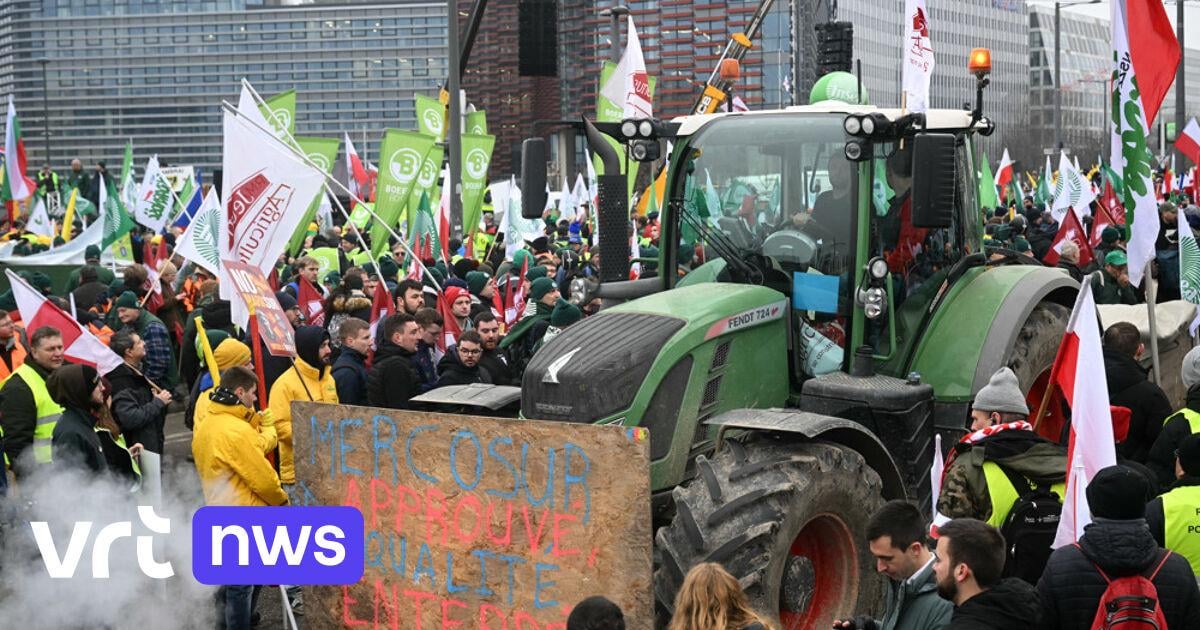
**Farmers from across Europe are protesting in Strasbourg against the Mercosur trade agreement. They believe that Europe is at risk of being flooded with cheap, low-quality agricultural products from South America, such as beef, chicken, eggs and soya. This would put European farms in a difficult position. But how justified are these fears? VRT NWS investigated three concerns that have repeatedly cropped up during the farmers’ protests in recent months.**
**Proposition 1**
**The Mercosur countries use plant protection products that are banned in the EU.**
To be clear: Mercosur is a trade agreement that sets (reduced) import tariffs for goods and foodstuffs such as meat and eggs. It does not determine which plant protection products, production methods and veterinary medicines may be used. Other rules and standards apply to this.
The European Union has high standards for food safety, traceability and public health and requires its trading partners to respect those standards.
Nevertheless, farmers in Mercosur countries do indeed use plant protection products that are not authorised in the EU. Take atrazine, for example. This herbicide has been banned in the EU since 2004, but is often used in Argentina, Brazil, Paraguay and Uruguay in the cultivation of maize, soya and sugar cane. Traces of atrazine could therefore be present in South American cane sugar.
Nevertheless, these products must comply with our food safety standards when they are imported into the EU. Compared to other countries, Europe applies very low maximum residue limits, i.e. the maximum amount of a particular pesticide that a product may contain. Substances that are banned in the EU must not be found at all in imported food. The bar is set as low as technically possible, at the smallest amount that can be measured.
So if there is more atrazine in cane sugar than is stipulated or than is safe for public health, it may not enter the EU and may not be consumed. There are checks in place to verify this.
**Proposition 2**
**Meat and eggs from Mercosur countries are not sufficiently checked**
A whole network of controls has been rolled out in the European Union.
This is how it works. First, countries that want to trade with each other must agree on the standards they will apply. Companies that want to export must then obtain an export certificate for certain products. And that’s not all. There are also border controls on arrival in the EU and random checks when the products enter our market.
How does it all work? Let’s take the example of a Brazilian steak.
The Brazilian company that wants to export that steak to the EU must first obtain an export licence from the authorities. Those authorities are the Brazilian counterparts of the Federal Agency for the Safety of the Food Chain (FASFC) in our country. The meat company will only obtain that licence if it complies with European rules.
To ensure that this part of the process runs smoothly, the EU carries out audits in the Mercosur countries.
Then there is the next step: the first steak from our Brazilian company arrives at the European external border. Like every shipment, that steak will be declared at a border inspection post. That way, we know exactly what is coming in. There, a few samples from the shipment containing our steak are subjected to a whole series of checks.
2 comments
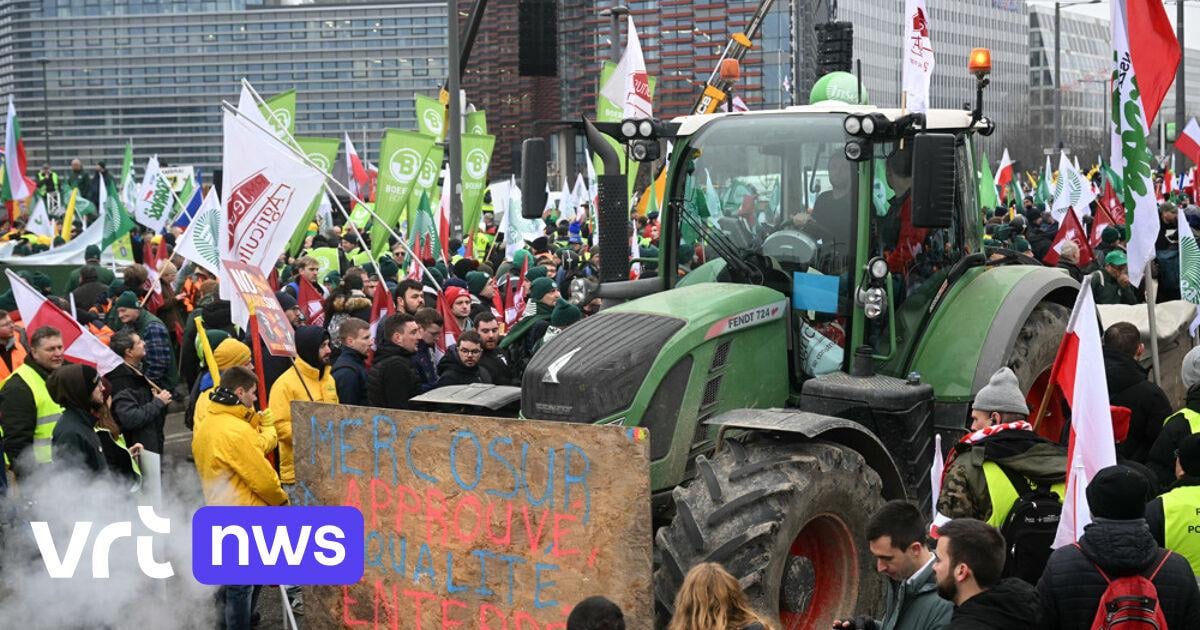
**Farmers from across Europe are protesting in Strasbourg against the Mercosur trade agreement. They believe that Europe is at risk of being flooded with cheap, low-quality agricultural products from South America, such as beef, chicken, eggs and soya. This would put European farms in a difficult position. But how justified are these fears? VRT NWS investigated three concerns that have repeatedly cropped up during the farmers’ protests in recent months.**
**Proposition 1**
**The Mercosur countries use plant protection products that are banned in the EU.**
To be clear: Mercosur is a trade agreement that sets (reduced) import tariffs for goods and foodstuffs such as meat and eggs. It does not determine which plant protection products, production methods and veterinary medicines may be used. Other rules and standards apply to this.
The European Union has high standards for food safety, traceability and public health and requires its trading partners to respect those standards.
Nevertheless, farmers in Mercosur countries do indeed use plant protection products that are not authorised in the EU. Take atrazine, for example. This herbicide has been banned in the EU since 2004, but is often used in Argentina, Brazil, Paraguay and Uruguay in the cultivation of maize, soya and sugar cane. Traces of atrazine could therefore be present in South American cane sugar.
Nevertheless, these products must comply with our food safety standards when they are imported into the EU. Compared to other countries, Europe applies very low maximum residue limits, i.e. the maximum amount of a particular pesticide that a product may contain. Substances that are banned in the EU must not be found at all in imported food. The bar is set as low as technically possible, at the smallest amount that can be measured.
So if there is more atrazine in cane sugar than is stipulated or than is safe for public health, it may not enter the EU and may not be consumed. There are checks in place to verify this.
**Proposition 2**
**Meat and eggs from Mercosur countries are not sufficiently checked**
A whole network of controls has been rolled out in the European Union.
This is how it works. First, countries that want to trade with each other must agree on the standards they will apply. Companies that want to export must then obtain an export certificate for certain products. And that’s not all. There are also border controls on arrival in the EU and random checks when the products enter our market.
How does it all work? Let’s take the example of a Brazilian steak.
The Brazilian company that wants to export that steak to the EU must first obtain an export licence from the authorities. Those authorities are the Brazilian counterparts of the Federal Agency for the Safety of the Food Chain (FASFC) in our country. The meat company will only obtain that licence if it complies with European rules.
To ensure that this part of the process runs smoothly, the EU carries out audits in the Mercosur countries.
Then there is the next step: the first steak from our Brazilian company arrives at the European external border. Like every shipment, that steak will be declared at a border inspection post. That way, we know exactly what is coming in. There, a few samples from the shipment containing our steak are subjected to a whole series of checks.
How are we gonna tell the difference?