Excited for what this means when Andy becomes PM for Labours second-term, you can’t argue with results like this against the moaning from Reform.
Who would ever pick Farage when we can have progressive inclusive politics thats good for the economy with Burnham? This is a rhetorical question because obviously the answer is no-one.
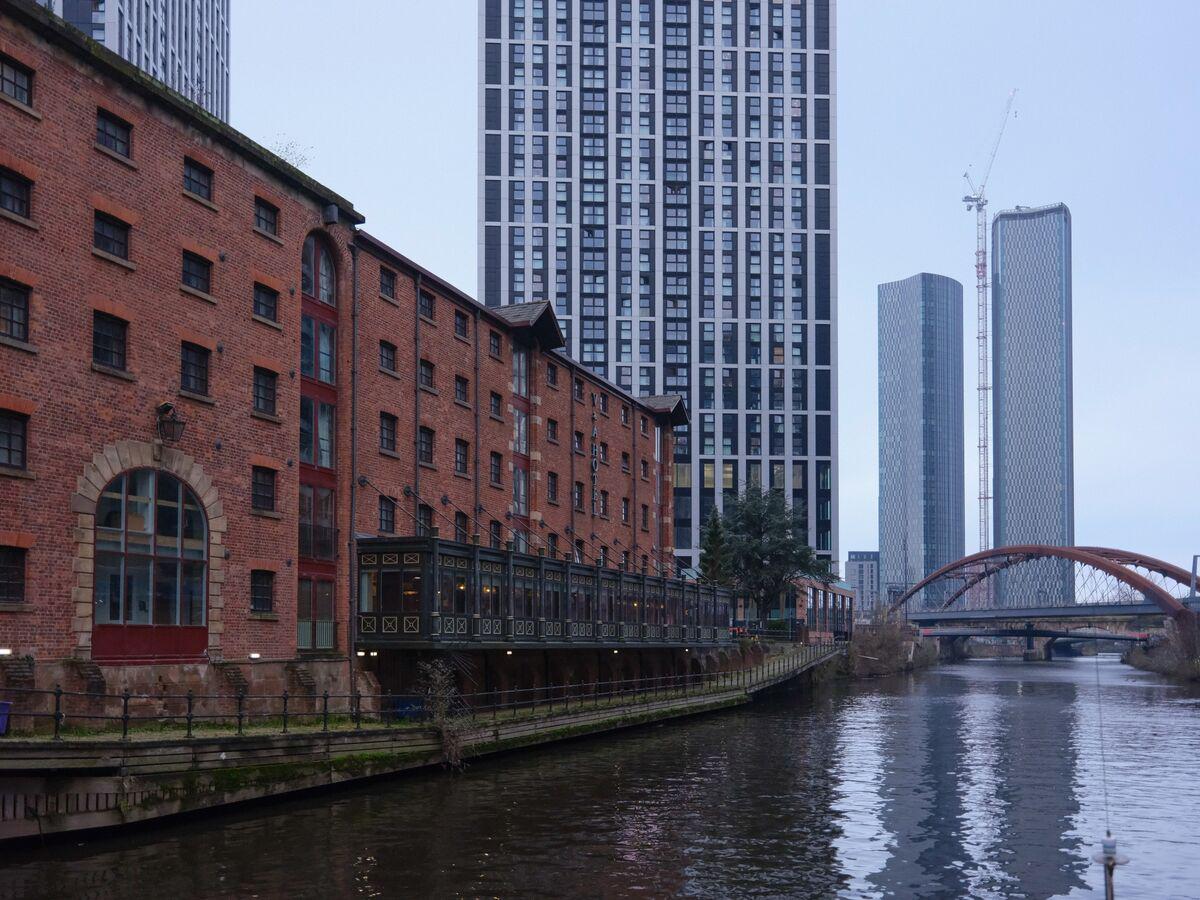
The fancy towers owned by Russian and Chinese billionaires look great, but being from here, I can tell you for a fact that most people are worse off than ever.
90% of locals couldn’t dream of living in them.
All you need is 2 world renown football clubs worth billions
Behind every success story lies a healthy dose of good luck and that’s no less true here. While Manchester’s leadership over the decades has done a lot of things right, the city has enjoyed tremendous good fortune.
Its football soft power can be dated back to one simple decision in 1986: to appoint Alex Ferguson as manager of Man United. Probably the greatest football manager in history, his team started to peak just as the Premier League (created in 1992) was transforming football into a massive instrument of commerce and soft power.
The regeneration of its city centre was kickstarted by the nineties fad for loft living. Fortunately the city had a glut of abandoned old mills that were just perfect for repurposing to that end. Right place, right time.
There’s a little pop at Birmingham in the article, but Birmingham was the pioneer in the UK of the kind of urban regeneration that has so benefited Manchester. A city-centre concert hall and convention centre, a new business district, a new attention to urban design with relandscaped squares: Brum actually got there first, with Symphony Hall, the ICC, the NIĄ, Centenary Square, Victoria Square, Brindleyplace, all in the space of a few years in the early nineties. It gets scant credit for any of it.
The rivalry is instructive in other ways that support the difference in fortunes. When Birmingham was bombed by the IRA in 1974, 21 people lost their lives and the city’s nightlife was damaged for years afterwards. Manchester’s 1996 IRA bomb resulted in zero fatalities and just so happened to destroy the ugliest part of its city centre, enabling a lavish rebuild.
And when Birmingham really was unquestionably second to London in every respect after WW2, the government was so worried about the negative impact of its runaway boom on the North that it used legislation to cut it down to size. Yes, that is a British government actively wanting one of its own cities to do worse.
Whereas in this, different era, a booming Manchester has successive governments’ wind in its sails, enjoying considerable largesse and accused by its northern rivals of receiving preferential treatment.
Still, it’s not healthy for the UK to be so dominated by one city, so despite all the above I hope Manchester continues to do well. I just hope the above context helps rein in some of cockiness for which they’re so renowned.
(Disclaimer: am not from Brum)
Manchester’s economic success is relatively simple to replicate. It takes tens of thousands of homes *right in the city centre* close to workplaces with density that can support a hospitality scene, support industry clusters and genuine and sustained investment in public transport to grow productivity.
But every time the goverment thinks about making investments like this, it bulks at the cost and gives up. Manchester had to go to the EU several times to get funding for it’s tram network.
5 comments
Excited for what this means when Andy becomes PM for Labours second-term, you can’t argue with results like this against the moaning from Reform.
Who would ever pick Farage when we can have progressive inclusive politics thats good for the economy with Burnham? This is a rhetorical question because obviously the answer is no-one.
The fancy towers owned by Russian and Chinese billionaires look great, but being from here, I can tell you for a fact that most people are worse off than ever.
90% of locals couldn’t dream of living in them.
All you need is 2 world renown football clubs worth billions
Behind every success story lies a healthy dose of good luck and that’s no less true here. While Manchester’s leadership over the decades has done a lot of things right, the city has enjoyed tremendous good fortune.
Its football soft power can be dated back to one simple decision in 1986: to appoint Alex Ferguson as manager of Man United. Probably the greatest football manager in history, his team started to peak just as the Premier League (created in 1992) was transforming football into a massive instrument of commerce and soft power.
The regeneration of its city centre was kickstarted by the nineties fad for loft living. Fortunately the city had a glut of abandoned old mills that were just perfect for repurposing to that end. Right place, right time.
There’s a little pop at Birmingham in the article, but Birmingham was the pioneer in the UK of the kind of urban regeneration that has so benefited Manchester. A city-centre concert hall and convention centre, a new business district, a new attention to urban design with relandscaped squares: Brum actually got there first, with Symphony Hall, the ICC, the NIĄ, Centenary Square, Victoria Square, Brindleyplace, all in the space of a few years in the early nineties. It gets scant credit for any of it.
The rivalry is instructive in other ways that support the difference in fortunes. When Birmingham was bombed by the IRA in 1974, 21 people lost their lives and the city’s nightlife was damaged for years afterwards. Manchester’s 1996 IRA bomb resulted in zero fatalities and just so happened to destroy the ugliest part of its city centre, enabling a lavish rebuild.
And when Birmingham really was unquestionably second to London in every respect after WW2, the government was so worried about the negative impact of its runaway boom on the North that it used legislation to cut it down to size. Yes, that is a British government actively wanting one of its own cities to do worse.
Whereas in this, different era, a booming Manchester has successive governments’ wind in its sails, enjoying considerable largesse and accused by its northern rivals of receiving preferential treatment.
Still, it’s not healthy for the UK to be so dominated by one city, so despite all the above I hope Manchester continues to do well. I just hope the above context helps rein in some of cockiness for which they’re so renowned.
(Disclaimer: am not from Brum)
Manchester’s economic success is relatively simple to replicate. It takes tens of thousands of homes *right in the city centre* close to workplaces with density that can support a hospitality scene, support industry clusters and genuine and sustained investment in public transport to grow productivity.
But every time the goverment thinks about making investments like this, it bulks at the cost and gives up. Manchester had to go to the EU several times to get funding for it’s tram network.