
Image courtesy of Stellantis
Whether you are an early adopter of technology or you are of the stripe who simply waits for your smartphone to break to move up, one thing is for certain: technology can make our lives better in diverse ways. Stellantis SRT Performance Division’s new innovation — eBoost Air — is tech used to solve a long problem associated with turbocharging.
SRT’s eBoost Air e-compressor technology exists to “deliver high-power potential of large turbochargers while preserving throttle response.” Paired with a prototype 3.0-liter Hurricane inline-six, this new e-compressor technology begins spooling the turbos from idle for a more immediate response via an electric turbine. After the turbochargers get the needed performance boost, airflow returns to its normal path as your heart rate increases in tandem with the engine’s speed.
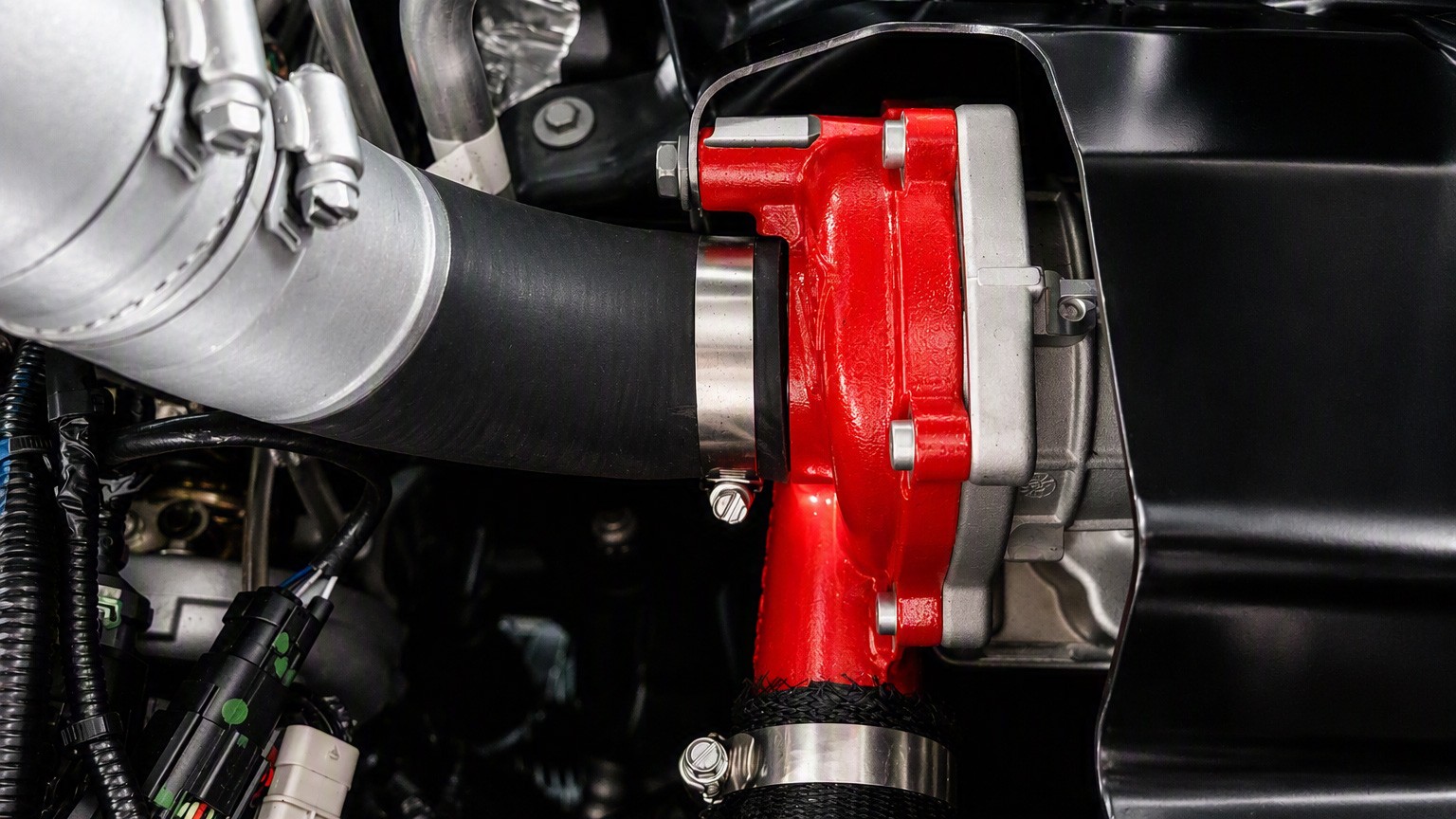 SRT eBoost Air e-compressor technology powertrain concept (Image courtesy of Stellantis)
“Enthusiasts aren’t interested in technology for the sake of technology. But when technology improves performance with no downside, they’re all in,” says Tim Kuniskis, head of American brand and marketing, North America. “eBoost Air delivers exactly that kind of tangible benefit. It’s a smart, simple idea that attacks turbo lag head-on and reflects what SRT does best — moving fast, challenging assumptions, and chasing more performance.”
Traditionally, turbochargers work by forcing more air into the engine. The larger the turbo, the more air can be introduced to the engine and the quicker you can feel like Ricky Bobby behind the wheel. Normally these only work well at higher rpms when the engine is creating more exhaust pressure. At lower RPMs there is that dreaded turbo lag that almost every automotive enthusiast has felt at least once. With the electric turbine, SRT’s eBoost Air e-compressor technology takes care of that issue by spooling the turbos sooner. All this is a very science-y way of saying, “New turbo make car go fast!”
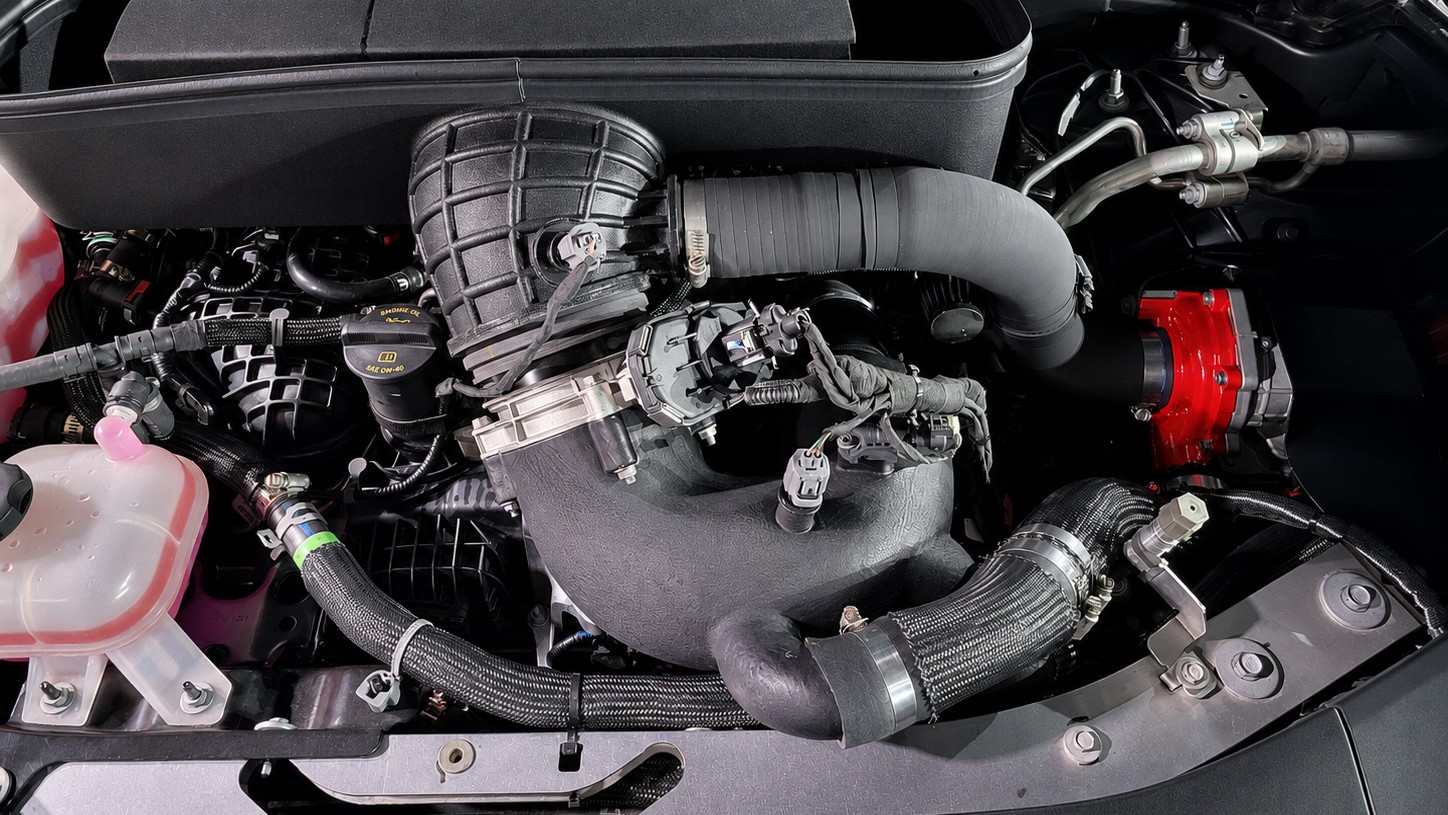 SRT eBoost Air e-compressor technology powertrain concept (Image courtesy of Stellantis)
Adds Tom Sacoman, head of SRT operations, “The SRT division is leveraging rapid development and cross-functional engineering to evaluate emerging performance technologies. In this case, by electromechanically pre-spooling the turbochargers before exhaust energy is available, we’re able to significantly improve boost response and drivability.”
This new technology will be a key component in Dodge’s new performance vehicles, so we imagine it could play a part with the Charger Super Bee and possibly the Ram Rumble Bee. And what about the Hemi V-8 Charger?
One can only hope.