
“I will probably never post this. I’m shaking. I think it’s a long shot, but fingers crossed,” Jenna Morales Ledbetter, founder of Omora Beauty Lab, said in a video recorded before learning whether she’d be selected for the 2026 Sephora Accelerate program. “I just wanted to remember how I was feeling.” Flash-forward to her next video, she’s still trembling, but for a different reason: She had just found out she was one of 12 founders selected for the incubator.
It was a full-circle moment for the 26-year-old founder who conceived the idea for Omora—a combination of her mother’s maiden name, Morales, and amor, the Spanish word for love—after shopping at Sephora, her favorite beauty retailer. On that trip, her go-to concealer was sold out. She spent nearly an hour scouring ingredients on her trusted sites, AcneClinicNYC and INCIDecoder. Unfortunately, none of the available brand formulas met her criteria for her acne-prone, sensitive skin. “I wished I could walk into a store and find an entire line that I didn’t need to Google to find the ingredients and know it would work for my skin,” she says.
She also had another goal. Ledbetter has a bachelor’s degree in psychology from Pitzer College and a master’s in public mental health from the Johns Hopkins Bloomberg School of Public Health. Before becoming a beauty creator, most of her career to date was in health research. Her background, combined with the impact acne and skin conditions have on mental health, including her own, prompted her to create products that could build confidence.

Omora Beauty Lab launched direct-to-consumer in May with seven shades of $34 Soft Cover Concealer, three colors of $30 Sun Kissed Glow Liquid Bronzer and one shade of $30 Rose Flush Lip and Cheek Tint—the line’s top seller.
Instead of forging ahead with her plans to pursue a Ph.D in health policy, especially with changes she saw in the public health landscape, Ledbetter followed her passion. The result is Omora, a clean, complexion-focused makeup brand for those with acne-prone and sensitive skin.
“I wanted to bring a level of prestige beauty to acne-prone, sensitive skin sufferers who struggle to find that,” she says, adding it was important to have a package consumers would be proud to display on vanities versus the often staid clinical solutions served up by derms. There is big potential in both acne and sensitive skin. Acne is the most common skin condition in the United States, affecting up to 50 million Americans annually, according to the American Academy of Dermatology Association. More than $5.3 billion is spent on prescription and over-the-counter acne products, per Grand View Research. Aveeno’s inaugural State of Skin Sensitivity Report revealed 71% of adults feel they have some degree of sensitive skin.
While acne is typically associated with the teen years, Ledbetter’s flare-up started in college. “It blew up seemingly overnight. I had red cystic acne. My entire face was covered,” she recalls. Adult acne, she notes, can be especially hard on young women’s mental health. “It’s one thing when you’re a teenager and everyone has it.” With a background in research, she approached her own skin the way she would any scientific problem. She immersed herself in dermatology studies, ingredient lists and emerging research on inflammation, the skin barrier and acne. As she experimented, one realization stood out: While acne treatments focused on aggressively stripping the skin, her damaged skin barrier needed exactly the opposite.
She says, “My dermatologist kept prescribing stronger and stronger active ingredients. My skin hurt every single day—not because of the acne itself, but because it was so dry and inflamed.” Ledbetter changed her diet, her exercise routine and even her laundry detergent. “I was constantly trying to figure out what was causing it.” She gradually shifted toward barrier-supporting skin care, eliminating fragrance, essential oils and pore-clogging ingredients. Finding skin care became manageable, but makeup was a bigger challenge. “I’ve spent so much money on my skin. It’s not worth it to experiment. I needed to come up with something completely clean for my skin,” she shares.
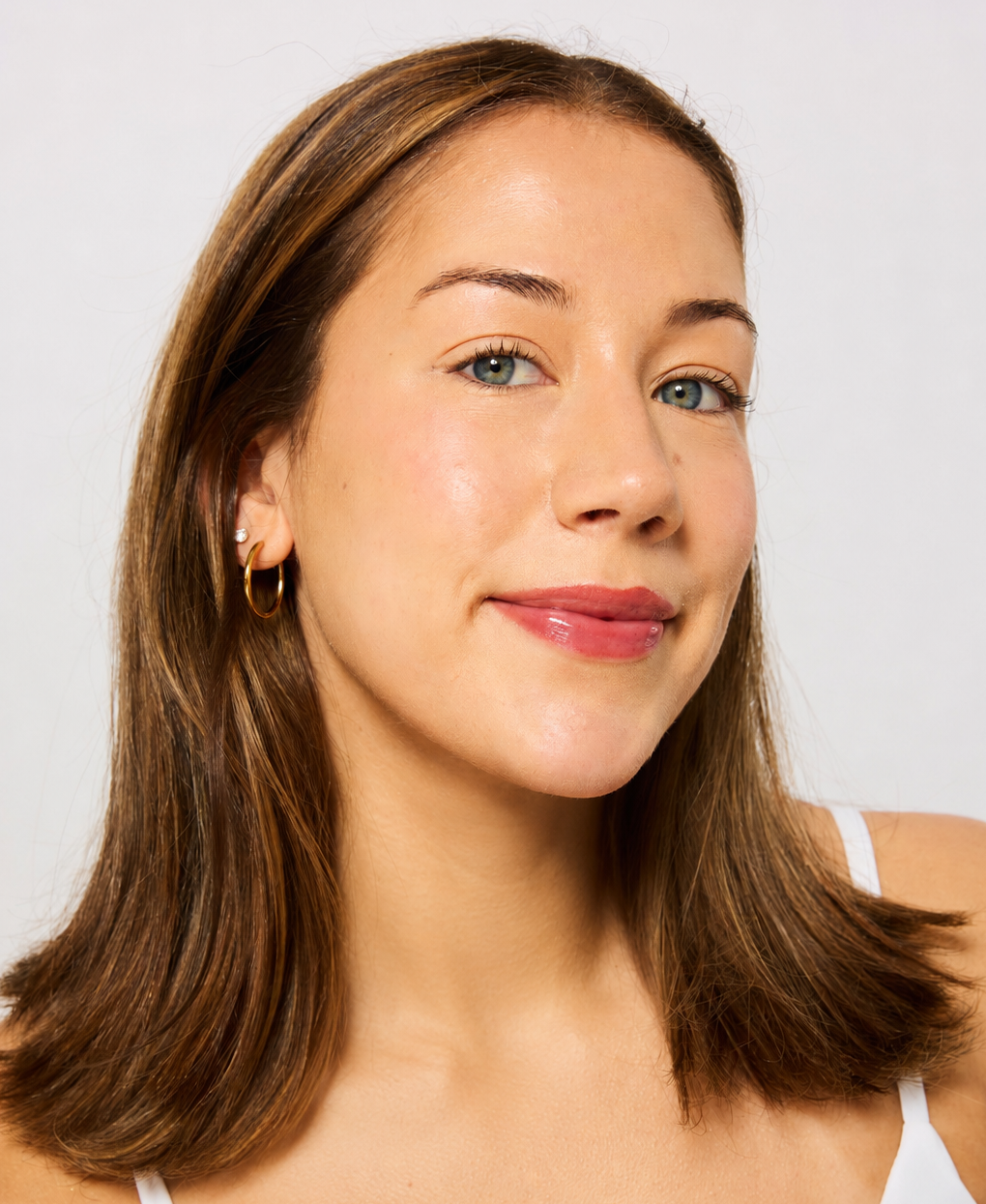
Omora Beauty lab founder Jenna Morales Ledbetter
As she set out to create her own, Ledbetter encountered countless roadblocks from labs. “They said we can’t do what you want with the ingredients you want, or you have to order 10,000 of every shade. I was not willing to budge on my ingredients. I had a very clear list of what I wanted and what I didn’t want in my ingredients,” she said. “When manufacturers asked if I was a cosmetic chemist, I’d ‘No, I just had really bad acne and a lot of time to do research.’” Eventually, she found a small, woman-owned manufacturing partner willing to work alongside her rather than dismiss her vision. Together, they developed formulas that combined high-performance makeup with barrier-supporting ingredients like ceramides, squalane and green tea while excluding fragrance, essential oils and ingredients known to trigger breakouts.
Omora Beauty Lab launched direct-to-consumer in May with seven shades of $34 Soft Cover Concealer three colors of $30 Sun Kissed Glow Liquid Bronzer and one shade of $30 Rose Flush Lip and Cheek Tint—the line’s top seller. Ledbetter plans to expand her assortment but remain focused on complexion products. “I wouldn’t launch a mascara,” she said.
Although Omora was born from Ledbetter’sown struggle with adult acne, the brand’s customer base already stretches well beyond young adults. “My grandmother uses it every single day and is always telling me about the compliments she receives,” she added. Self-financed through a small friends-and-family round, Ledbetter moved from the Northeast to California, where she felt she had a better chance at making industry connections. She retains a job coaching at Solidcore along with educational consulting and college essay tutoring as she builds her brand.
Ledbetter has to be judicious in her spending, but she invested in an FDA consultant at $400 per hour to ensure every label met regulatory requirements, money she said was well spent. The FDA, she explained, has specific packaging requirements, from the size of ingredient lists relative to the package to the placement and orientation of the product name. “It wasn’t worth the risk to get it wrong,” she said, noting she changed her brand name from vertical to horizontal orientation to meet requirements and had to edit the font size and placement of her product specifications.
She also funneled her budget into dermatologist testing. “If people with acne-prone and sensitive skin are going to trust a new brand, the formulas have to be exceptional from day one.” Ledbetter is intentional with her social media investments. She’s gauging what works best and what doesn’t. For example, she learned that just because a big influencer mentions a brand, it doesn’t always translate into sales. She’s also weighing the impact of pop-ups and other grassroots efforts. Ledbetter shares Omora’s behind the-scenes journey openly on social media, documenting both successes and setbacks in an effort to build transparency around the brand. She kicked off her campaign six months prior to launch to build exposure.
While not sharing her sales goals, Ledbetter said she is inspired by Cassandra Morales Thurswell, the founder and CEO of Kitsch, who has grown her brand to a reported $500 million without any outside investment. After hearing Thurswell speak at an event, Ledbetter said her biggest takeaway was not to chase growth for growth’s sake or say yes to every opportunity, but to stay focused on building the company.
What she hopes to gain the most from the Sephora Accelerate is a support network and building relationships with other founders. “One of the big things is that I come from outside the beauty industry so I really want to hear from others who have experience and might be a few steps ahead of me,” she said. Learning what it means to be retail-ready is also mission critical. While she dreams of eventually landing in big retailers, she knows the importance of starting small. Several social media posts following the announcement about the latest Sephora cohort singled her brand out for filling a gap in makeup for acne-prone skin.
Since launching in 2016, Sephora Accelerate has helped elevate new founders across the beauty industry. Alumni brands include Eadem, Kulfi, Topicals, Bounce Curl and Oliviaumma. Members of this year’s cohort will gain access to the Sephora Impact Summit and the chance to apply for the $100,000 Sephora Beauty Grant.