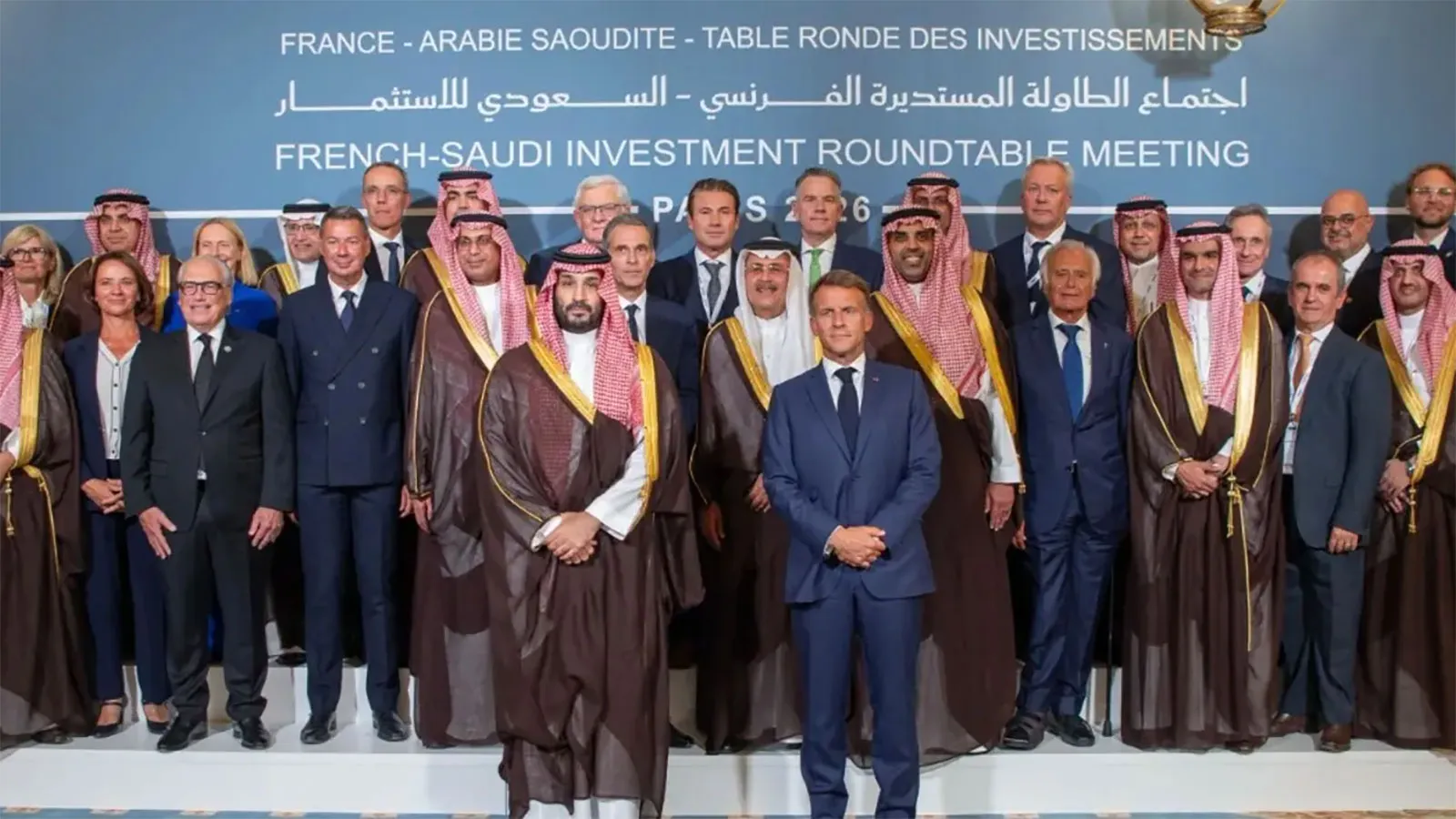
The Saudi operator Red Sea Gateway Terminal (RSGT) and the French group CMA CGM have signed the definitive agreements to jointly develop and operate Terminal 4 of the Islamic port of Jeddah, in collaboration with the Saudi Port Authority (Mawani). The project entails an estimated investment of 434 million dollars (1.6 billion Saudi riyals) and is presented as one of the largest foreign direct investment operations recorded in the maritime sector of the kingdom.
The signing took place in Paris, coinciding with the Franco-Saudi Investment Roundtable and with the presence of the Crown Prince and Prime Minister of Saudi Arabia, Mohammed bin Salman, and the President of the French Republic, Emmanuel Macron. The two companies, along with Mawani, frame the operation within the National Transportation and Logistics Strategy of the kingdom and the objectives of Vision 2030.
The new Terminal 4 will be integrated into the concession that RSGT already operates in Jeddah and will add an annual capacity of up to 2.6 million TEUs. The project includes the construction of deep-water docks sized to accommodate the world’s largest container ships and the commissioning of ten new dock cranes (STS), along with advanced terminal management systems. The deepening of drafts aims to allow efficient calls of next-generation vessels and attract and retain regular services from major international shipping companies.
The Islamic port of Jeddah is the main maritime gateway of Saudi Arabia and one of the reference stops of the Red Sea corridor, one of the most sensitive routes in global container trade due to its direct connection to the Suez Canal. Additionally, the capacity expansion occurs at a time when major shipping lines are progressively reactivating their transits through the Red Sea after the hiatus opened at the end of 2023 due to the attacks by Houthi militias on merchant traffic.
RSGT, which brings operational experience in Jeddah and knowledge of the local market to the project, and CMA CGM, which contributes its global traffic network and its experience as a terminal operator, define the agreement as a long-term alliance. The French company has stakes in 64 port terminals around the world, a part of its business to which it has been increasingly giving weight as a lever to secure operations and strengthen major trade corridors.
The president of Mawani, engineer Suliman bin Jaled Al-Mazrou, has described the agreement as a reference point for the kingdom’s attractiveness for investment in the maritime sector and the growing confidence of global investors in the Saudi port ecosystem. Al-Mazrou has linked the project to Mawani’s ongoing work to develop port infrastructure and improve the competitiveness of the system, in line with the objectives of the National Transportation and Logistics Strategy and with Vision 2030.
The chairman of the board of directors of RSGT, Aamer Abdullah Alireza, has described the alliance as “a decisive benchmark for RSGT and for the maritime sector of Saudi Arabia,” and added that “it reflects the kingdom’s ability to attract top-level international investors and demonstrates the growing confidence in Saudi Arabia’s economic future, its logistical ambitions, and its strategic position at the heart of global trade.” The CEO of the RSGT group, Lars Vang Christensen, has emphasized that the operation will substantially increase the operator’s container capacity and create long-term value for the kingdom.
The president and CEO of CMA CGM, Rodolphe Saadé, has framed the operation in the group’s terminal expansion strategy. “As the global trade landscape evolves and infrastructure needs to be expanded and modernized, terminals become increasingly strategic assets, essential to securing our operations, strengthening major trade corridors, and providing our customers with greater reliability,” the executive noted. Saadé added that the investment responds to the group’s long-term commitment to Saudi Arabia and its ambition to establish itself as a major global logistics and trading hub.
The operation adds to a sequence of recent movements where major shipping lines are rearranging their terminal positioning in the Asia-Europe-Gulf corridor, with Jeddah as one of the key enclaves. The commissioning of Terminal 4, whose timeline has not been detailed by the parties, will expand Saudi Arabia’s capacity to absorb additional traffic and compete with other major hubs in the region for services operating the largest container ships in circulation.