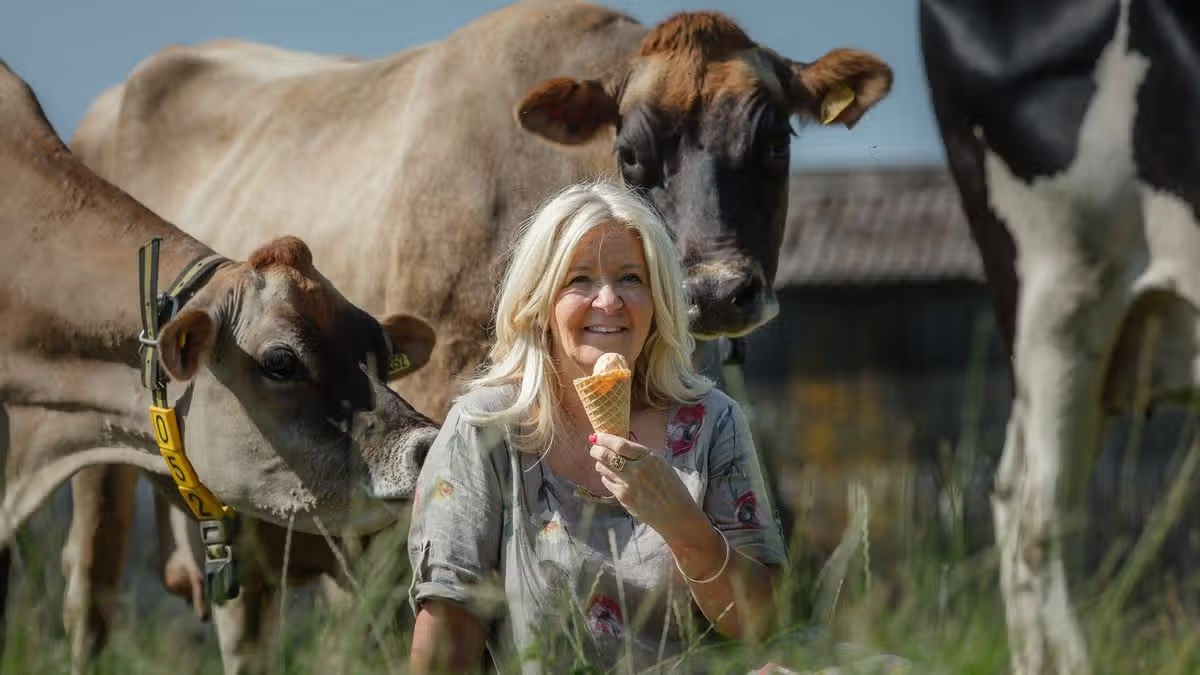
Devon’s food and drink businesses have had a tough year, buffeted by inflation, the cost-of-living crisis and even the hot summer – and they are praying the chancellor doesn’t make it any more difficult for them.
Leaders from industry body Food Drink Devon have travelled Westminster to tell MPs about the challenges they are facing ahead of next week’s Budget.
Amanda Ringelberg, a Food Drink Devon director and founder of Devon luxury ice cream business Granny Gothards, told DevonLive that energy and labour costs were hitting businesses.
But the biggest challenges are inflation and the cost–of-living squeeze which is curtailing the amount of cash customers have to spend – particularly with Devon’s high-end producers and hospitality businesses.
She hopes Chancellor John Healey does more to put cash in people’s pockets and certainly doesn’t hit businesses with more taxation, especially as they are still reeling from the hike in employers’ National Insurance contributions, brought in by Rachel Reeves’ Budget two years ago.
“We had a roundtable with MPs in Westminster,” she said. “We told them energy prices and labour costs are affecting most local businesses.”
And she added: “Fuel tax, they have to hold that back and not increase that any more, and look at VAT on fuel.”
But Ms Ringelberg stressed: The Government has to help people with more disposable income to spend. All our producers are producing high-quality products, and that comes with a cost when you go to the supermarket.
“If people have more disposable income they would go to farm shops and markets and buy those products.
“Until that changes and customers’ perception of what percentage of income we should spend with (quality producers) changes it will be a struggle for producers.
“The number of people with income to buy that special cheese or cider or ice cream that has not been mass produced, they need more disposable income or a greater proportion of their income to spend.
“And to understand the difference between eating good food and not overproduced and cheaper food, mass produced for a market, they have to understand the difference.
“We have to educate people about why the food that is being produced in Devon and other counties is better than mass produced food.
“But it comes at a cost and until the customer has that money and can spend it is a challenge.”
She said the increase in employers’ National Insurance contributions “took a chunk” out of businesses and made it more difficult to employ youngsters.
“We all had a right-of-passage job working in a pub,” Ms Ringelberg said. “But it’s now a struggle to employ those people.
“It’s made employers wary of taking staff on and there are so many young people who are NEETS (not in employment, education or training).”
Food Drink Devon has more than 300 members throughout the county including many in Plymouth, Exeter and Torbay.
Ms Ringleberg said that as a collective they have “more chance of getting your voice heard” and that membership is wide ranging “from farms to cafes, food and drink producers to vineyards” and visitor attractions too.
Ms Ringelberg, who has been a director for nearly five years but this year became an ambassador, said a current trend for businesses to “pivot” to account for the higher labour and energy costs. That means diversifying or, in some cases, moving into something new.
“We’ve noticed a change in hospitality,” she said. “So many are looking at ways to increase footfall or review their product range to compensate for things they can’t control.”
And that goes for dealing with the weather too. She said: “Farmers are worried, they also have to pivot what crops they are growing and management of the land.”
She said Granny Gothards’ ice cream is an example of how 2026’s heatwave hit business. Her high-end products are mostly sold in restaurants and bars, not on beaches, and therefore “we did not have a great summer”.
But, she said, waterside ice cream vendors had a successful summer, although, again, the cost-of-living squeeze hit traders.
“People went to the beach with picnics and sat there all day,” she said. “The people who came on holiday did not have the disposable income to eat out every day.”