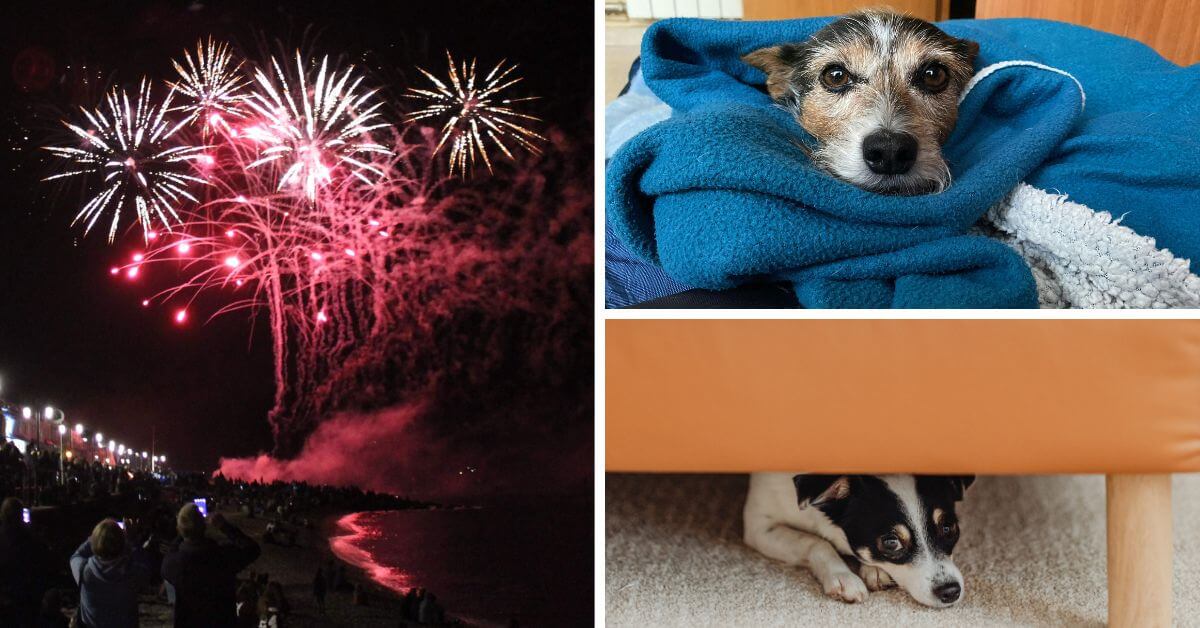
A Devon vet has revealed what dogs hear, see, and feel when fireworks explode – and is sharing why some pets sleep though bonfire night, but others shake, bark, or flee.
A vet near Exeter has revealed dogs can hear sounds around four times the distance compared to humans, and at higher frequencies, so a pet’s fear of fireworks is down to physiological changes taking place inside its body .
Vicky Johnston, clinical director at St David’s Veterinary Centre, Exminster, near Exeter, said a dog frightened by fireworks was not ‘making a fuss’ but experiencing ‘very real fear’.
She said: “We experience fireworks knowing exactly what they are, when we’re likely to hear them and that they aren’t a threat. Our dogs don’t have that explanation.
“Imagine suddenly hearing an extremely loud, unpredictable noise when you don’t know where it has come from.
“For some dogs, their body responds as though there is something they need to protect themselves from. These aren’t dogs being naughty or overreacting. They can be outward signs of a very real fear response.”
The vet practice said laboratory research involving dogs with a history of firework sensitivity found differences in their fight-or-flight response when they heard recorded firework sounds.
Behaviours include hyper-alertness, searching for the sound, trembling, freezing, barking, hiding and attempting to run away.
But a subdued, quiet, dog seen pacing, restless, panting, leaving a room, choosing an unusual place to lie in, refusing food, and seeking attention, could also be showing fear and experiencing noise sensitivity.
The vet practice said dogs all reacted differently to fireworks, which could be down to a combination of genetics, age, health, previous experiences and learning.
Vicky said: “Owners sometimes wonder why their new puppy is frightened when their previous dog wasn’t, or why two dogs living in exactly the same household react completely differently.”
She said fear can change over a dog’s lifetime and recommended a vet check if a dog suddenly develops sensitivity to noise when it was previously not frightened.
The vet practice’s six facts about dogs and fireworks:
Dogs detect sounds around four times further than humans, at higher-frequencyResearch into firework-frightened dogs found ‘measurable differences’ in their nervous system on hearing firework noiseDogs can be scared by the smell of fireworks, light flashes and unpredictable noisesGenetics play a part in dog firework fear – Standard Poodles are genetically hardwired to be more sensitive to loud noises.A study of 1,225 dogs found firework fear can last longer than the celebration. Three-quarters recovered by the next morning, 12 per cent needed up to a week, three per cent took several weeks and monthsDogs do not get used to fireworks and repeated exposure is not a guarantee cure-all. Some fear can diminish, but some become ‘sensitised’ and are triggered by exposure.