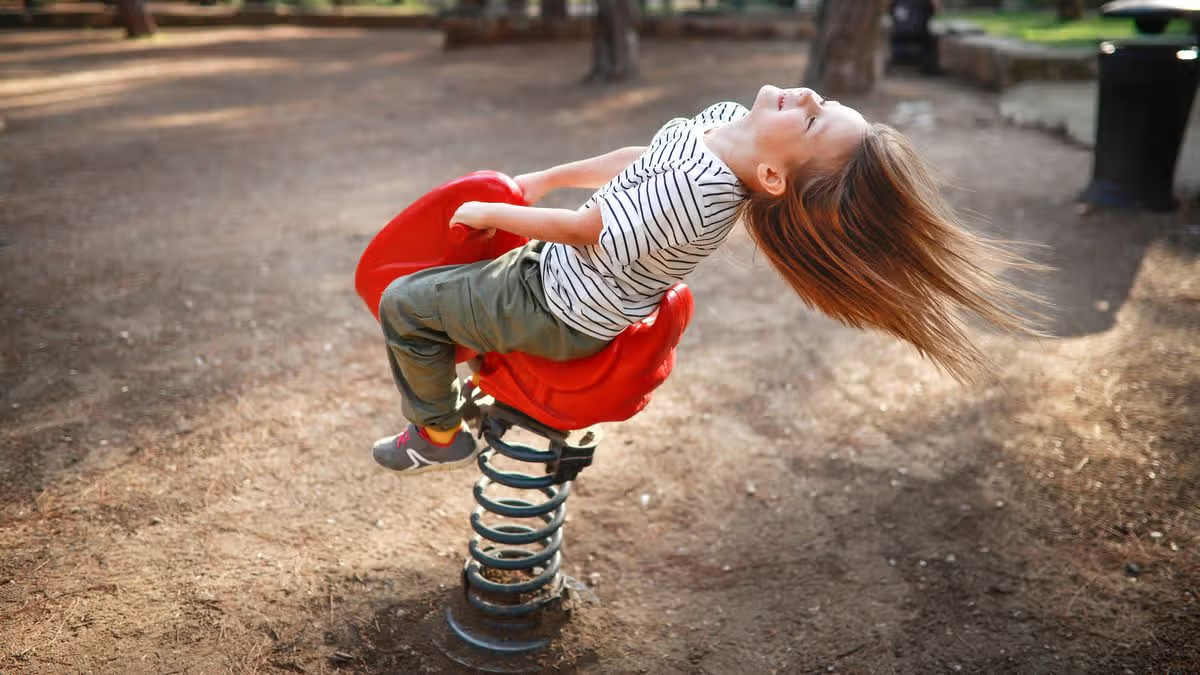
The research looked at young people aged from four to 11
Neil Shaw Assistant Editor
06:26, 11 Nov 2026

A child on a spring swing in the park
Children who visit the park at least once a week may have better mental health as they grow up, a study suggests. Communities need “good quality parks that are safe, accessible and welcoming to families from all backgrounds”, researchers said.
Experts at the University of Exeter analysed data from 4,219 youngsters aged between four and 11 taking part in the Children of the 90s Study. Social-emotional development was measured using questionairees completed by parents at five time points in their child’s life.
The study found that children who were taken to the park at least once a week had better social-emotional development compared to those who went less often.
This could be down to “physical activity, cognitive benefits, social interaction, parent- child interaction and bonding, and play opportunities”, researchers said. Mark Ferguson, of the University of Exeter, said: “Our research suggests encouraging children to visit parks and playgrounds at least once a week could be a practical way to support their emotional wellbeing, social skills and mental health.
“But for this to work fairly, communities need good-quality parks that are safe, accessible and welcoming to families from all backgrounds. Parks give children space to be physically active, which is known to support mental and physical health, as well as helping adventurous and imaginative play to build confidence and independence. We believe parks could be more than places to play, but an important resource for children’s healthy development.”
Reacting to the findings, which are published in Epidemiology and Community Health, Paul Noblet, interim head of external affairs and research at the charity YoungMinds, said: “We know how important community spaces such as parks and playgrounds can be in supporting mental health, and addressing the increasing isolation and loneliness young people today feel.
“Many spaces where young people can connect and build relationships have disappeared from communities across the country. This is a trend that we need to urgently reverse. Free, safe and accessible spaces are vital in our communities can help young people make friends, build confidence and develop a sense of belonging, all of which supports mental health.”