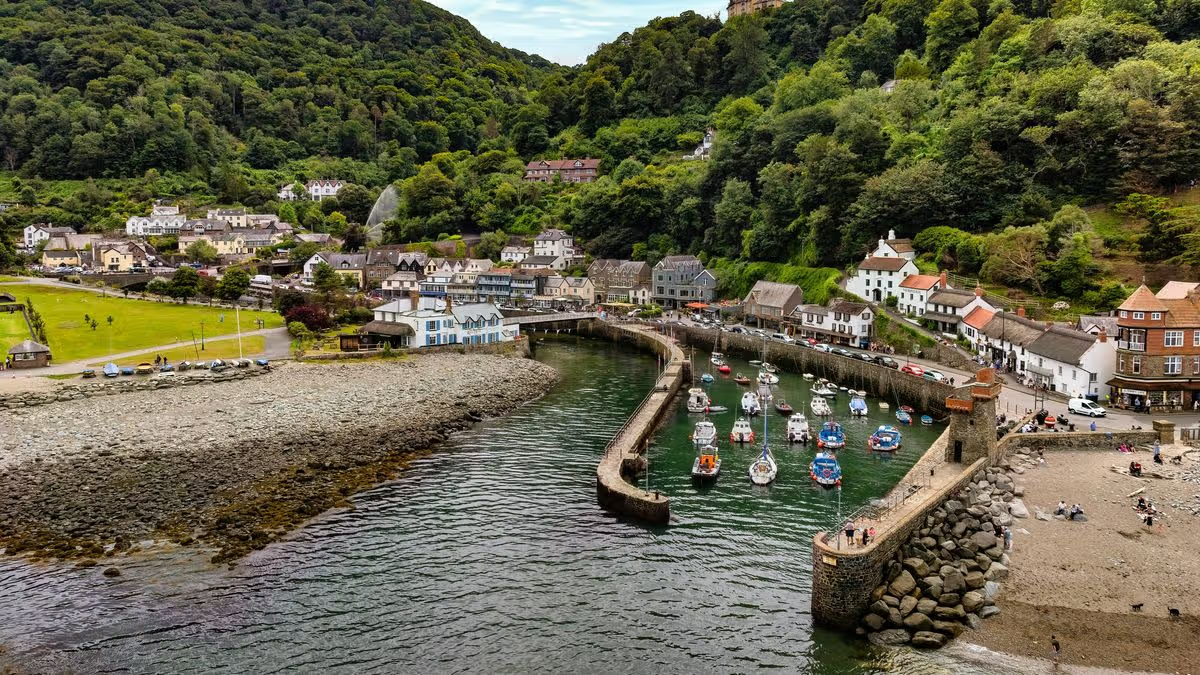
Lynmouth has been named the best seaside town in Devon in the latest Which? survey for 2026, beating well-known rivals Woolacombe, Sidmouth, Salcombe and Dartmouth
Lynmouth claimed 21st place in the ranking(Image: Dark_Eni via Getty Images)
Devon’s finest seaside town has been revealed – and it may surprise you.
Each year, Which? surveys its members on their most and least favourite coastal destinations across the UK. This time around, Bamburgh in Northumberland held on to the top spot for an extraordinary sixth year running, while Bognor Regis in West Sussex propped up the table, with visitors taking aim at its underwhelming seafront.
When it comes to Devon, the county has no shortage of worthy contenders.
Salcombe, known for its high-end shops and exceptional seafood, and Dartmouth, with its history and riverside charm, are two favorites. Woolacombe, with its sweeping two-mile stretch of golden sand, and the elegant Georgian resort of Sidmouth, are another couple of classics.

It is nestled in rugged Exmoor coastline(Image: Getty)
Yet none of these have taken the county crown. That honour goes to Lynmouth, which claimed 21st place in the national rankings.
Tucked away on Devon’s most northerly coastline, where the wild expanse of Exmoor tumbles down to meet the sea, the twinned towns of Lynton and Lynmouth sit nestled between dramatic hillsides and thickly wooded valleys. The poet Robert Southey was so struck by the scenery that he likened it to the Alps – a comparison that gave rise to its enduring nickname, Switzerland on the Sea.
One of the area’s most remarkable features is its cliff railway, which holds the distinction of being the world’s only fully water-powered funicular. Drawing on water from the East Lyn River, the system works by shifting water between tanks beneath each carriage to keep them balanced as they pass one another on the track. It was also voted the UK’s Best Cliff Railway in the Which? Reader Poll – a well-deserved title for what is a genuinely impressive feat of Victorian engineering.
A short walk from Lynton along the South West Coast Path brings you to the Valley of Rocks, a dramatic dry valley carved out over thousands of years by coastal erosion. Jagged rock formations punctuate the landscape, and the most adventurous visitors can scale Castle Rock for sweeping views across the Bristol Channel towards South Wales – with the added chance of spotting one of the wild goats that roam freely across the hillside.
Back in Lynmouth itself, the Glen Lyn Gorge is well worth a visit. The attraction includes an absorbing exhibition on the Power of Water, with a focus on the hydroelectric energy generated by the river, alongside a small museum charting the town’s rich and at times turbulent history. Exhibits cover the devastating flood of 1952, the daring 1899 lifeboat rescue of the stricken vessel Forrest Hall, and even a whale that once washed ashore on the town’s beach.
That lifeboat rescue has passed into legend. When stormy seas made it impossible to launch the lifeboat Louisa from Lynmouth, the crew made the extraordinary decision to haul her overland through the night, eventually launching her some 15 miles away – a feat widely regarded as one of the most remarkable rescues in British maritime history.
The area’s literary connections run deep, too. Both Samuel Taylor Coleridge and William Wordsworth spent time here, and it is widely believed that the surrounding landscape – which they knew as the Valley of the Stones – inspired a number of their works.

The Glen Lyn Gorge in Lynmouth(Image: Getty Images)
For those who venture beyond the beach, there is plenty to keep even the most active visitor busy. Miles of walking trails thread through ancient woodland, open moorland, rugged clifftops and peaceful river valleys, suiting all abilities and fitness levels. The area is a particular favourite with walkers, trail runners and cyclists, while nature lovers can seek out birds, deer and other wildlife throughout the year.
Railway enthusiasts are also well catered for. The Lynton and Barnstaple Railway, a lovingly restored narrow-gauge steam line, is unique in Britain as the only steam railway where passengers ride in original Victorian carriages dating from the 1890s. Trains depart from Woody Bay Station, just a short distance from Lynton, winding through some of North Devon’s most spectacular countryside.
TOP 30 SEASIDE TOWNS & VILLAGESBamburgh — 84%Tynemouth — 82%St Andrews — 81%Aldeburgh — 80%Crail — 80%Frinton-on-Sea — 80%Portmeirion — 80%St Davids — 79%Bude — 78%Southwold — 78%North Berwick — 77%Plockton — 77%St Ives — 77%Swanage — 77%Lyme Regis — 76%Lytham St Annes — 76%Portstewart — 76%Conwy — 75%Dornoch — 75%Filey — 75%Lynmouth — 75%Sidmouth — 75%St Mawes — 75%Tenby — 75%Tobermory — 75%Wells-next-the-Sea — 75%Whitley Bay — 75%Broadstairs — 74%Falmouth — 74%Llandudno — 74%BOTTOM 30 SEASIDE TOWNS & VILLAGESIlfracombe — 57%Minehead — 57%Bridlington — 56%Cleethorpes — 56%Fishguard — 56%Seaton — 56%Torquay — 56%Abersoch — 55%Colwyn Bay — 55%Morecambe — 55%Newquay — 55%Barry Island — 54%Skegness — 54%Mablethorpe — 53%Margate — 53%Paignton — 53%Southport — 53%Herne Bay — 52%Littlehampton — 51%New Brighton — 51%Weston-super-Mare — 50%Burnham-on-Sea — 48%Clacton-on-Sea — 48%Southend-on-Sea — 47%Bangor — 46%Blackpool — 46%Fleetwood — 46%Great Yarmouth — 46%Lowestoft — 46%Bognor Regis — 41%
Results are based on an online survey conducted in January-February 2026 of 5,320 Which? Connect panel members, who shared 11,999 experiences of visiting a UK seaside town for leisure in the previous 12 months.