
The City Plan 2040 outlines the City of London Corporation’s vision for the Square Mile, from transport to tall buildings
The Corporation is expecting to adopt the Plan by the end of the year(Image: Mike Kemp/In Pictures via Getty Images)
The Square Mile’s local plan has taken a step closer to adoption as the Inspectors’ report finds the blueprint to be sound, with heritage assets given “appropriate protection.”
The publication of the report was necessary before the City of London Corporation, the Square Mile’s governing body, could formally implement the Plan. It is expected to be adopted by the end of the year.
Officially City Plan 2040, the document outlines the Corporation’s vision for the Square Mile, and spaces it runs further afield, up until the end of the next decade.
Covering everything from transport and development to the management of green spaces, it features an extensive list of strategic priorities and objectives including becoming a net zero city and adding more than a million square metres of office floorspace.
A series of public hearings were held last year at which stakeholders from Historic England to the City Property Association (CPA) provided feedback on the Plan.
Inspectors Alastair Phillips and Jameson Bridgwater were due to send their report to the Corporation earlier this year, though were halted by a Government intervention to allow for further scrutiny of the impact of tall buildings on the Tower of London.
UNESCO’s World Heritage Committee had expressed concern about the risks posed to the Tower and requested a report on the issue from the UK Government by February 2027.

The Tower of London is just outside the Square Mile, in neighbouring Tower Hamlets(Image: Martin Berry/UCG/Universal Images Group via Getty Images)
The Minister of State for Housing and Planning, Matthew Pennycook MP, wrote to the Inspectors in June directing additional hearings be held to allow for further investigation.
Following a session on September 2 the Inspectors concluded the draft Plan adequately protects the historic site, with Mr Pennycook saying he was “reassured” by the findings. The Minister also lifted the directions pausing the City Plan’s progress.
A spokesperson for Historic England said at the time they acknowledged the decision, and “remain committed to working constructively with all partners to achieve an appropriate balance between supporting economic growth and protecting London’s internationally significant historic environment”.
The Corporation has since published the Inspectors’ final report, which finds the City Plan 2040 to be sound.
The report outlines a series of Main Modifications to the draft Plan which were required to enable it to be adopted.
These included an expansion and refinement of the tall buildings strategy and strengthening heritage protection.
On the latter point the Inspectors noted the City has “an exceptional concentration of historic assets, including hundreds of listed buildings, scheduled monuments, conservation areas and historic parks and gardens”.
They wrote there is “a strong presumption against harm” within the draft Plan, with development “expected to preserve, and where possible enhance, the significance of heritage assets and their settings”.
They continued: “Harm to designated heritage assets is only acceptable where it is clearly outweighed by public or heritage benefits, and where applicants have demonstrated that harm has been minimised, alternative uses considered, and works are the minimum necessary to secure the asset’s long-term conservation.”
In conservation areas, the Inspectors wrote the draft Plan dictates proposals must preserve or enhance the character and appearance, with similar principles applied to sites including registered historic parks and open spaces.
“Development should protect the significance of Bevis Marks Synagogue and The Monument, safeguard the City’s historic roofscape, and avoid harming the setting of heritage assets.”
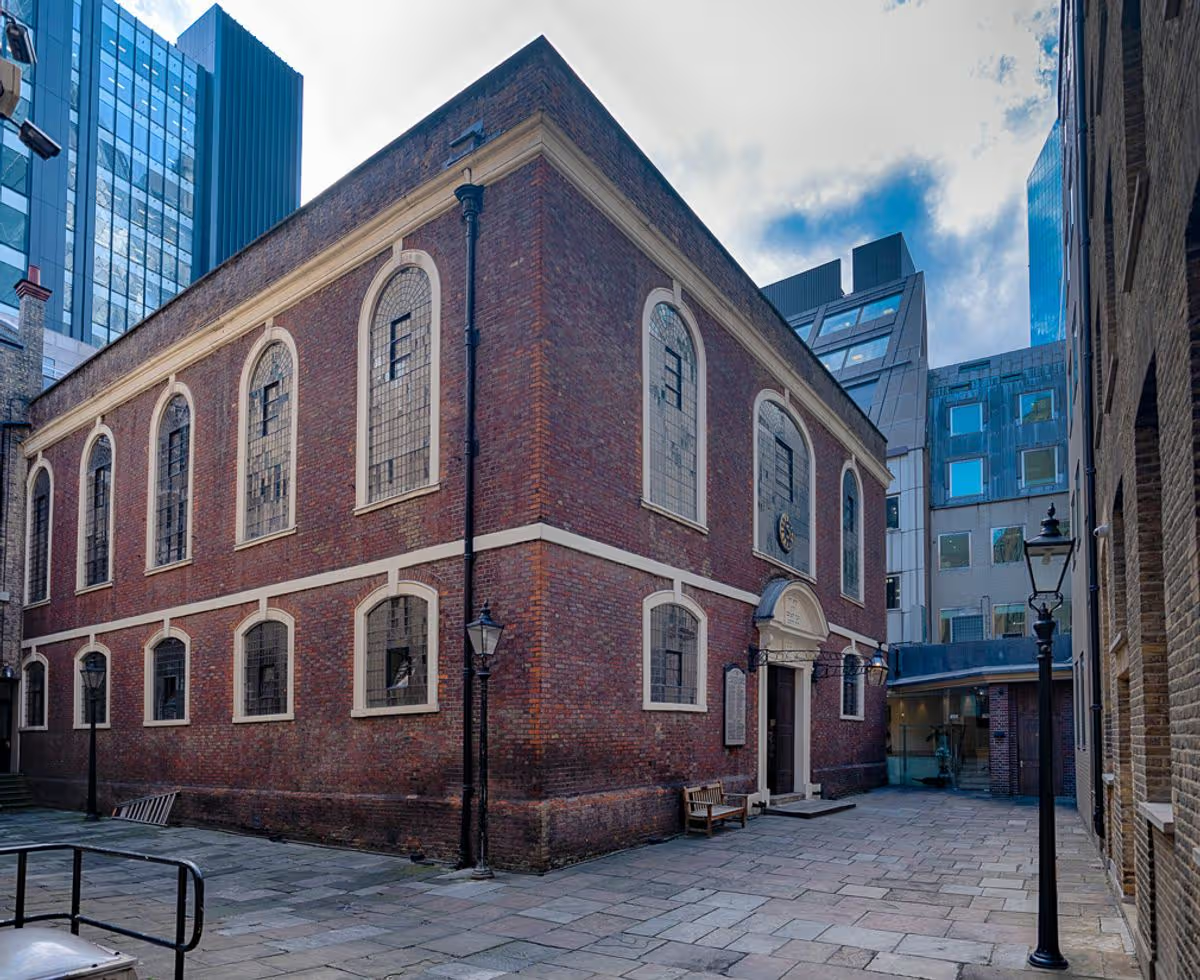
Bevis Marks is the UK’s continuously-run synagogue, having been founded in 1701 (Image: Louis Berk)
On the Tower of London the Inspectors wrote the blueprint sets out how development near the World Heritage Site will be managed, and that any proposal that could affect the site “must protect, and where possible enhance, its international importance”.
The Inspectors added that when taken together, “the policies provide a coherent framework that both secures appropriate protection for heritage assets and supports their viable and sensitive use in a manner that is aspirational yet deliverable”.
The Corporation’s Policy Chair and de facto political leader, Deputy Chris Hayward, said: “This is an outstanding result for the City, for London and for the wider UK economy. The independent Planning Inspectorate has recognised that it is possible to protect one of our nation’s most important heritage assets while still supporting the growth our country needs.
“We are grateful to the Housing Minister for his swift consideration of this matter and for acting decisively. This decision brings us another important step closer to adopting City Plan 2040, which will provide the certainty needed to support future investment, jobs and ensure the Square Mile remains one of the world’s leading business destinations.”
The draft City Plan 2040 will now move through the Corporation’s internal committees, with the expectation it will be adopted before the end of the year.
Get the biggest stories from around London straight to your inbox. Sign up to MyLondon’s The 12 HERE for the 12 biggest stories each day.