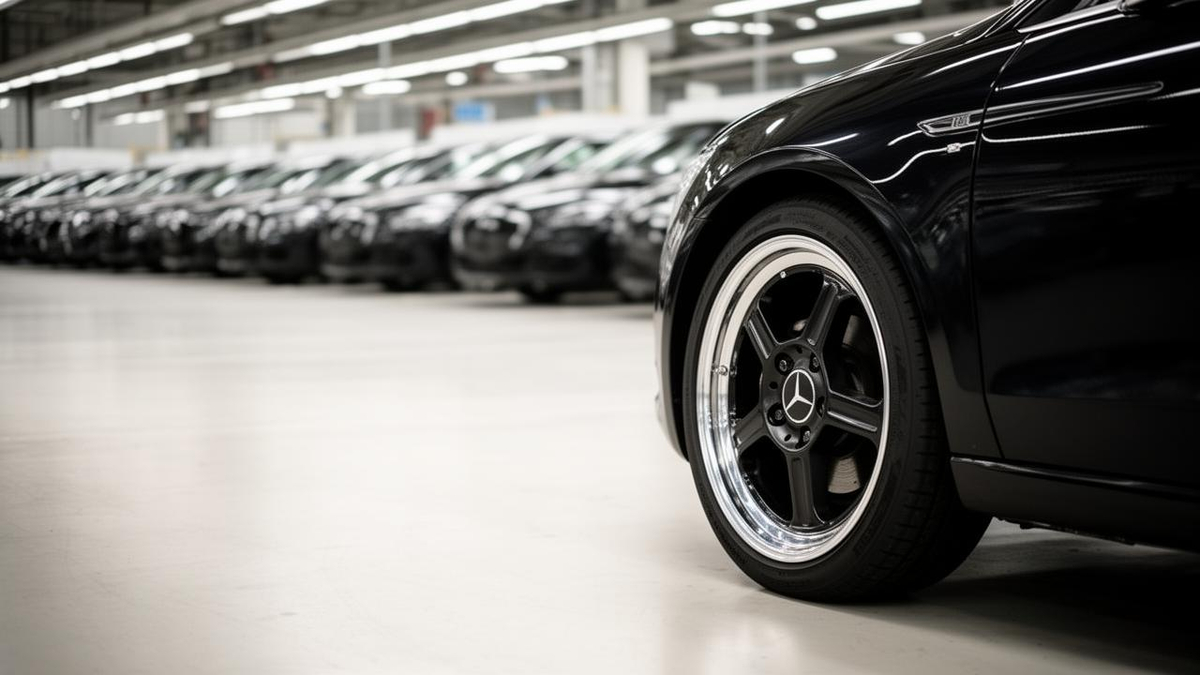
Senator Bernie Moreno (R-Ohio), one of the sponsors of legislation in the United States that would regulate the sale of vehicles involving Chinese entities, disclosed on the 29th that negotiations are continuing to exclude German luxury automaker Mercedes-Benz from the sales ban. The bill was approved by the U.S. Senate Commerce, Science and Transportation Committee in July, and Moreno indicated he aims to secure passage through an expedited procedure this week, before the Senate enters its recess until November.
The bill would prohibit companies in which Chinese entities hold more than 15% ownership from selling vehicles in the United States. Mercedes-Benz would fall under the restriction as currently written because Chinese entities hold approximately 20% of its shares. Moreno stated emphatically, “Obviously, we’re not going to ban Mercedes-Benz vehicles in the United States,” and noted that the key question is whether the ownership stake can be reduced to 15% or below without dealing a severe blow to the company.
Negotiations Over Which Companies Are Covered
Beyond Mercedes-Benz, discussions are also underway on measures that would allow Volvo Cars—majority-owned by China’s Geely Holding Group—to continue selling vehicles in the United States. Moreno said “various options are being explored” but declined to elaborate on specific remedies.
He also noted that British automaker Aston Martin, in which Geely holds a 17% stake, and British brand Lotus, majority-controlled by Geely, could face sales bans under the legislation. Determining which brands among companies with high levels of Chinese capital should be exempted has become a major point of contention ahead of the bill’s passage.
Senate Vote Outlook and Opposition
Senator Elissa Slotkin (D-Mich.), a co-sponsor of the bill, said last week that all Democratic senators support the measure and that Senator Rand Paul (R-Ky.) is the only opponent. Slotkin projected a vote of 99 in favor and 1 against.
Paul maintains that the bill amounts to an unjustified attack on Mercedes-Benz. He told Reuters that he would be willing to advance the legislation if the provision banning Mercedes-Benz were removed, stating, “The bill should not directly target one specific company.”
The bill is also gaining momentum in the House of Representatives, where the House version has attracted more than 100 co-sponsors. Automakers and congressional staff are hopeful the measure will be fully enacted by year-end.
Background on Tightening Restrictions
Regulations introduced by the Biden administration in early 2025 effectively prohibit Chinese automakers from selling or manufacturing passenger vehicles in the United States. The rationale is that sensitive driver data could be transmitted to China, and the U.S. government has also maintained tariffs exceeding 100% on Chinese-made electric vehicles (EVs).
Meanwhile, President Trump signaled earlier this month in a Fox News interview that he would be open to Chinese auto companies manufacturing vehicles in the United States, raising alarm across the auto industry. Automakers, suppliers, and dealers have urged Trump to maintain policies that firmly close off avenues for Chinese automakers to sell, import, or manufacture vehicles in the United States.
China’s Foreign Ministry has repeatedly called on the United States to respect the laws of the market economy and the principles of fair competition, criticizing previous proposals targeting Chinese companies as “unjustified suppression.” Beijing maintains that Chinese vehicles have gained global popularity through technological innovation.