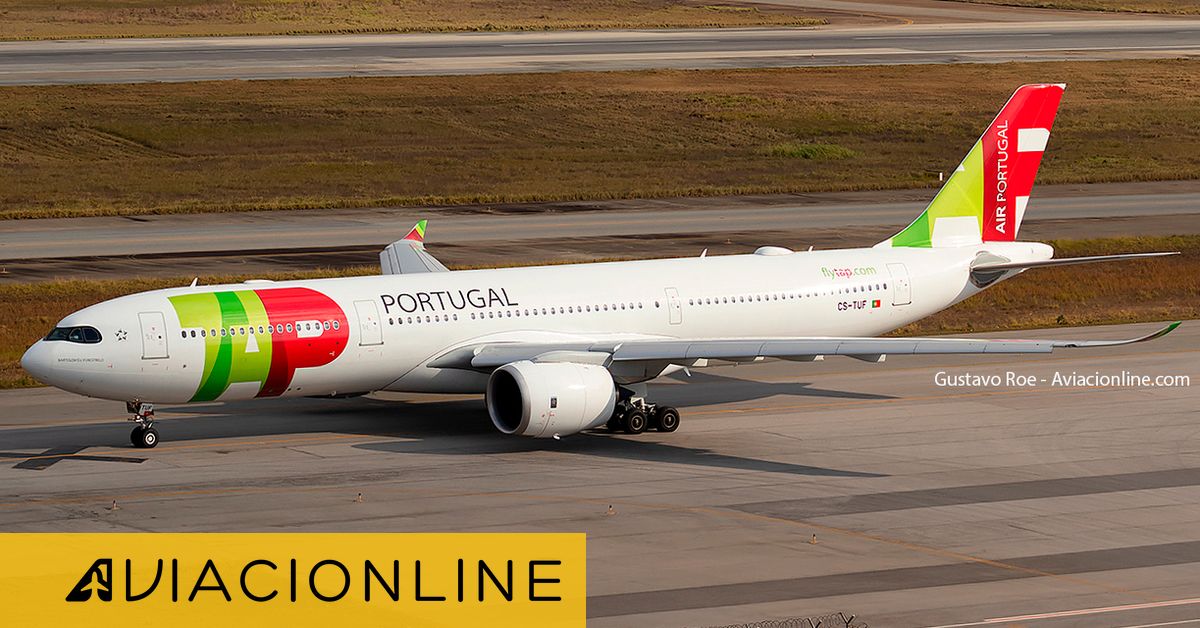
Parpública received this Wednesday, September 30, the improved binding offers from Air France-KLM and Lufthansa for up to 49.9% of TAP Air Portugal. The Portuguese government has around 15 days to assess them and is aiming for a decision in mid-October.
The process covers the sale of up to 49.9% of the share capital: 44.9% to a strategic investor and 5% reserved on a preferential basis for employees. Any portion not taken up by staff could be acquired by the selected partner. The State would retain 50.1%. The transaction will still require approval from the Council of Ministers and the green light from European competition authorities, so the effective closing is expected in 2027.
Air France-KLM reiterated that its interest is “stronger than ever” and that it is bidding for up to 49.9%. Benjamin Smith, the group’s CEO, said the long-term strategic plan seeks “to better position TAP for the future and safeguard Portugal’s connectivity and sovereignty”. “If Air France-KLM is chosen, TAP and Portugal will come out ahead in the global aviation market,” he said.
Who has submitted offers for TAP Air Portugal and for what percentage?
Air France-KLM and Lufthansa have submitted improved binding offers for up to 49.9% of TAP Air Portugal.
How is the capital split in the TAP sale?
The sale covers up to 49.9%: 44.9% for a strategic investor and 5% reserved preferentially for employees. The Portuguese State would retain 50.1%.
What does Air France-KLM propose for Lisbon and TAP?
Air France-KLM proposes turning Lisbon into its only hub in southern Europe, preserving the brand’s Portuguese identity, strengthening Porto and other cities, reinforcing the Atlantic bridge with Brazil, integrating the nearly 9,000 employees and boosting TAP’s assets.
What has Benjamin Smith, CEO of Air France-KLM, said?
Benjamin Smith said the group’s interest is ‘stronger than ever’ and that its plan seeks to better position TAP and safeguard Portugal’s connectivity and sovereignty. He said that if Air France-KLM is chosen, TAP and Portugal will come out ahead in the global aviation market.
When are the decision and the closing of the deal expected?
The Portuguese government aims to decide in mid-October, after about 15 days of assessment. The effective closing is expected in 2027, once approval is obtained from the Council of Ministers and the European competition authorities.
What criteria are weighed beyond price in choosing the partner?
Investment, fleet, maintenance, sustainable fuels, industrial project and labour commitments are being weighed.
In a letter addressed to the Portuguese parties, Smith set out five pillars: preserving the brand’s identity and “Portuguese spirit”; turning Lisbon into the group’s exclusive hub in southern Europe, while also strengthening Porto and other cities; reinforcing the Atlantic bridge — north and south, and especially Brazil — with the backing of Delta Air Lines and the transatlantic joint venture, which would provide access to more than 375 destinations; integrating TAP’s nearly 9,000 employees through a social dialogue approach built on trust, respect, transparency and confidentiality; and boosting TAP’s assets (passengers, cargo, loyalty and MRO) within a European champion committed to Portugal.
The group already operates at five Portuguese airports (Lisbon, Porto, Faro, Funchal and Ponta Delgada). For winter 2026 it announced a 12% capacity increase in the country. Together with Transavia, it offers up to 346 weekly frequencies across 26 routes to France, the Netherlands and Belgium in the summer season. Since 2019, Air France and KLM have increased their capacity in Portugal by 44%. A KLM DC-3 launched commercial service at Portela in 1942.
Delta and SkyTeam back the bid, with an emphasis on North Atlantic connectivity. In earlier phases, Air France-KLM also offered the option of the State receiving shares in the group itself instead of cash only, an alternative Lufthansa did not include.
Lufthansa submitted an “updated and improved” offer and presented itself as the partner with a “proven track record” in developing network airlines, with a focus on South America. The government had considered both proposals “broadly so close” that it opened a final round of negotiation with the two of them. Price matters, but it is not the only criterion: investment, fleet, maintenance, sustainable fuels, industrial project and labour commitments are all being weighed.
The New Concert of Europe: the Pivot State, the end of air sovereignty and the consolidation of the European blocs
For TAP, the deal is about scale in an increasingly concentrated European market. Lisbon offers a privileged geographic position towards Brazil, Portuguese-speaking Africa, the islands and the diaspora. Whoever wins defines the map of southern European hubs and the future of Portuguese connectivity.