
Very little seems to faze City of London veteran Elissa Bayer, Rathbones’ business originator & strategic consultant.
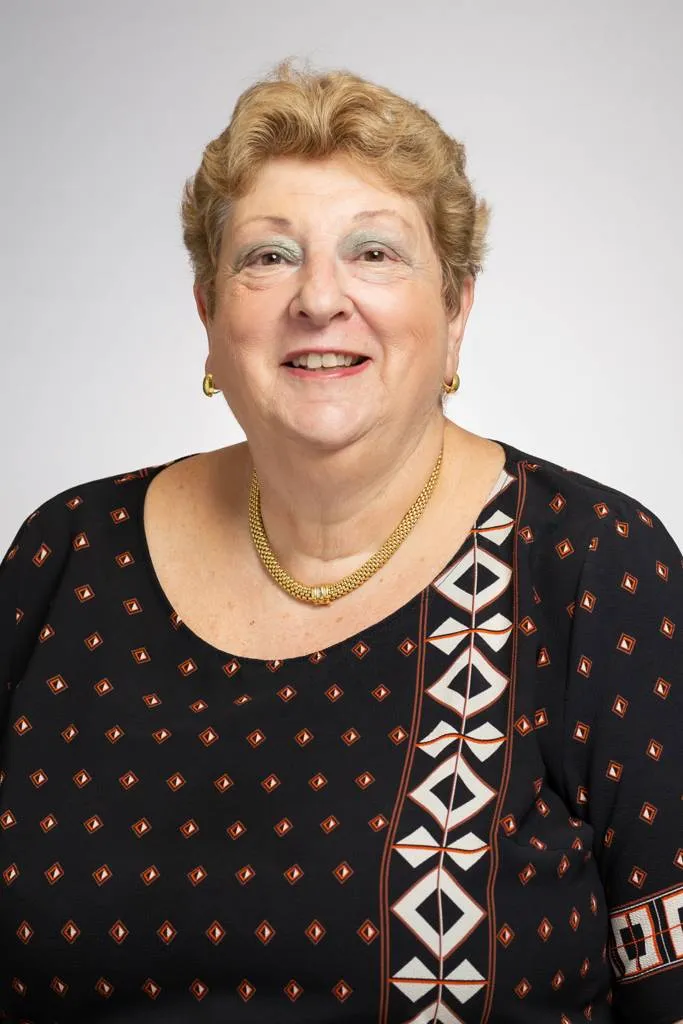 Elissa Bayer
She has the gritty determination one would expect from a woman who started her wealth management career in 1972, when the capital’s financial district was visibly “a man’s world”.
Take Bayer’s recent family visit to Israel. This was before the fragile ceasefire, so she spent some of the time sheltering from missiles.
“Having gone back and forth from Israel, I can’t say that I like it, but I’m slightly more used to missiles and rockets than other people,” she says wryly.
It brings to mind a dilemma Bayer faced on September 11, 2001, after the terrorist attack on the World Trade Center in New York.
“In London, they made everybody leave the City. But I thought, I’m doing a broadcast for the BBC, how can I leave?” she says.
“It was a totally mad thought, because they didn’t know if something was going to hit London – and lo and behold, I just carried on.”
Pathways to change
Bayer’s resilience will come as no surprise to those who attended last year’s PIMFA Women’s Symposium to hear Bayer speak about her successful City career.
The Symposium returns on May 19 and 20, providing a range of content to empower women working in financial advice and related fields.
When I came into the City, it was totally white male – there wasn’t anything else
Some of that is geared towards diversity and inclusion, showing that even though there is still work to be done, conversations that can bring about change are happening.
“When I came into the City, it was totally white male – there wasn’t anything else,” says Bayer.
“I was also Orthodox Jewish and at that time, there were firms that you couldn’t go to if you were Jewish. It wasn’t, I would say, overt, but basically you didn’t get in and there were certain firms you didn’t apply to.”
Some firms, she says, were “almost totally Jewish” as you “couldn’t get in any other way.” But even the more welcoming firms would probably fall short of today’s standards on diversity and inclusion.
It was different when I started because there weren’t loads of women, so you made your own pathway
“I leave early in the winter on Fridays and when I got a job at Joseph Sebag, they checked that I really was going home early for the Sabbath on Friday,” says Bayer.
“They had other Jewish members of staff who were not as observant, so they wanted to make sure that I was seriously doing it.”
Joseph Sebag & Co was a private client specialist and one of the largest stockbroking firms in the City at that time.
“They were incredibly supportive. At every firm, including Investec and Rathbones, which took them over – everyone has been very supportive in what I’ve done,” says Bayer.
“But it was different when I started because there weren’t loads of women, so you made your own pathway.”
I would say that there certainly was a gay community, but it was a totally different era of behaviour
The same could be said for other underrepresented groups.
“There were no people of colour,” recalls Bayer. “I would say that there certainly was a gay community, but it was a totally different era of behaviour where people didn’t talk about it or possibly hid it.”
An anecdote starkly illustrates that point. Bayer knew of one person who was gay and while working for a previous firm, he had bumped into one of the senior partners at a gay club.
“The partner told him ‘if you ever say you saw me in this bar’ – basically, he would lose his job,” says Bayer.
But as more women came through, this paved the way for other underrepresented groups to become more visible.
Starting Out: Why women need more women in financial advice
“When we did a female conference, which I was very pleased about, suddenly you got a gay speaker, you might have got a black speaker, you got different people,” says Bayer.
Change, however, has not come easily to an environment so steeped in male tradition. The City was, says Bayer, “set up by men for men”. It was common for them to mistake women occupying a senior role for a secretary, because that was a job women typically did.
“I’d just moved to one firm, where I had two female assistants,” recalls Bayer. “There was a fellow who sat at the next desk – it was an open-plan office – and on the third day he said, ‘do you mind if I ask you something?’”
When Bayer told him to go on, his response was ‘when are your typewriters coming?’
If he saw three women together, he couldn’t imagine they’d be doing anything other than typing
“I think I was a main board director and that hadn’t been announced officially,” says Bayer. “The office manager was deeply mortified. But the point was, if he saw three women together, he couldn’t imagine they’d be doing anything other than typing.”
Bayer’s anecdotes about the archaic rules that private members clubs in the City imposed on women are amusing because they defy logic to the point of absurdity.
It is baffling why women could use the front door in the evenings but were only allowed in through the back door at lunchtimes. If they had a lunch meeting when nobody was on the door to let them in, they had to run quickly through the front before anyone spotted them.
Finding allies
For years, City firms assumed that once a woman got engaged to be married, she would stop working. As Bayer progressed to senior roles – director, head of private clients and so forth – she noticed that the wives of her male peers did not tend to work full time and that shaped how they reacted to her.
I don’t think you needed to be like a man. I very rarely wore black because everybody was in black suits
“What you had to have were men who understood women – and I suppose you gravitate towards those people,” she says.
One of her former bosses – a man with two daughters and a wife who had gone to Oxford University – fell into that category of male ally. “He was like a mentor to me,” says Bayer.
But did she have to emulate the men around her to progress in her career?
“I don’t think you needed to be like a man. I very rarely wore black because everybody was in black suits and I didn’t wear trousers, partly for that reason,” she says.
I felt there was a virtue in being a woman, but I thought you couldn’t be what I called a’ shrinking violet’
“I felt there was a virtue in being a woman, but I thought you couldn’t be what I called a’ shrinking violet’.”
However, some took that perception too far. Bayer has met women who try so hard to prove they are just as good as men that they are not helpful to other women in the industry.
“There’s definitely quite a tough streak in some women that mean they don’t promote their own sex in that way, because they feel it’s a weakness,” she says. “I think that’s wrong because you know what some of the problems are, so therefore you should help.”
Support networks
When Bayer was bringing up her family, City firms made few allowances for both men and women to achieve a work/life balance. The ability to ask about flexible hours or working from home was decades away.
My husband’s practise was much nearer home so he would come home between surgeries and we had full-time help
“I think people just accepted that they came up to town on the 6.42am train on Monday and some of them left on Friday at 5.40pm,” says Bayer. “Often many of them, at a certain level, had places in town and didn’t go home.”
With support from her husband, Max – a doctor – Bayer managed to juggle her career with family life.
“My husband’s practise was much nearer home so he would come home between surgeries and we had full-time help,” she says.
Without that, Bayer doubts she could have continued in her job. “But not everybody was prepared to do that and depending on where you were in the firm, could you afford to have help? I think that held people back for a long time,” she says.
To do what I did at that time, you had to have a support network and I still think that is necessary
It was not so much being female in a male-dominated industry that was isolating for Bayer – it was progressing into leadership roles and realising there was nobody similar around her.
“I was the first woman director at my firm and there weren’t other people to talk to, so my husband has been an enormous sounding board because you do have to let off to somebody,” she says.
“To do what I did at that time, you had to have a support network and I still think that is necessary.”
Queen Elizabeth II and her husband, Prince Philip, apparently came to the same conclusion, as Bayer once discovered.
You still tend to find that the senior women are talked about much more because there still are so few of them
“I was involved with the Duke of Edinburgh Awards and we were at a reception with Prince Philip,” recalls Bayer. “Prince Philip turned to Max, and said, ‘why are you here?’ Max said ‘actually, it’s due to my wife’ and Prince Philip replied ‘yes, I can understand that.’”
Taking stock of where we are now in financial services, Bayer sees Covid as a trigger for everyone to “do more thinking.”
“You need to think what it’s like to be ‘not you’ and I think that may have helped,” she says. “But you still tend to find that the senior women are talked about much more because there still are so few of them.
“Even now – despite the law, the rhetoric and everything else – firms have to make more of an effort to be inclusive.”
The PIMFA Women’s Symposium 2026 will take place on May 19/20. See the full programme here