
Sometimes the best way to appreciate a place is to not be from there. This feels like a weird thing to state in words, but I suspect you get what I mean. There’s can be a perspective advantage to being an outsider, letting you see things about a place that the people who are immersed in it can’t see, in the way fish don’t seem particularly interested in water. Artist David Hockney, though, he was very interested in water, especially if that water was contained within a blue-painted swimming pool in Los Angeles, and, ideally, populated with naked men. David Hockney died yesterday, at the visually compelling age of 88, leaving a legacy of some of the most powerful and exuberant art of the last century, and, since we’re still a car site, one BMW art car.
Most of us know Hockney from his long-running series of pool-related paintings, paintings that I think capture the essence of what Southern California wishes to be, and, sometimes, actually is. And person who was able to spot this essence and so effectively capture it, visually, was someone who comes from a place about as far, visually and conceptually, from sunny SoCal as you can imagine: West Yorkshire, England.


Born in 1937, Hockney went to the Royal College of Art, and began his art career with works that could be considered Pop Art adjacent, sort of. He grew tired of London and its grayness, its expense, and just the general Londoness of it all, and moved to Los Angeles in 1964, where he began to paint the works that I think most people know him for today.
Like 1967’s A Bigger Splash:
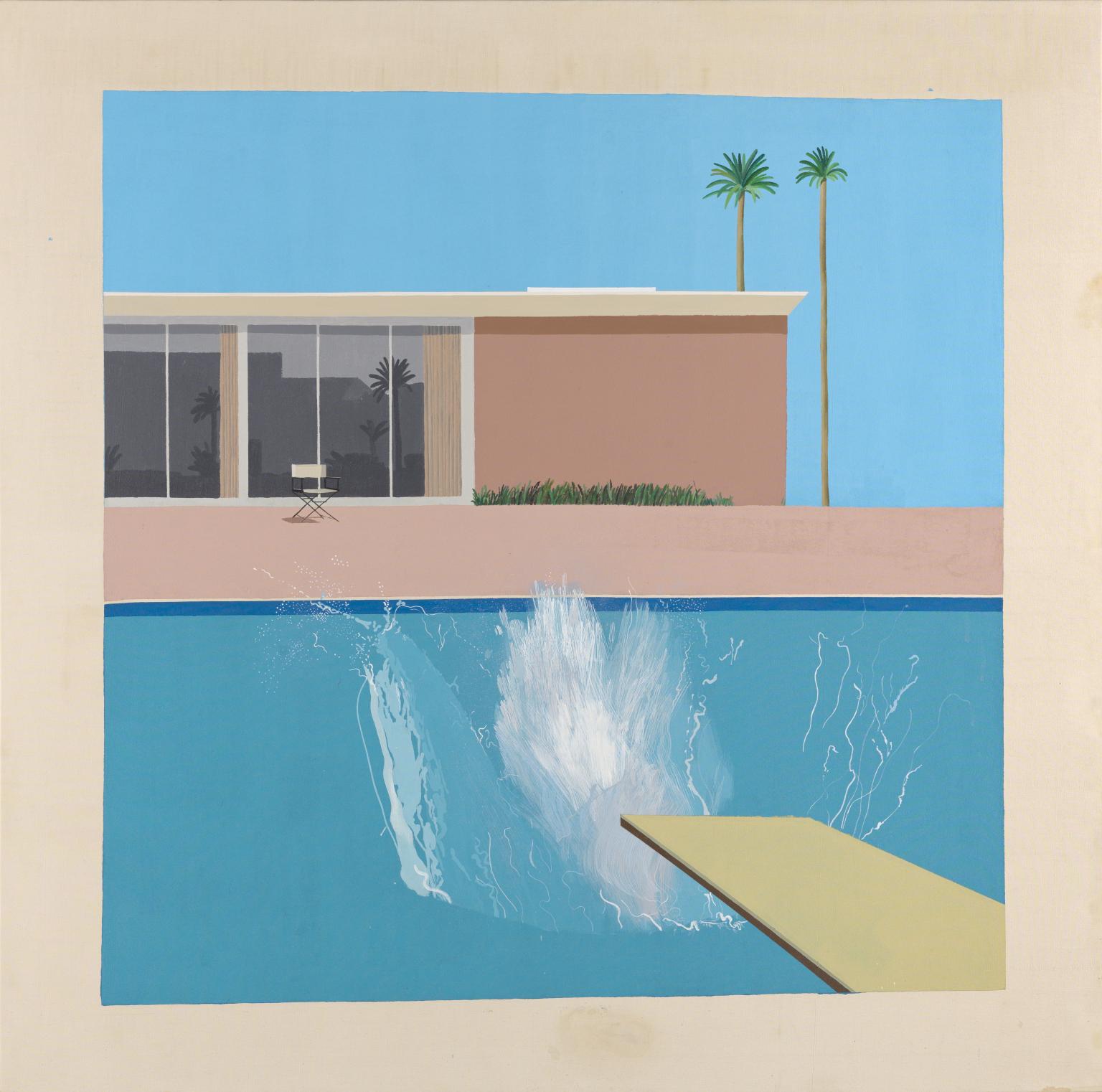 Image: Tate Gallery
Hockney is far more than just one work, but if you had to pick one, at spearpoint, this one may be the one to pick. You can somehow feel the bright, relentless sunlight, so much so that looking at this painting in a dark room still makes me want to squint.
It’s simple planes and flat expanses of color save for the palm trees, a line of plants and that splash, that exuberant, untamed splash of paint that represents a splash of water. Santa Monica should make this painting their flag.
The difficulties and challenges of rendering water, especially pool water, in paint were a huge draw for Hockney, and he tried all manner of approaches to the problem, from the highly abstracted:
 Image: Apollo Magazine
…to the more naturalistic:
 Image: Vocal Media Art
Hockney absolutely delighted in the process of trying to render water. And that’s a key part of all of Hockney’s art: delight. The man seemed to love the world and all the brightly sunlit things in it, and his art was a means to attempt to broadcast that joy wherever he could.
He also was a fan of technology and playing with tech in novel ways to create art. One of my favorite things that Hockney did was to embrace fax machines for art purposes, sometimes sending his works to gallery shows entirely via fax, with instructions on the first page about how to assemble the hundreds of pages to follow into a coherent work.

It’s clever and I love how the limitations of what faxes can do define the work. Plus, there’s something just fun about turning a utilitarian office machine like a fax into a medium for art.
This is still an automotive site, so let me drag this back around to cars and driving. For example, Hockney produced some of what I think are the best representations of what a desert highway feels like to be on, with his interesting photo collages, like the incredible Pearblossom Hwy, which you can see him talking about here:
It’s a remarkable work, a sort of painting made from 800 photographs, and was originally made for a Vanity Fair story about Humbert Humbert, the creepy narrator of Nabokov’s novel Lolita, and his long road trip across America. Even without that context, it conveys the excitement, loneliness, freedom, and adventure of a long desert drive so remarkably well.
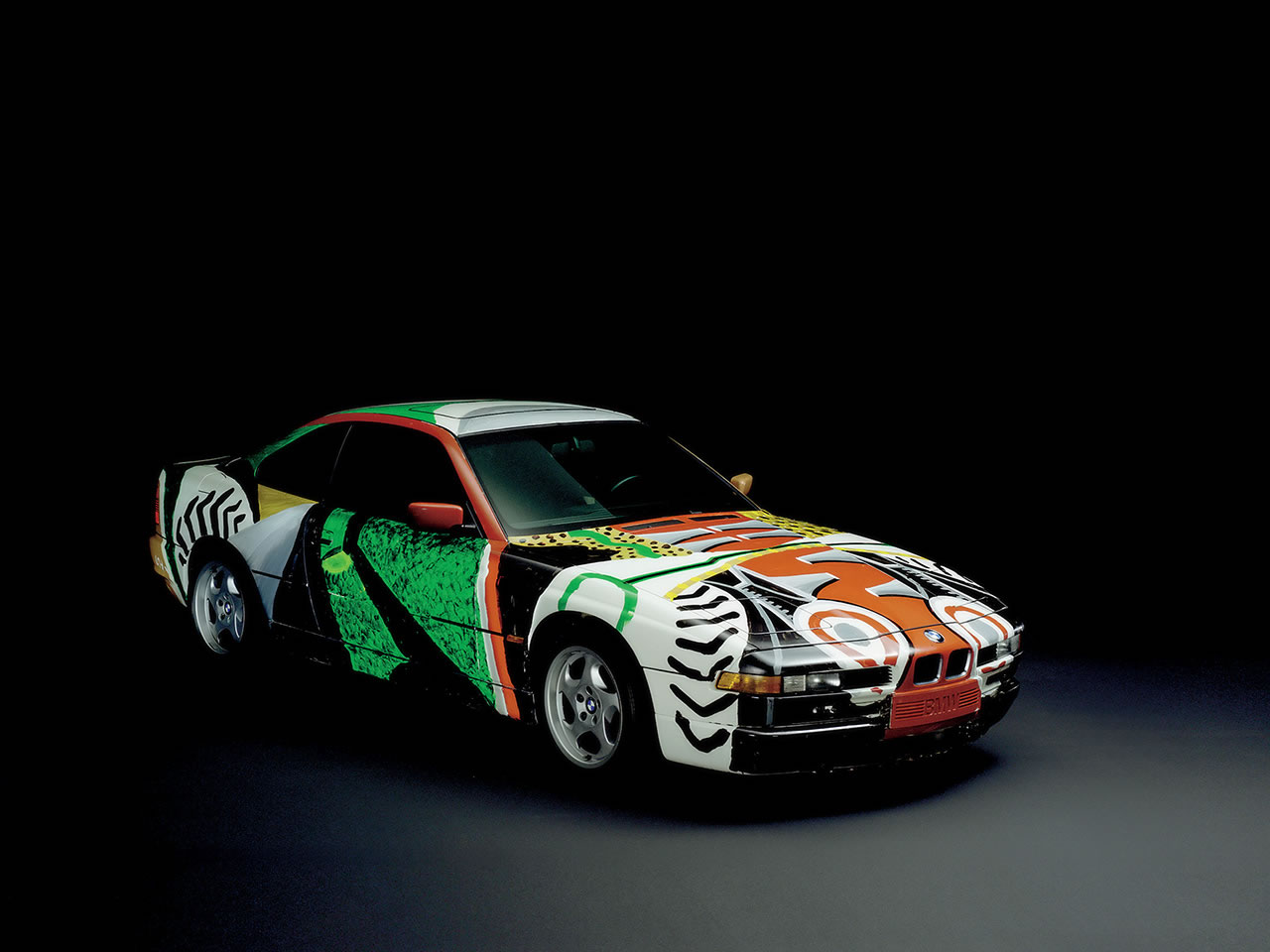
Hockney did BMW’s 14th art car in 1995, with a BMW 850 CSi as the medium. Hockney sought to represent some of the interior parts of the car on the outside, like having a stylized intake manifold on the hood, and on one side we see the occupants of the car, a human driver and a little dachshund, likely inspired by these fellas:
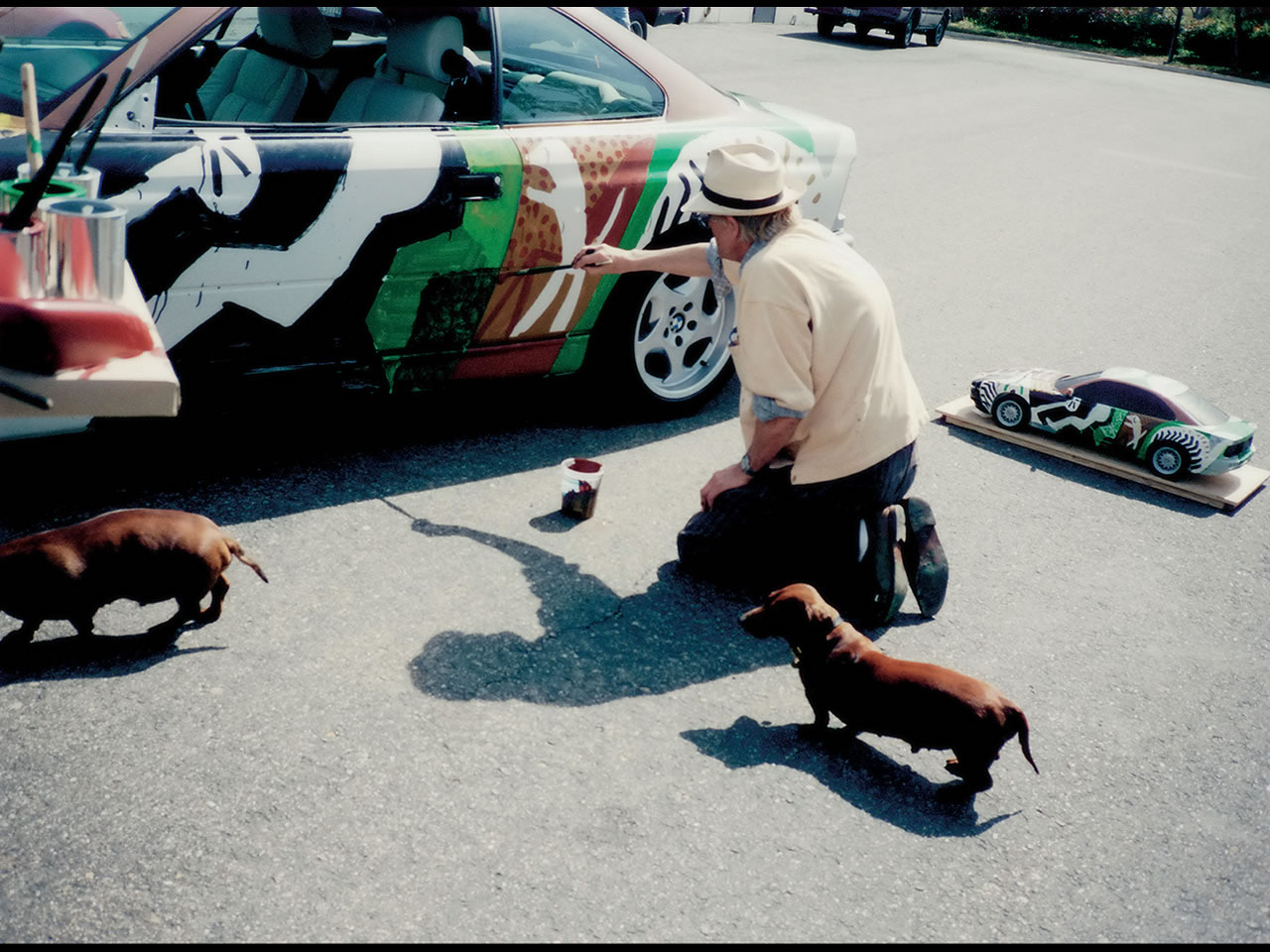
Hockney’s statement about painting the BMW Art Car was short but summed up the artist’s longtime intent very well: “It was lots of fun.”
David Hockney was lots of fun indeed, an artist who reveled in the joys of life, and who sought to spread that joy visually, in all manner of novel ways. He had a long and productive run, and I have a lot of respect for what he brought to the world.
Rest in peace, ideally by a pool.