Following the Federal Reserve’s June FOMC meeting, a striking phenomenon has emerged: officials have gone almost completely silent. A newly released research report from Deutsche Bank sounds the alarm, noting that such unusually sparse public speaking schedules have historically appeared on the eve of major monetary policy shifts, and investors should remain highly vigilant.
In a report published on June 30, Deutsche Bank’s fixed income strategy team systematically reviewed the Fed’s communication density. Data shows that in the two weeks since the June meeting concluded, public speeches and media appearances by Federal Open Market Committee (FOMC) members have been notably scarce. While still within the historical range by conventional standards, the degree of scarcity is sufficient to raise strategists’ concerns.
Deutsche Bank strategist Matthew Raskin and colleagues explicitly stated in the report that this phenomenon likely signals the Fed is advancing some form of communication tightening. This tightening is not merely a scheduling coincidence but more likely a deliberate strategic choice aimed at delivering a more unified and controlled signal to the market during a policy-sensitive period.
A look back at historical data makes this signal even more significant. Using Bloomberg’s economic calendar, Deutsche Bank’s strategy team tallied the number of speeches and media appearances by officials in the two weeks following each past FOMC meeting, using this as a proxy for communication density. To exclude seasonal distortions, the statistics deliberately omitted data following December meetings, a period historically marked by sparse commentary due to holidays.
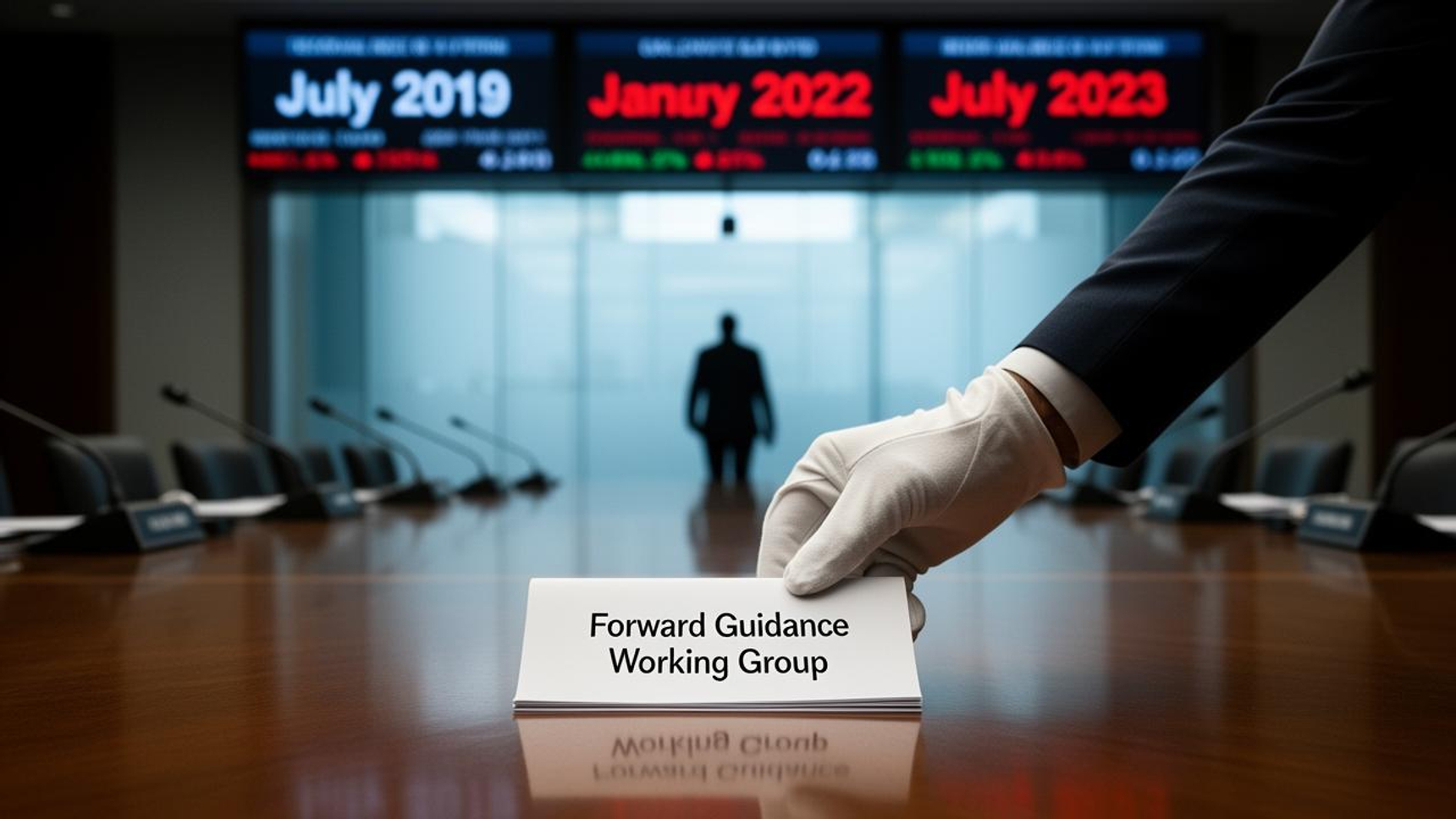
The results reveal a clear pattern: periods with similarly low speech counts are concentrated precisely around three key policy inflection points—July 2019, January 2022, and July 2023. After the July 2019 meeting, the Fed subsequently began a rate-cutting cycle; after January 2022, the Fed swiftly pivoted to aggressive rate hikes to combat inflation; after July 2023, the hiking cycle neared its end as markets began to price in a pause and eventual pivot. The common thread across these three periods is that the Fed was facing major policy directional decisions and tended to maintain a more unified public stance.
Since taking office, current Fed Chair Warsh has made several adjustments to the Fed’s external communication approach, which have been prominently reflected during this silent period. At the most recent press conference, Warsh deliberately avoided forward guidance—a communication tool widely used for many years—and exercised considerable restraint regarding policy interpretations beyond the published statement, showing reluctance to offer additional explanation on the committee’s decision-making rationale. This posture stands in stark contrast to previous chairs’ tendency to guide market expectations through public remarks.
Meanwhile, Warsh announced at the June meeting the establishment of five Fed working groups, the first of which focuses specifically on external communication mechanisms. This institutional-level action suggests the Fed may be redefining its dialogue with the market at the systemic design level, rather than merely reflecting an individual official’s stylistic change.
Market sources indicate that while the current round of post-meeting commentary is indeed low, it has not yet breached the all-time minimum. However, considering that the three aforementioned historical comparable periods all accompanied major policy pivots, the Fed’s current silence is no longer just a fine-tuning of communication style but more likely a forward-looking signal worthy of caution. Investors need to consider: behind officials’ deliberate reduction in public statements, is the Fed brewing its next major policy adjustment?
From a market impact perspective, declining communication density means market participants face greater difficulty obtaining policy signals from official channels. During an information vacuum, markets may become more susceptible to individual data points or isolated events, with the risk of amplified volatility. Deutsche Bank’s report essentially reminds investors not to mistake the current silence for calm, but rather to view it as a prelude to a potential turning point.