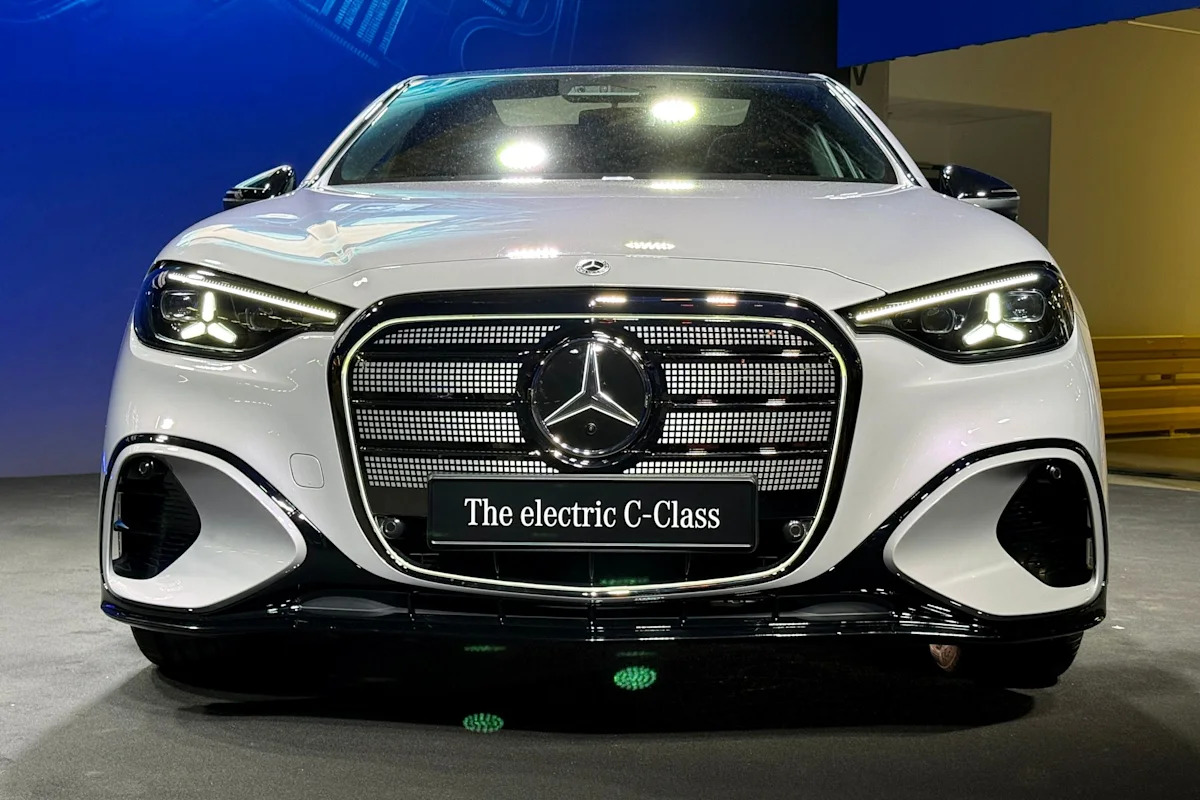
 The Mercedes-Benz electric C-Class is displayed on stage during the opening ceremony of the expanded Mercedes-Benz plant in Kecskemet. (is associated with: «Mercedes boss praises major Hungarian plant as ‘benchmark in Europe’») Julian Weber/dpa
Mercedes chief executive Ola Källenius on Monday called the company’s massive factory in Hungary the “benchmark in Europe,” as he attended a ceremony to mark the opening of the site’s new extension alongside Hungarian Prime Minister Péter Magyar.
Källenius said the Kecskemét plant is “proof that top Mercedes-Benz quality and top cost efficiency can go together – with factory costs that set the benchmark in Europe.”
Magyar called the plant a symbol of German-Hungarian cooperation.
The new prime minister, who succeeded Viktor Orbán in May, said Mercedes’ presence strengthens Hungary’s position in the global automotive supply chain, with Germany, the country’s most important investor for decades.
“We are proud that Hungarian and German knowhow combine here in this plant,” he added.
Kecskemét is situated around 80 kilometres south-east of the Hungarian capital, Budapest.
The Mercedes group has significantly expanded the site, where vehicles have been manufactured since 2012.
It is now the country’s largest car factory, and with a potential annual capacity of up to 400,000 vehicles, Kecskemét will become the largest Mercedes plant in Europe.
At a cost of around €1 billion ($1.14 billion), two new halls for bodywork and assembly lines have been added to the plant. In addition, a second press shop, a new paint shop and a battery assembly facility have also been built.
The A-Class and the GLB SUV are already being produced in Kecskemét, with the electric C-Class now being added to the line-up.
Feeling the financial strain from US tariffs and intense competition in China, Mercedes has seen a decline in sales in recent years.
In response, the company is aiming to double the proportion of production in low-wage European countries from 15% to 30% over the next few years.
According to chief financial officer Harald Wilhelm, production costs in Hungary are 70% lower than in Germany.
Other German companies including Volkswagen and BMW also have sites in Hungary.