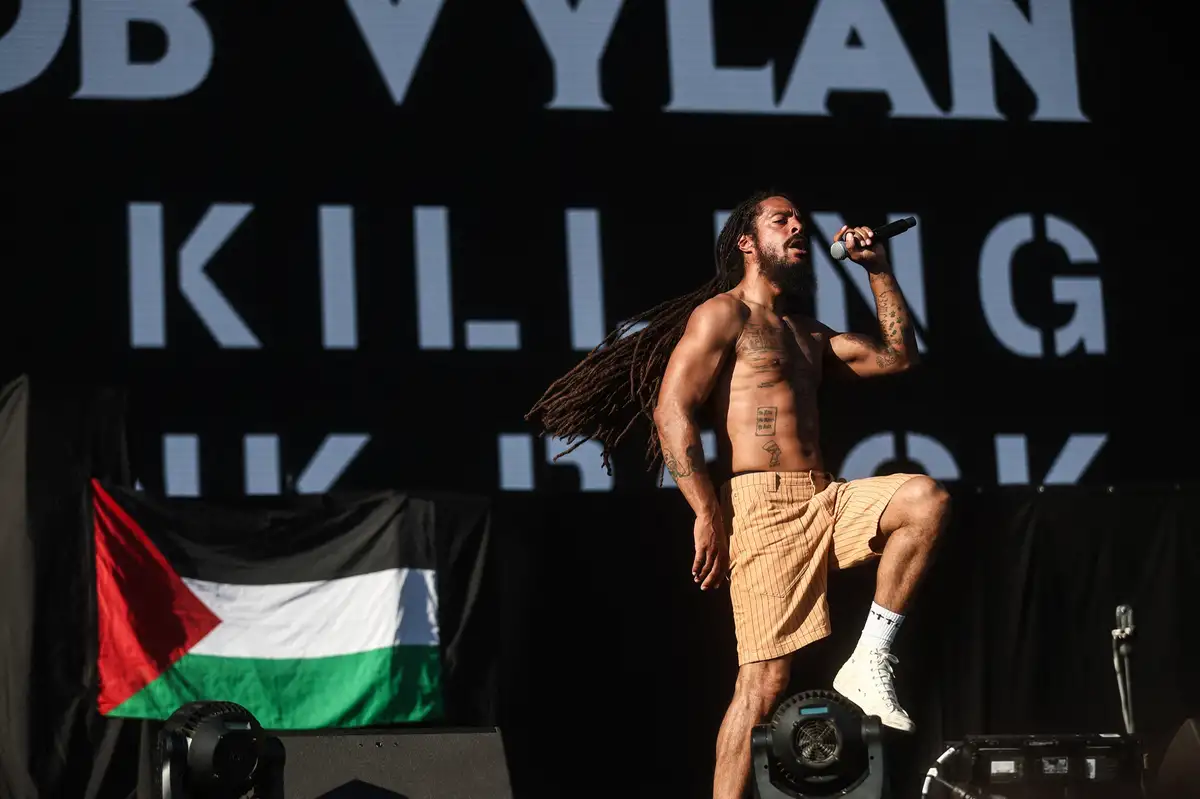
The magazine says it has seen a German police file describing Robinson-Foster as someone who had spread antisemitic narratives and “Hamas propaganda” capable of “radicalising certain sections of the [German] population” and serving as an “ideological justification” for terrorist organisations or lone attackers.
The document reportedly also concluded that he represented “a danger to public security and order in Germany.”
Robinson-Forster told The Intercept: “It is frankly absurd to claim that I am a threat to Germany’s national security. It is equally absurd to claim that we are spreading propaganda on behalf of a banned organisation.”
Germany has some of Europe’s strictest laws and policies on combating antisemitism, reflecting the country’s historical responsibility following the Holocaust.
The band has consistently denied allegations of antisemitism and insisted the slogan was directed at the Israeli military rather than Jewish people, describing it as political criticism of Israel’s conduct in Gaza.
Criminal investigations into the Glastonbury performance were later dropped by British authorities, meaning neither Robinson-Foster nor fellow band member Laurence George were charged over the chants.
Robinson-Foster’s German lawyer, Alexander Gorski, slammed the decision, telling The Intercept: “From the perspective of the rule of law, it is highly problematic that someone can be refused entry because of a political statement that does not constitute a criminal offence.”