August 10, 2026 4:07 PM, EDT
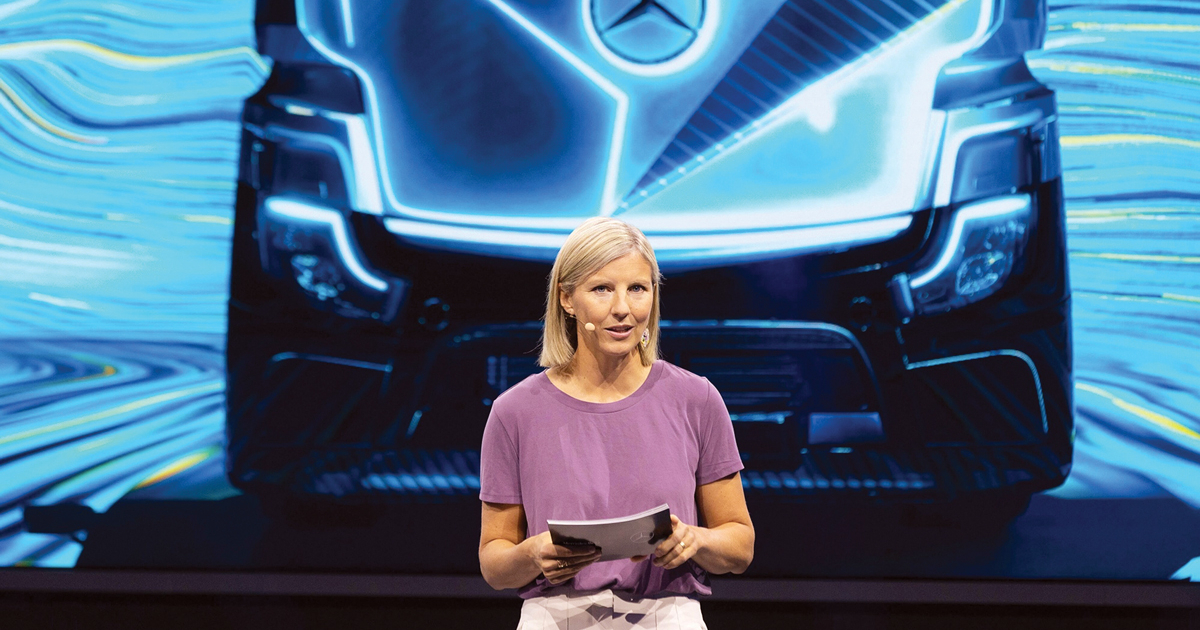
The move “reflects our confidence in the U.S. market and our commitment to strengthening our manufacturing footprint,” Radstrom said. (Krisztian Bocsi/Bloomberg)
Key Takeaways:
Daimler Truck said Aug. 7 its planned largest U.S. assembly plant will expand North American capacity and not prompt additional plant closures beyond Portland.Executives said the facility reflects confidence in rising truck demand, while DTNA’s second-quarter orders jumped 156% year over year to 35,379 vehicles.Construction is scheduled to begin by the end of 2026 and the plant is expected to start operations in 2029.
Daimler Truck does not expect to shutter any North American manufacturing plants beyond its Portland, Ore., site as a consequence of plans unveiled Aug. 6 to build its largest U.S. assembly facility, its top executive said Aug. 7.
The German parent company of Daimler Truck North America sees the plant — whose location is yet to be decided — as an expression of confidence in future truck demand in the region and a tool to aid production flexibility and vocational truck ambitions.
The plant is not, executives stressed during Daimler Truck’s second-quarter 2026 earnings call and an Aug. 6 media briefing, a response to tariffs imposed on imports of heavy- and medium-duty trucks and parts, plus steel, aluminum and rubber.
A slim majority of Freightliner and Western Star trucks built in North America are assembled at two plants in Mexico: Saltillo and Santiago Tianguistenco.
DTNA’s Cleveland plant in North Carolina is currently the company’s largest manufacturing site in the U.S.
The southeastern U.S., particularly the Carolinas, is a heavy favorite for the greenfield facility because North Carolina has long been a production nucleus for DTNA and Freightliner.
Alongside the Cleveland plant, the Mount Holly and Gastonia plants are also in the Tar Heel State.
“This is a long-term investment, which reflects our confidence in the U.S. market and our commitment to strengthening our manufacturing footprint. The new facility will help create a production network that’s more flexible, resilient and positioned to support future growth,” Daimler Truck CEO Karin Radstrom said during the Aug. 7 call.
Construction of the new plant will begin by the end of 2026. It is expected to begin operations by 2029.
“It’s early days with this plant. It is a plant which will increase our overall production capacity in the North American market,” Radstrom said, adding: “But for now, we don’t have any plans to shut down any other factory sites.”
Freightliner exits Portland for first time in 9 decades
Radstrom’s response to a comment from an analyst about the future of existing plants came in the context of news emerging at the end of July that DTNA would close its Swan Island manufacturing plant in Portland on Oct. 30, ending Rose City manufacturing by Freightliner for the first time since 1947.
“It’s a quite logistically challenging place to have a plant as most of our customers and most of our suppliers are on the East Coast,” Radstrom noted. “As an example, we’re shipping cabs across the country to this plant. And, as I said, it’s a rather small volume plant that we can absorb within our current network.”
DTNA will move manufacturing of the Western Star X-Series, Freightliner eCascadia and Freightliner eM2 trucks to North Carolina and South Carolina.
The company is also increasing the size of the workforce at Mount Holly, O’Leary told Transport Topics at the start of July. The plant, which focuses on production of Freightliner trucks, will bring back 400 employees laid off in July 2025 as part of 2,000 production plant job cuts across North American DTNA manufacturing facilities.
In addition, DTNA plans to hire an additional 200 employees for the Mount Holly facility by the end of 2026 as part of plans to add a second shift.
Raising the head count at Mount Holly is a shorter-term solution to a pleasing development for DTNA — North American truck demand is on the rise due to the rebound in the freight market.
Market confidence
Daimler Truck on July 22 lifted its full-year 2026 truck and bus sales guidance for DTNA by 10,000 vehicles to 160,000-180,000, citing improving demand based on the upswing in the freight market since the beginning of 2026.
Freightliner and Western Star captured a combined 40.8% share of 2025 Class 8 sales, and the brands’ market share in the first six months of 2026 totaled 39.6%, according to Omdia Automotive data.
But Radstrom and Chief Financial Officer Eva Scherer said Aug. 7 that the second half of the year had seen an improvement in the brands’ market share, with the latter telling analysts the brands won a 45% Class 8 share in July.

Brad Gulick of Eaton Mobile Power Group discusses hydraulic systems that power trucks. He addresses dump pump sizing and more. Tune in above or by going to RoadSigns.ttnews.com.
Daimler Truck did, however, maintain its 2026 North American heavy-duty truck sales forecast of between 250,000 and 290,000 units.
That said, DTNA’s orders rocketed 156% higher year on year in Q2 to 35,379 trucks and buses from 13,842 vehicles in the year-ago period.
Scherer also told analysts that since the start of the third quarter, “the larger fleets and the rental and leasing customers are ordering again, and they’re placing larger orders again especially, which is a part of the market that we’re particularly exposed to.”
Freightliner’s Cascadia model is the best-selling on-highway tractor in North America, but DTNA and Daimler Truck are keen to increase Western Star’s share of the vocational truck market, as was emphasized at the company’s 2025 capital markets day and again on the earnings call.
The new plant is intended to support those ambitions. As a result of an increase in vocational orders and sales during the longest downturn in freight market memory, DTNA completely inverted its production model at the Cleveland plant.
“This investment gives us the rare opportunity to start with a blank sheet of paper and create a state-of-the-art facility, which will be designed around the latest manufacturing technologies, a flexible production system and, of course, the products that will define our future,” Radstrom said.