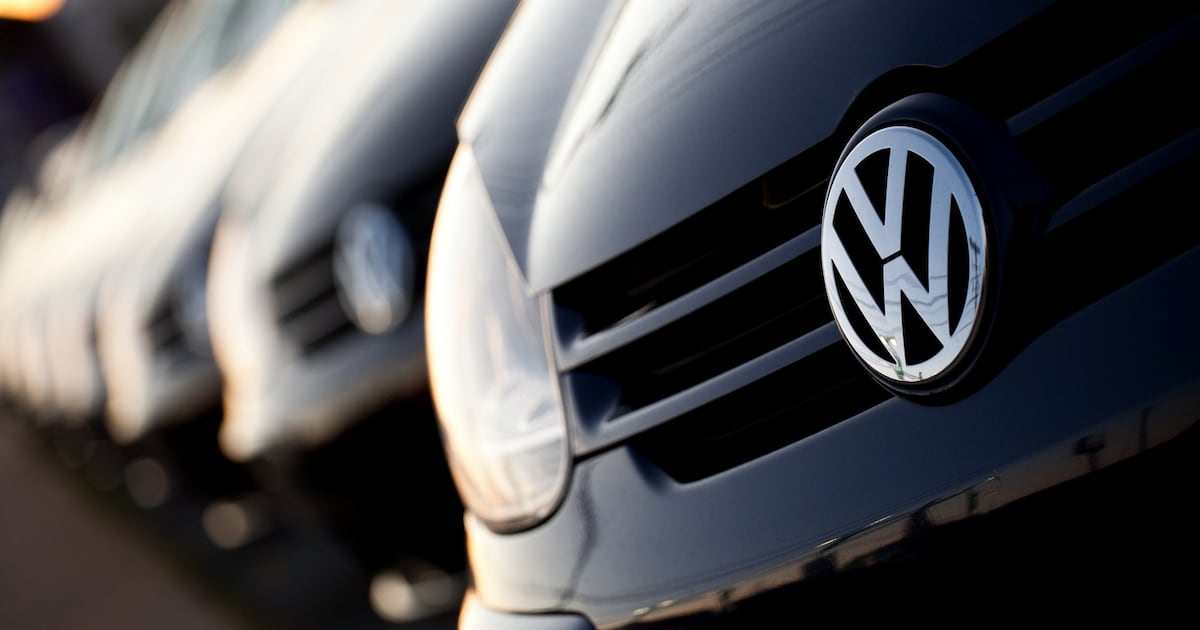
For so long the symbol of Germany’s industrial might, car maker Volkswagen is now emblematic of the country’s ailing manufacturing base and a process of deindustrialisation that could drag on Europe’s growth potential for decades.
The company is preparing for the most consequential restructuring in its 89-year history – it plans to lay off 100,000 employees, a sixth of its global workforce.
The retreat comes on the back of a triple whammy of factors. The German auto giant is losing the race to capture the global EV (electric vehicle) market to more competitive Chinese brands. At the same time, Chinese imports of Volkswagen cars have fallen through the floor, down a third on 2019 levels, as consumers switch to electric.
If that wasn’t bad enough, Volkswagen is getting hammered in its most lucrative market – the US – by Donald Trump’s tariffs.
Volkswagen “is at a historic crossroads”, Hans Dieter Poetsch, board chairman of Porsche SE, the investment vehicle of the Porsche/Piech clan and Volkswagen’s top shareholder, said last Friday.
He was speaking after Porsche SE reported a first-half loss after tax of €2.22 billion.
“The longer decisions are delayed, the bigger the problems will become,” he said.
Volkswagen chief executive Oliver Blume is trying to make the company faster and leaner by shuttering four German factories and axing as many as 100,000 jobs.
But his room to manoeuvre has narrowed after the supervisory board, where unions hold powerful sway, last month pushed back against plans to shutter the German factories and axe so many jobs.
[ What does billionaire Dart plan to do with his Flutter shares?Opens in new window ]
In his book Kaput: The End of the German Miracle, Wolfgang Munchau claims the country’s recent reversal has been brewing for decades and stems from several faulty assumptions about the global economy, corporate complacency and a chronic underinvestment in digital.
In his view, crisis-stricken Volkswagen – whose corporate image remains tarnished by the 2015 diesel-gate scandal – is the perfect symbol of the country’s economic problems, which he says are structural and long term.
“The German supercycle is ending,” Munchau says. A sobering thought for all Europeans.