 For electrification, Boschs focus is on motors, motor controllers and vehicle controllers, supported by engineering capabilities in India.Bosch Two-Wheeler & Powersports, India, is betting on localisation and country-specific product development to scale its operations in the country and improve economics.
Manohar Halahali, President, Bosch Two-Wheeler & Powersports, India told ETAuto in an exclusive interaction that the localisation has helped the company reduce costs, particularly in electric motors.
“Not just the final assembly, but also the child parts are sourced locally wherever there is a possibility. Of course, some electronics we still import, but a major chunk of the child parts are also localised,” he said.
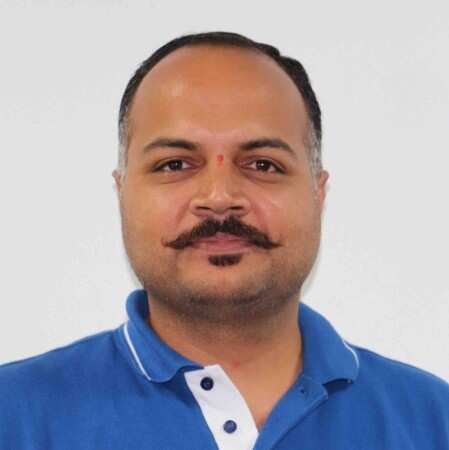 Manohar Halahali, President, Bosch Two-Wheeler & Powersports
Halahali said India has the capability to manufacture e-machines and that Bosch has localised motors and motor controllers since 2021.
The company has invested in motor manufacturing at its Chennai plant and in motor controllers at its Nagarnathapura facility in Bengaluru. It is also investing in vehicle control units (VCUs).
Halahali also highlighted the company’s investments across its two-wheeler business, including engine management, chassis systems, connectivity and electrification.
“Investments are also being made to expand capacity for electronic controls and sensors at Bidadi and Nagarnathapura, while capacity expansion is also under way for anti-lock braking systems at Chakan in Pune,” he noted.
For electrification, Bosch’s focus is on motors, motor controllers and vehicle controllers, supported by engineering capabilities in India.
EV economics tied to scale and supply chains
Halahali said increasing volumes would allow the industry to benefit from scale effects. Electric two-wheeler volumes, which were around 400,000-600,000 units a few fiscals ago, have risen to around 1.5-1.6 million units.
“So India engineering, localisation, and then of course the support system which is coming in from the government,” he said, referring to the factors supporting the segment.
He added that government schemes, including PLI and PM E-DRIVE, continue to support the electrification ecosystem.
The next phase, however, will also require manufacturers to reduce exposure to supply risks involving China, rare-earth magnets and lithium.
“How to de-risk China, how to de-risk the magnet situation, or even the lithium situation which comes because we are exposed to that,” Halahali said.
He expects the measures being undertaken by the industry to take six to eight quarters to show their full impact.
“With this, I think in couple of fiscals from now, we should be in a fairly sustainable way forward as far as EV is concerned,” he said.
Halahali also identified charging infrastructure and battery-swapping networks as areas that need further development. While some models are available with swappable battery architectures, he said the ecosystem remains under development.
Bosch expects the broader two-wheeler market to continue evolving alongside electrification. Halahali said India is also becoming an engineering base for global two-wheeler programmes, with Bosch developing engine-management solutions in India for deployment across markets including ASEAN and Europe.
The company is also working on connectivity, displays, safety systems and alternative fuels, alongside electric powertrain technologies.
For the electric two-wheeler industry, however, Halahali’s assessment is that profitability will depend less on a single technology shift and more on the combined impact of local engineering, deeper localisation, higher volumes and reduced supply-chain exposure.
Published On Aug 11, 2026 at 07:35 AM IST
Join the community of 2M+ industry professionals.
Subscribe to Newsletter to get latest insights & analysis in your inbox.
All about ETAuto industry right on your smartphone!
