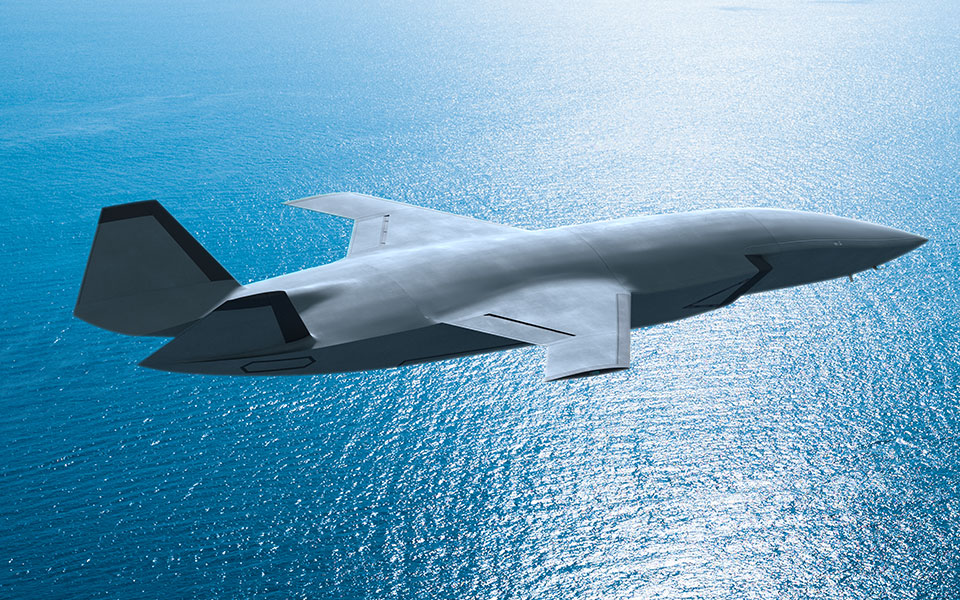

Rheinmetall and Boeing are pitching the MQ-28 Ghost Bat as a ready-made option for Germany’s Collaborative Combat Aircraft (CCA) program.
The companies say the Australian-developed unmanned aircraft could help Germany establish a CCA capability without waiting for the lengthy development of an entirely new platform.
Rheinmetall would serve as the system integrator for the MQ-28 in Germany, overseeing its integration into German military systems and adapting the aircraft to national requirements. Boeing would provide the Ghost Bat and continue developing its capabilities, including air-to-ground functions.
The two companies said the aircraft has already progressed through flight testing and multinational exercises, including the US military’s Valiant Shield exercise. They argue that this maturity could allow Germany to focus sooner on integrating its own sensors, weapons, and mission software.
Boeing also points to the MQ-28’s modular architecture as a way to adapt the aircraft to new missions. It could also provide Germany with a way to develop tactics, training, force structures, and manned-unmanned teaming procedures while the country works toward longer-term CCA capabilities.
“If the goal is to achieve such a capability by 2029, this work must begin today with the development of tactics, training, definition of force structure and the integration of sovereign technologies,” Boeing’s MQ-28 global director Glen Ferguson said.
Defense Firms Bid for Germany’s CCA
Boeing and Rheinmetall are not the only companies positioning an existing aircraft for Germany’s CCA requirement.
In June, INTEC Group agreed to support General Atomics Aeronautical Systems as it competes to supply Gambit aircraft to Germany.
Earlier, in July 2025, Airbus Defence and Space teamed up with US defense firm Kratos to offer the XQ-58A Valkyrie to the German Air Force, with deliveries proposed from 2029.
The XQ-58A, which has been in development since 2019, is designed to operate autonomously or alongside crewed aircraft while carrying kinetic and non-kinetic payloads.