August 12, 2026
 (Image: Siemens)
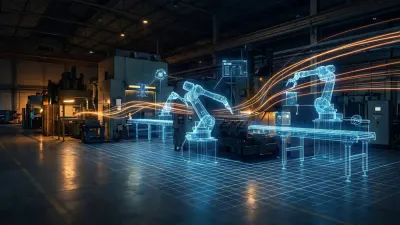
Siemens Government Technologies has been awarded an $80 million contract by Army Contracting Command to establish an integrated digital and physical manufacturing environment at Anniston Army Depot for the production of uncrewed aerial system (UAS) electric motor stator assemblies. The 12-month effort will modernize a legacy facility using a “born digital” manufacturing strategy centered on process-driven digital twins and digitally connected production systems.
According to Siemens, the digital twin environment will be used to model, validate and optimize the production line before equipment is installed, allowing the Army to commission manufacturing capabilities in a virtual environment before transitioning to physical production. The project also includes supporting infrastructure such as resilient energy, power-distribution and safety systems.
The award aligns with Siemens Government Technologies’ broader portfolio in digital engineering, model-based manufacturing, industrial automation, simulation and smart infrastructure modernization for federal customers. Siemens has increasingly promoted the use of digital thread and digital twin technologies to connect product design, production planning and factory operations within a single digital environment.
The project also supports the Army’s larger effort to modernize its Organic Industrial Base (OIB) . The service recently outlined a strategy to make its depots, arsenals and ammunition plants more data-driven while expanding advanced manufacturing capabilities for systems such as unmanned aircraft and other critical defense technologies. Recent OIB investments have included robotics, additive manufacturing and new domestic production capabilities for drone components.
The Siemens contract is noteworthy because it focuses on manufacturing digital twins rather than weapon-system digital twins. A recent GAO review found that only four of 48 major defense acquisition programs are pursuing full system-level digital twins, citing cost, technical complexity and data-management challenges as key barriers to broader adoption. Despite those challenges, Department of War acquisition policy continues to push increased use of digital engineering and digital-thread practices across future programs.
For aerospace and defense manufacturers, the Anniston project serves as another example of how digital twins are moving beyond product development and into factory design, production planning and industrial modernization. If successful, the approach could provide a model for upgrading additional government-owned manufacturing facilities while accelerating production of critical UAS components.
More From SAE Media Group