Partners are key to helping customers move from pilots to full-scale deployment.

Image:
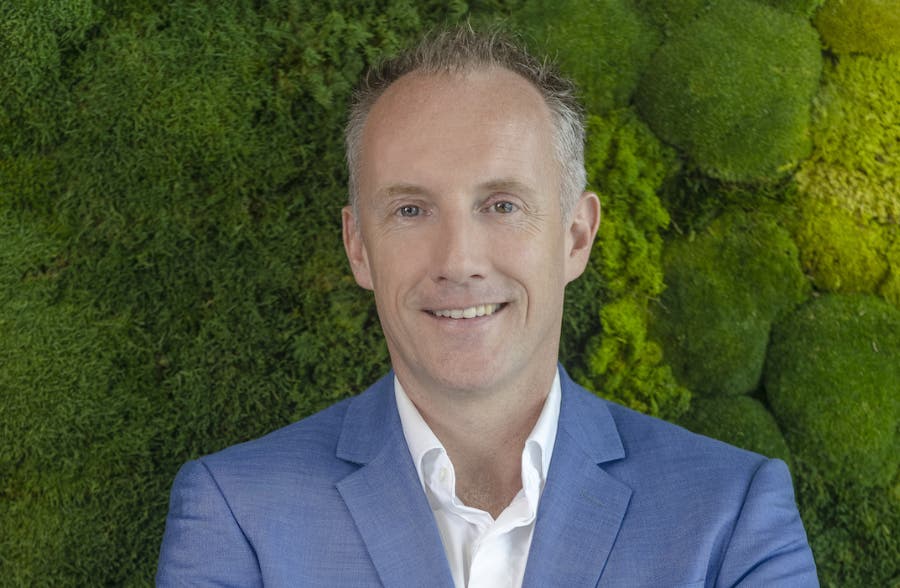
Peter Moore, regional head of partner ecosystem success, SAP APAC
SAP is putting greater emphasis on ecosystem-led growth, according to Peter Moore, regional head of partner ecosystem success, SAP APAC.
“The ability for us to scale can only be through working with our partner ecosystem,” said Moore, speaking at this week’s SAP NOW event in Sydney.
SAP is also spruiking two major go-to-market messages this year — the autonomous enterprise and the business AI platform, with customer demand for AI and agentic capabilities accelerating.
“This year in particular, we’ve seen an enormous increase in adoption. Our customers want to innovate, they want to look at how to apply agentic AI into the business processes using SAP’s platform,” he said.
The message to partners is that harnessing this demand and helping customers adopt AI is where they’ll find the richest opportunities.
“The partners that are embracing this and taking helping us to take this message to market are those that are extremely successful,” he explained.
Agentic AI adoption is on the agenda for most software and solution providers and SAP is no different. The common theme is moving beyond AI proof-of-concepts and into production.
The challenge is turning demonstrations into scalable enterprise business processes, Moore noted. “It’s fine to do a demonstration, but when you take into account the customer’s landscape, their IT maturity, their business processes, their policies — that’s not so easy,” he said.
Partners are the lynchpin in SAP’s ecosystem as AI becomes embedded in its platform. Moore said partners understand, and work within, each customer’s constraints. “We need to guide the customer, but at the same time we’ve got to fit into the customer’s environment and understand their own complexities,” he said.
Early AI adoption is focused on practical use cases such as document extraction and automation, while Joule is being applied to areas such as performance and goals management.
SAP has established a €100 million partner-led AI adoption fund to support partners building AI agents as part of S/4HANA and other business application deployments. SAP also plans an AI agent store towards the end of 2026.
“We’re investing in our ecosystem, investing in our customers to co‑innovate and bring these AI assistants and agents to production,” he told CRN Australia.
SAP is also supporting partners through AI certifications, workshops, capability-building programs and incentives, while APAC has the highest number of certified consultants globally, according to Moore.
AI adoption is also blurring the traditional distinctions between technology partners, delivery partners, resellers and service providers, with partners increasingly operating across multiple roles. AI projects cut across technology, process and ongoing operations in a way that the old partner categories didn’t.
“You can be a technology partner as well as a delivery partner in some cases too,” he said.
Managed services are another growing opportunity, particularly in APAC and ANZ, where partners are extending their role beyond go-live into continuous transformation and value-added services.
“Not only is there a delivery. Our partners can continue to bring valueadd service around the core SAP applications – and nonSAP as well,” he said.