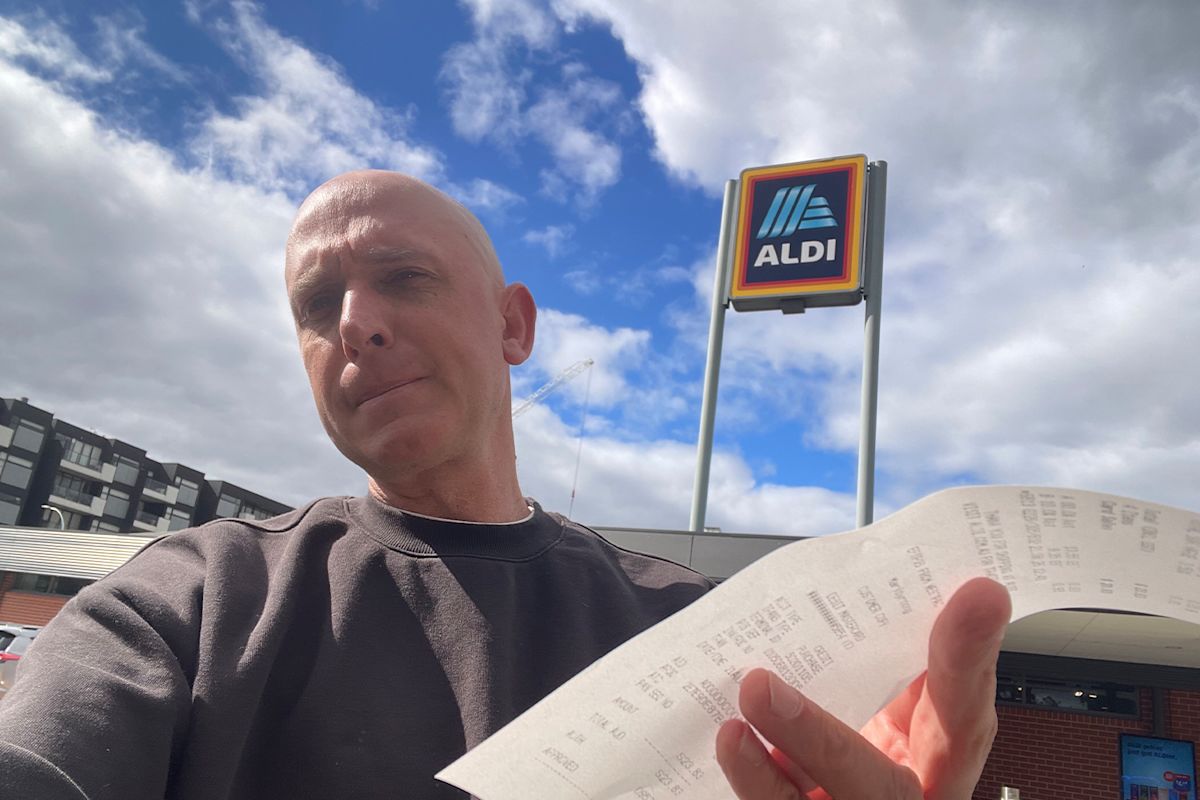
Aldi’s new trial requiring customers to scan their receipt before exiting its self-service security gates gives me the ick.
Previously, a proof-of-purchase wasn’t automatically printed, so it annoys me that the German supermarket chain could be on the verge of creating a whole new waste stream.
But there’s a second little problem I’m a bit nervous about confessing, because it may seem silly — I hate touching receipts.
The old paper ones were fine, but the modern, glossy paper feels a bit yuck to the touch.
It could be linked to the thought that it’s been chemically treated.
My fear could be irrational. It started around 15 years ago, when there was a scare around the chemical Bisphenol A (BPA), which at the time was used in everything from baby bottles to thermal paper.
Most retailers have replaced BPAs with other chemicals in receipts, but that begs one simple question. With what?
Are BPAs even a problem?
Research indicates that small amounts of BPA can be absorbed through the skin.
Amid growing human health and environmental concerns, the European Union (EU) banned it in food packaging.
However, Food Standards Australia and New Zealand concluded it does not pose a “significant human health and safety issue at current exposure levels”.

Aldi is trialling new security gates that require customers to scan their receipts to leave.
(Supplied)
When I spoke to Oliver Jones, a professor of analytical chemistry at RMIT University, he also played down concerns about the chemical.
“The amount you might get transferred through skin if you’re touching a receipt is going to be minimal, even if you’re a teller and you’re handling them all day,” he said.
“You’d have to have huge amounts to disrupt the endocrine system, and you’re not going to be exposed to that much.”
Jones isn’t claiming there is no risk to handling BPA, it’s just that it needs to be put in perspective.
“The risk is proportionally small compared to other things that you have control over, like drinking too much, not getting enough sleep, or not doing exercise,” he said.
“If people are worried, they can always put on gloves.”
He then paused and noted that some people might then have concerns about the chemicals the gloves could contain, particularly if they were plastic.
My nagging concern about receipts
The EU has extended its BPA ban to receipts, and major retailers in Australia have voluntarily done the same.
But my nagging concern is that we don’t know what BPAs were replaced with in supermarket receipts.

The constant security monitoring at my local Aldi bothers me a little, but if they broaden the security gate trial, I’ll likely start shopping elsewhere.
(Yahoo News Australia)
I like to know what chemicals I’m dealing with so I can make an informed choice about the risk I’m taking.
RELATED:
There have been similar concerns about microwaves and mobile phones being dangerous, but they’re now generally believed to be safe.
On the other hand, chemicals like PFAS and DDT were once thought to be fine, too.
So I have a natural, and possibly absurd, fear I can’t shake.
What does Aldi use in its receipts?
Many companies that stopped using BPA in plastics switched to a very similar chemical, Bisphenol S (BPS) instead. Experts I’ve spoken to say it’s very similar, but we know less about it.
Aldi confirmed its receipts don’t contain BPA or BPS, but wouldn’t divulge what chemicals they do contain.
And it explained that customers can opt out of printing a receipt and that staff can guide them through the process of leaving without one.
Kmart and Bunnings, two companies owned by Wesfarmers Group, generally require customers to show their receipts to staff before leaving the store.
Both have previously confirmed that their receipts are BPA-free, but neither responded to requests for comment asking which chemicals they now contain.
You can also follow us on Facebook, Instagram, TikTok, X and YouTube.