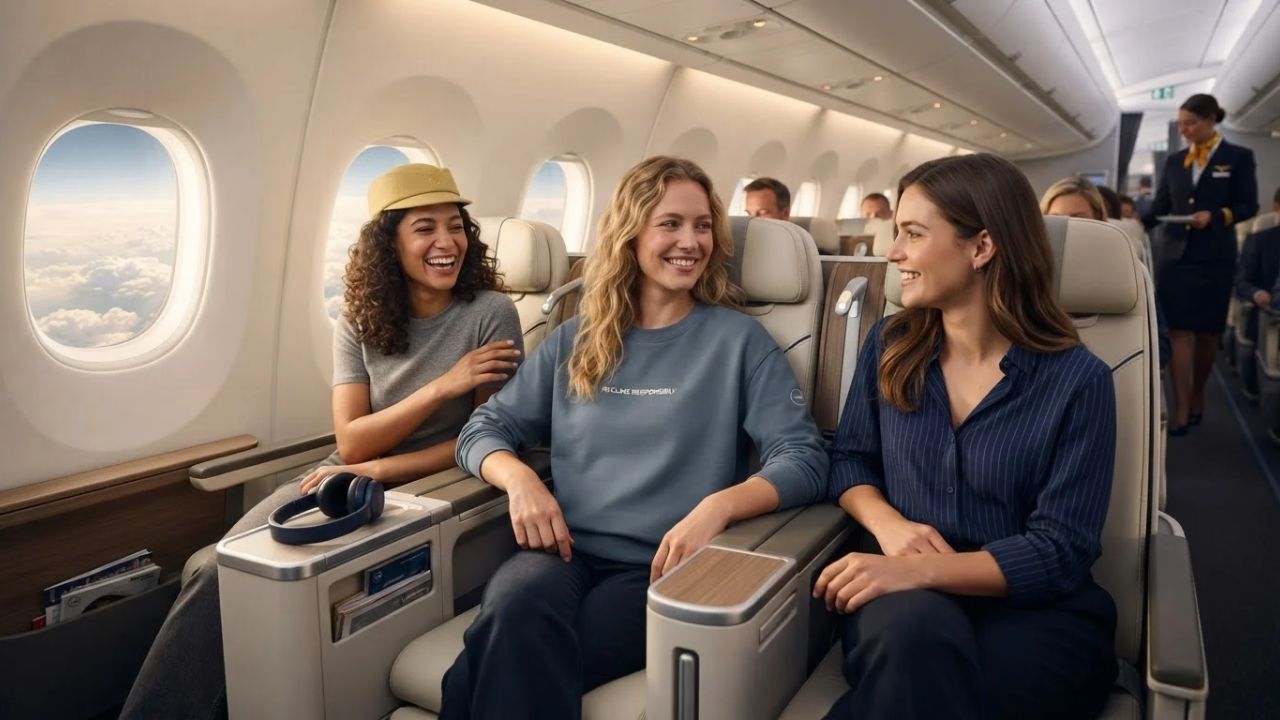
Lufthansa partners with Serviceplan to launch a travel etiquette clothing line, addressing armrest, reclining, and boarding behaviors. The International Air Transport Association indicates that historically high load factors make passenger cooperation increasingly important inside confined cabins.
The Transition of Inflight Conduct into Lifestyle Marketing
A notable trend in aviation branding is the transition of passenger conduct guidelines into humorous lifestyle marketing campaigns. Historically, airlines relied on formal safety briefings and rigid print-outs in seatback pockets to manage cabin behavior, resulting in low compliance and passenger friction. In 2026, marketing divisions coordinate joint ventures with creative agencies, placing common travel dilemmas (such as armrest space or gate crowding) onto wearable merchandise like sweatshirts, caps, and shirts.
By placing etiquette messages on everyday clothing, airlines address cabin conflicts through social consensus rather than authority. This light-hearted approach helps manage passenger expectations during peak travel periods, showing how consumer branding supports the onboard passenger experience.
Lufthansa Travel Etiquette Campaign Parameters
The wearable collection addresses common cabin frustrations through concise messaging:
Campaign Launch: The collection officially debuted on July 31, 2026.
Creative Partners: A collaboration between Lufthansa and the creative advertising agency Serviceplan.
Etiquette Consultant: Developed in consultation with etiquette expert Clemens Graf von Hoyos.
Key Messages: Displays statements including “Middle seat gets the armrests,” “Recline responsibly,” “Boarding by Group Hits Different,” and “Text your mom after landing.”
Lufthansa Passenger Scale (2025): Lufthansa Airlines carried 65.7 million passengers (up 2% from 2024), operating 476,842 flights (up 1%) with a 83.4% load factor (compared to 82.8% in 2024).
Lufthansa Group Scale (2025): The wider group carried approximately 135 million passengers across more than one million (1,002,935) flights, recording an 83.2% load factor.
These figures show the scale at which minor passenger interactions occur daily across the airline’s network.
Global Aviation Traffic and Sentiment Indicators
The campaign launch corresponds with growing passenger volumes and high cabin occupancy rates:
Global Traffic Growth (2025): Global passenger demand increased 5.3% (international demand rose 7.1%, domestic demand rose 2.4%), with an industry-wide load factor of 83.6%.
Traveler Preferences: IATA’s 2025 Global Passenger Survey reported that 86% of passengers were satisfied with their travel experience.
Digital Integration: The survey indicated that 78% of passengers wanted smartphone integrations for digital passports and wallets, while half used biometrics during airport transit.
National Market Scales (2025): Led by the US at 890.1 million passengers, followed by China (776.1 million), India (218.2 million passengers, up 3.3%), and Germany (163.8 million passengers, up 3.4%). Spain grew by 5%, while Japan recorded 9.2% growth.
These occupancy rates leave little room for passengers to ignore their immediate neighbors.
Lufthansa Etiquette Campaign Coordinates
The table below breaks down the marketing messages, target behaviors, recommended etiquettes, campaign partners, passenger traffic numbers, and coordinating aviation boards recorded on August 23, 2026:
Printed Campaign Message
Target Cabin Behavior
Recommended Inflight Etiquette
Creative Partner
Annual Passenger Volume
Coordinating Aviation Board
Middle seat gets armrests
Armrest space disputes
Give middle passenger priority
Serviceplan Agency
65.7 million (Lufthansa)
Intl Air Transport Association
Recline responsibly
Seatback reclining
Check behind before reclining
Clemens Graf von Hoyos
Approximately 135M (Group)
Federal Aviation Office (Germany)
Boarding Group Hits Different
Gate crowding
Wait for assigned boarding group
Serviceplan Agency
1,002,935 group flights
Association European Airlines
These coordinates outline the messages, behaviors, etiquettes, partners, passenger volumes, and boards established for the marketing program.
Resource Stewardship and Eco-Aware Cabin Travel
For the traveler, the benefit of following group boarding guidelines is the reduction in airport gate congestion, allowing boarding processes to run more efficiently. Checking behind before reclining prevents damage to laptop screens and reduces single-use cup spills on passenger trays.
Additionally, using mobile boarding passes via smartphone wallets minimizes printed paper waste at airport security gates. Respecting the personal space of fellow travelers reduces mid-flight cabin crew interventions, allowing flight teams to focus on safety and cabin service.
For comparison, you can explore the changing dynamics of Stimulus Launch: Taiwan Unveils Billion-Dollar Repeat Visitor Rewards to see how destinations promote visitor spend. For transit updates, comparing travel scheduling matches other networks, such as Aviation Growth: Christchurch Airport Expands International Networks updates. This trend is similar to the tourism growth seen in other destinations, as detailed in our guide on the Hacienda Heights Bus Fire Transport Safety regulations.
Visitor Insider Tips: Navigating Airport Etiquette
If you are preparing for your next flight, keep these practical tips in mind:
Observe Boarding Group Numbers: Remain seated in the lounge until your specific boarding group is announced to avoid crowding the gate.
Give the Middle Seat the Armrests: If you occupy the window or aisle seat, allow the middle passenger to use both inner armrests.
Look Behind Before Reclining: Take a quick look behind your seat before reclining, especially during meal service times.
Coordinate Post-Flight Alerts: Send a quick text to family members after landing to confirm arrival before retrieving your checked bags.
Rely on Digital Boarding Passes: Store your tickets in your smartphone wallet to speed up boarding gate transit.
Long-Term Outlook for Airline Passenger Services
The long-term outlook for transit in the aviation sector is focused on introducing biometric self-boarding gates, deploying quieter cabin lighting systems, and upgrading seat structures to manage passenger space. As load factors remain near historic peaks, state departments and airline boards will cooperate to maintain passenger comfort standards.
By developing sustainable transit options and protecting passenger comfort, the aviation sector aims to build a sustainable transport network.
FAQ
What is the Lufthansa Travel Etiquette Collection?
It is a wearable merchandise line displaying humorous inflight etiquette messages, designed in collaboration with the advertising agency Serviceplan.
When did the etiquette collection launch?
The campaign was officially launched on July 31, 2026, as passenger load factors reached historic highs.
What is the passenger volume of Lufthansa Airlines?
Lufthansa Airlines carried 65.7 million passengers in 2025, operating 476,842 flights with an 83.4% load factor.
What is the recommended armrest etiquette?
The collection suggests that middle-seat passengers should receive priority access to both shared armrests.
Stay updated on the regional travel regulations and cabin service alerts shaping international transit.
Related Travel Guides