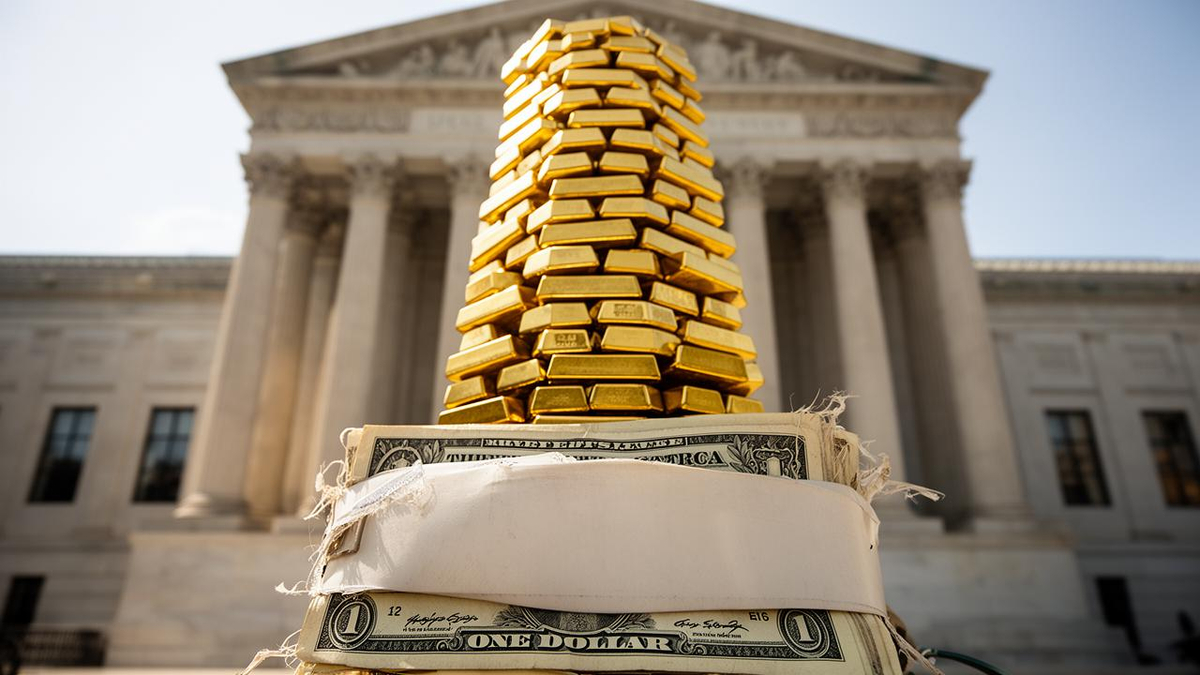
After U.S. Treasury debt officially crossed the psychologically jarring $40 trillion threshold, global market attention has shifted beyond the headline number itself toward how Washington intends to manage the mounting pressure. Deutsche Bank’s head of FX research, George Saravelos, argued in a recent analysis that the U.S. Treasury Department’s flurry of recent operations amounts to “soft financial repression”—and the real price will ultimately be paid by the dollar.
U.S. Treasury Secretary Scott Bessent surprised Wall Street on Wednesday. With the 30-year Treasury yield hovering near a two-decade high, Bessent announced the Treasury would step up buybacks of longer-dated bonds in an effort to put the brakes on rising yields. The move echoed the logic behind the coordinated U.S.-Japan currency intervention just weeks earlier—when, in order to boost the yen without selling Treasuries, the U.S. tapped its euro reserves rather than dollar assets, thereby avoiding additional selling pressure on Treasury yields.
Japan, the largest foreign holder of U.S. Treasuries, has been unusually “cooperative” as well. Rather than dumping Treasuries on a large scale to raise funds, Japanese authorities tapped an obscure Federal Reserve facility known as the Foreign and International Monetary Authorities (FIMA) Repo Facility, pledging Treasuries as collateral in exchange for dollar liquidity. Saravelos contends that whether it’s bond buybacks or encouraging use of the FIMA facility, the underlying policy objective is the same: forcibly capping the trajectory of long-end Treasury yields.
The Historical Shadow of “Financial Repression”
“Financial repression” refers to government intervention in markets to keep interest rates artificially low, thereby reducing the real burden of its own debt. This is hardly a new phenomenon. After World War II, the United States and other developed economies made extensive use of financial repression to successfully lower debt-to-GDP ratios. Yet historical research shows the strategy has often spelled disaster for creditors. A study spanning 300 years of U.S. and U.K. history found that wartime periods “have always been catastrophic for holders of government debt,” with the twin blows of inflation and financial repression typically inflicting real losses on creditors.
Saravelos’s warning is more direct: the side effects of forcibly suppressing interest rates will be transmitted straight into the currency. He explains that if the market price of Treasuries is constrained and unable to adjust downward, the value of foreign investors’ Treasury holdings must be absorbed through the exchange rate—the result being a weaker dollar. “If the market price of Treasuries is constrained and unable to adjust downward, the value of foreign investors’ Treasury holdings must be absorbed through the exchange rate,” he noted. “The result is a weaker dollar.”
The Fed’s Stance Becomes the Key Variable
Markets are now intensely focused on how the Federal Reserve will respond. Saravelos predicts that Bessent’s easing of financial conditions will typically force the Fed to offset it with tighter policy. U.S. inflation has now exceeded the 2% target for five consecutive years, and multiple officials have signaled a willingness to hike rates. Yet Fed Chair Kevin Warsh recently abandoned so-called “forward guidance,” leaving Wall Street guessing about his true stance.
“If Chair Warsh fails to recognize the easing effect of the buyback policy on financial conditions, that would be another bearish factor for the dollar,” Saravelos added. “Markets will become increasingly wary of these price-distorting interventions. The more visible the fingerprints of intervention, the greater the depreciation pressure on the dollar.”
Since the Treasury buyback plan was disclosed, enthusiasm for the “debasement trade” has rapidly heated up. Gold prices have continued to climb, and bitcoin has surged on expectations of further dollar depreciation. This flight-to-safety sentiment reflects a widespread investor concern: with Washington lacking the political will to cut spending or raise taxes, and facing a projected $2 trillion budget deficit this fiscal year plus $1 trillion in annual interest costs, policymakers appear to have little recourse beyond “repression” to manage the symptoms.
The International Monetary Fund (IMF) also sounded an alarm in a research report last month. The report said today’s global economic environment already exhibits all the characteristics historically associated with periods of widespread financial repression, and that this “debt-reduction tool” is highly likely to re-emerge on a large scale worldwide. The study noted: “Given the current existence of conditions historically associated with high repression, our evidence suggests that financial repression may be used more broadly in the future.”
For foreign investors holding large amounts of U.S. Treasuries, this trend points to an uncomfortable reality: if Washington continues to rely on technical maneuvers rather than fiscal discipline to manage debt pressures, nominal Treasury yields may be artificially suppressed, while a weakening dollar could further erode real returns. Saravelos’s analysis clearly traces this transmission chain—the more frequent and visible the Treasury’s interventions, the more alert markets become to pricing distortions, and the greater the depreciation pressure on the dollar.