Volkswagen Chief Executive Oliver Blume has issued a stark warning to employees that Europe’s largest automaker faces a situation that is “more than critical,” as he prepares to defend sweeping cost-cutting measures that could eliminate up to 50,000 jobs and put multiple German plants at risk.
In an interview posted on the company’s intranet and distributed to AFP, Blume said Volkswagen and Germany’s broader auto industry are confronting “the biggest upheaval in their history,” driven by intensifying competition from China, global trade barriers, weak markets, and mounting regulatory pressure.
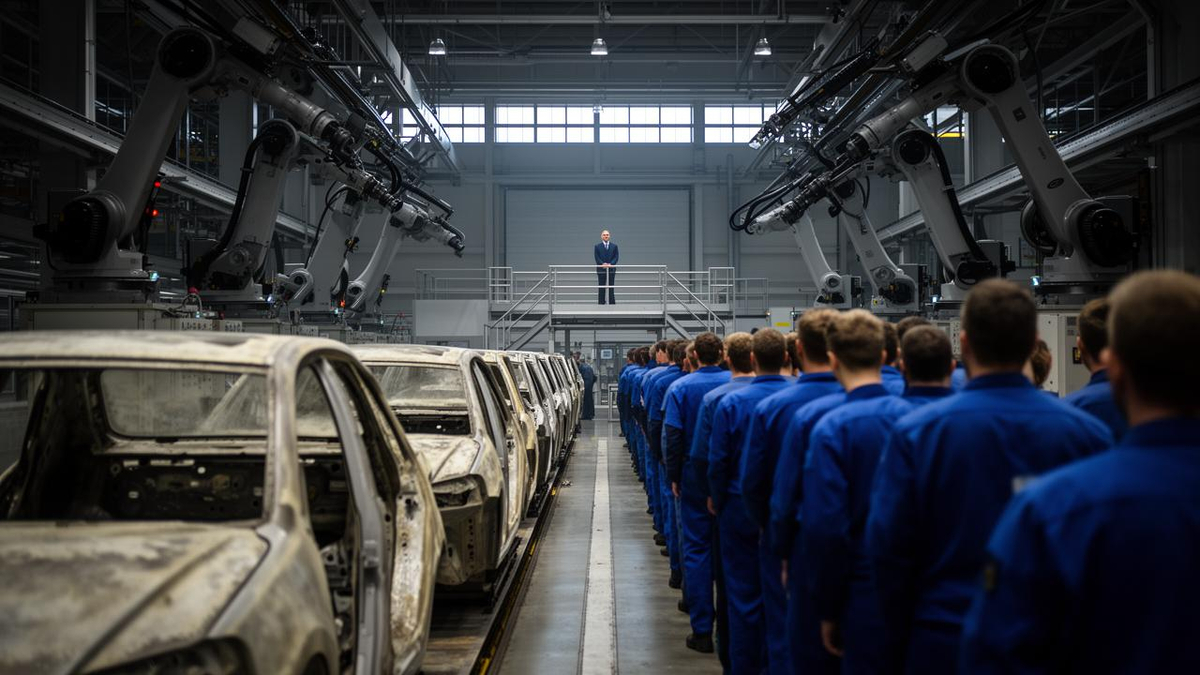
The remarks come as Blume prepares for a series of extraordinary works council meetings next week. He is scheduled to appear personally at Volkswagen’s headquarters in Wolfsburg on Tuesday, followed by visits to plants in Emden and Zwickau on Wednesday, where he will outline the company’s transformation plans to employees.
“The coming weeks are what matter: everyone has to pull together,” Blume told Bild am Sonntag in a separate interview published Sunday. “We have set up the largest transformation plan in the history of the Volkswagen Group.”
Blume said the next few years will determine “who stays in the race and who drives to the front,” adding that “the global auto industry is in a mega-crisis, and the Volkswagen Group is right in the middle of it.”
Plant Closures Still on the Table
While no final decision has been made on factory closures, Blume reiterated that four German sites face an uncertain future. For plants in Emden, Hannover, Zwickau, and Neckarsulm, he said, “we cannot currently see any way of them remaining profitable in the 2030s.”
The company is also grappling with overcapacity of roughly 500,000 vehicles per year in Europe, a structural problem that has forced management to consider drastic measures. Closing factories, Blume acknowledged, would always be “the last and most expensive solution.”
At locations where car production may cease, Volkswagen is exploring alternative industrial uses. Blume pointed to advanced negotiations with defense industry companies over repurposing the Osnabrueck plant, signaling a potential pivot toward military manufacturing as European governments boost defense spending.
The automaker has already ordered approximately 50,000 job cuts globally, and Blume said agreements have been reached with 37,000 employees so far. The CEO has framed the reductions as necessary to bring overhead costs to a competitive level, noting that Volkswagen carries a cost disadvantage of roughly 20 percent compared with comparable companies.
Blume said the company’s current operating margin of 3.8 percent, while solid, is “far from sufficient” to generate the long-term resources needed for new technologies, products, and factory sites.
Global Headwinds Compound Pressure
Beyond Chinese competition, Blume identified U.S. tariffs, the war in the Middle East, and regulatory burdens as key challenges. Asked whether he expected conditions to improve, he offered a pessimistic outlook: “On the contrary, we have to assume that risks will get worse, worldwide.”
In July, Blume presented savings plans to Volkswagen’s supervisory board, but no decision was reached. German media reported at the time that the Lower Saxony state government, which holds 20 percent of the voting rights, refused to sign off on the proposals.
Union Resistance Intensifies
The head of IG Metall, Christiane Benner, who also serves as deputy chair of Volkswagen’s supervisory board, sharply criticized management on Friday and vowed to resist factory closures. She called Blume’s profitability targets “unrealistic” and likened them to “cloud cuckoo land.”
“How is the Volkswagen Group supposed to achieve an operating return on sales of nine percent under the current geopolitical conditions?” Benner told Wirtschaftswoche. She demanded that the executive board substantially revise and specify its plans before seeking supervisory board approval.
“Workers have already had to accept hefty and painful cuts and now are getting another slap in the face,” Benner said. “Factory closures are not going to happen with us. The employees deserve prospects.”
The union leader also accused management of destroying the culture of trust at Volkswagen, warning that the new savings proposals would have massive repercussions for model policy and plant operations.
Volkswagen faces a pivotal week as management attempts to win employee buy-in for restructuring measures that will define the company’s competitive position in the electric-vehicle era. The outcome of the works council meetings and subsequent negotiations with labor representatives will shape whether the automaker can execute its transformation plan without triggering prolonged industrial conflict.