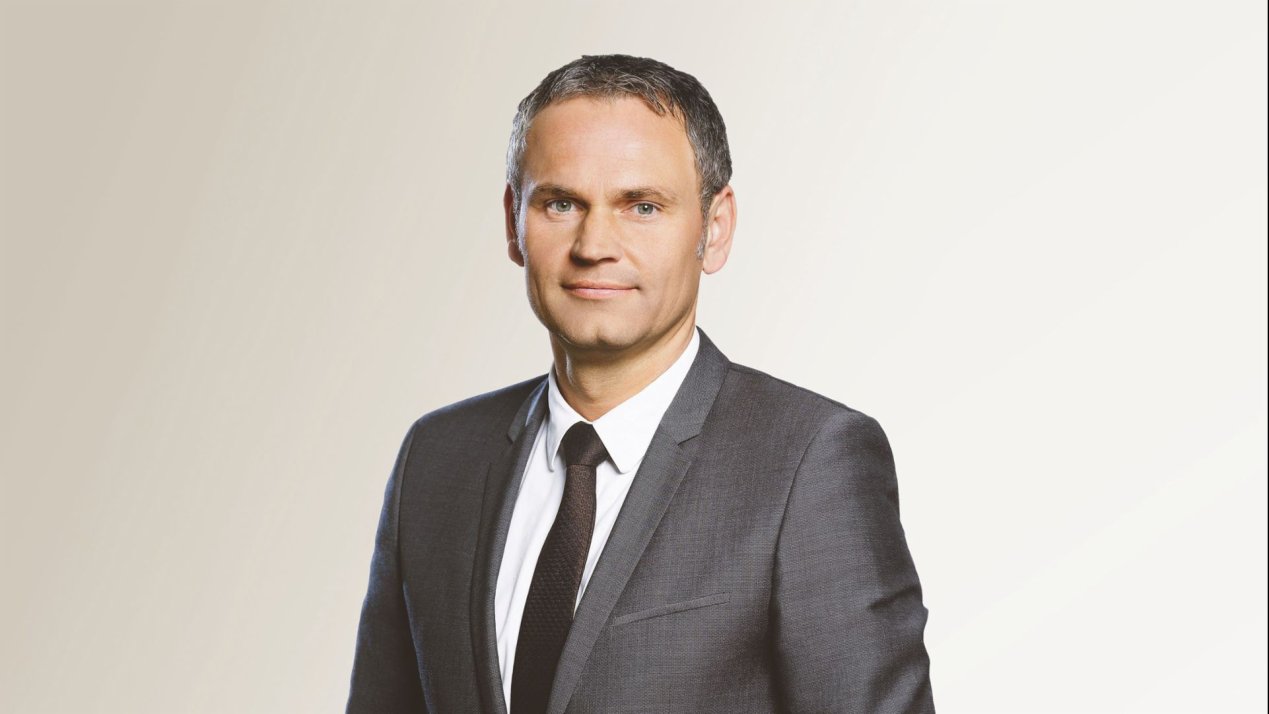
Volkswagen AG Chief Executive Officer Oliver Blume told thousands of employees on Tuesday that approximately half of the automaker’s proposed 50,000 additional workforce reductions will take place in Germany, escalating tensions in a high-stakes corporate restructuring.
Speaking at the company’s primary plant in Wolfsburg during the first in a series of employee assemblies, Blume defended the measures as essential operational adjustments. He stated that Volkswagen’s fixed costs currently run 30% higher than those of its key industry competitors. Addressing widespread concerns among the workforce, Blume clarified that the frequently cited figure of 50,000 additional global job cuts represents a theoretical calculation rather than a fixed operational target.
“As of today, approximately half of the adaptation requirement applies to Germany and the other half to the international arena, across a total of about 170 companies,” Blume said, according to statements reported by AFP.
The concentration of job cuts in Germany threatens to deepen the economic strain on the nation’s automotive sector, long considered a core pillar of Europe’s largest economy. German vehicle manufacturers and tier-one suppliers are actively scaling back workforces and shuttering production lines to contend with muted consumer demand, elevated energy costs, and accelerating competitive pressure from Chinese automakers, led by BYD.
Blume framed the pending decisions as part of an existential corporate shift. “Our plan for the future constitutes the largest transformation program in the history of our company. Everyone must participate now,” he told workers.
Labor representatives responded with sharp criticism. Daniela Cavallo, chairwoman of Volkswagen’s works council, told employees in Wolfsburg that worker confidence in management—and specifically in the CEO—has “been damaged; not irreparably, but damaged.”
Union leaders contend that employees are being asked to absorb the financial burden of multi-year strategic errors in software development, electric vehicle rollouts, and Chinese market strategies. Cavallo emphasized late Monday in Hanover that executive leadership must establish clear future employment perspectives across all domestic facilities.
Labor representatives estimate that up to 140,000 total jobs face long-term risk. This figure includes 50,000 reductions previously agreed upon in Germany, 50,000 prospective global cuts identified by executive leadership, and roughly 40,000 positions situated across four German manufacturing plants whose operational futures remain undecided.
Management is targeting structural expense reductions of at least €10 billion (US$11.7 billion). The restructuring strategy involves trimming annual European production capacity by 500,000 vehicles, streamlining executive hierarchies, and dramatically cutting back the number of vehicle models and equipment variants offered.
Pressure on the company is compounded by declining sales volume in China, elevated domestic operational overhead, and underutilized assembly lines. Pressure is also mounting from Porsche SE, the holding company owned by the billionaire Porsche-Piëch family that holds voting control over Volkswagen. The family has urged management to accelerate restructuring efforts, citing falling dividend yields resulting from declining profitability at both Volkswagen and sports car manufacturer Porsche AG.
Pressure is acute at assembly facilities in Emden, Hanover, Zwickau, and Neckarsulm. Blume acknowledged that the company has not yet identified competitive production assignments for these four facilities moving into the 2030s.
Management aims to establish viable operational perspectives for all domestic plants within six to 12 months, with Blume noting that factory closures remain the “ultimate and most costly solution.” To achieve reductions, management intends to rely on voluntary departures, early retirements, mutual severance packages, and a restrictive hiring policy.
Both management and labor left open the possibility of negotiated compromises. Blume indicated that individual facilities have up to one year to develop alternative operating concepts centered on voluntary headcount reductions and altered plant capacity.
However, union leaders warned of potential labor disruptions if negotiations stall. Thorsten Gröger, regional head of the IG Metall union, warned that organized labor would oppose pure headcount cuts and budget reductions. “If management persists in relying solely on job cuts and budget reductions, we will oppose it with all our strength,” Gröger said, refusing to rule out strikes. Christiane Benner, head of IG Metall, separately characterized Blume’s target of raising operating profit margins to 9% as an “unrealistic fantasy.”
Volkswagen’s specialized corporate governance structure grants labor representatives and the state of Lower Saxony veto authority over key corporate decisions, preventing executive leadership from unilaterally implementing plant closures or mass redundancies.
“There are many enemies, many actors with veto power, and little support,” said Wolfgang Schroeder, a political science professor at the University of Kassel and an expert in German industrial relations. Ingo Speich, head of sustainability and corporate governance at Deka Investment, similarly observed that the chief executive faces a “titanic task” in navigating the competing power centers.