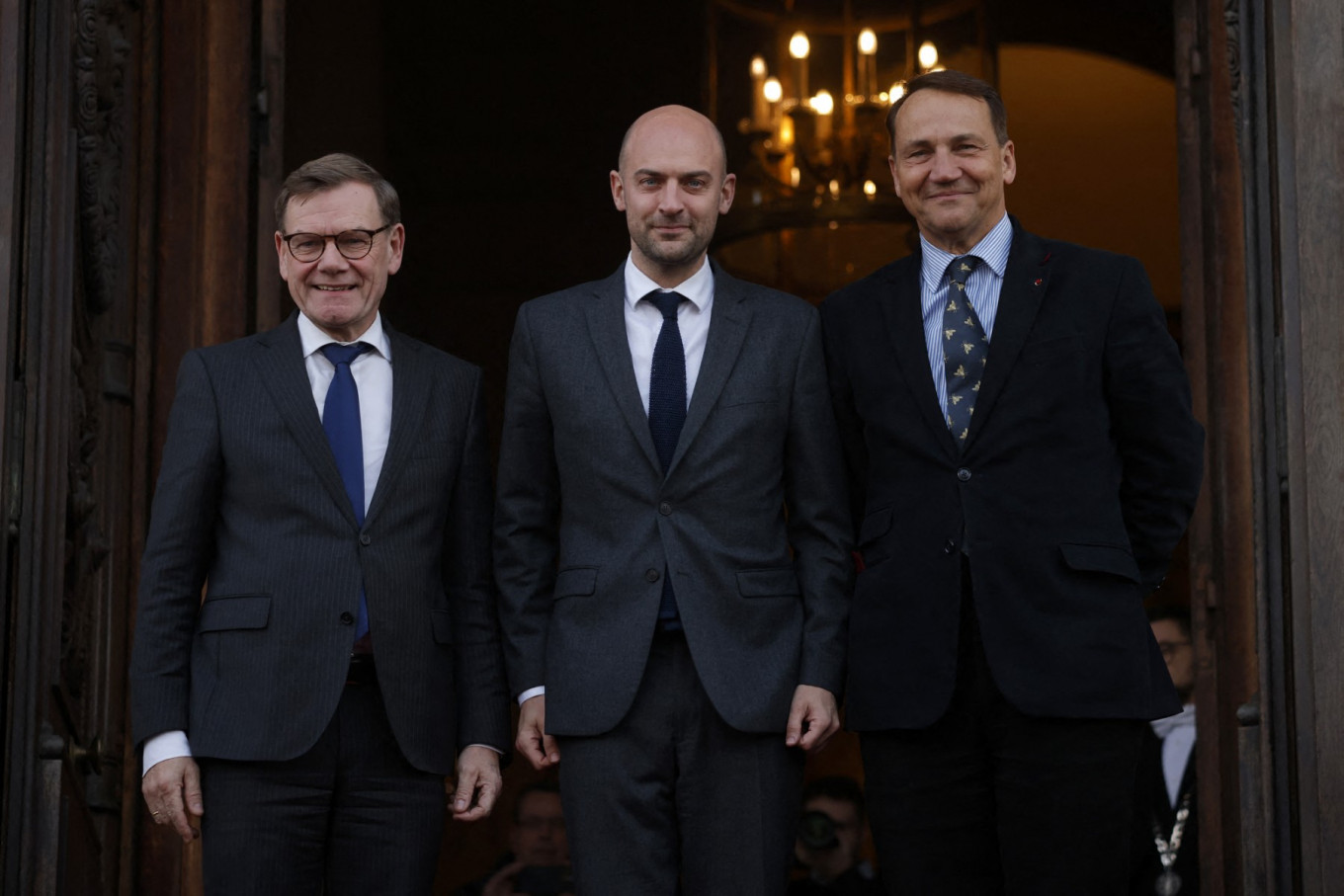
ome 35 years ago, Europe stood at a historic crossroads. The Cold War was coming to an end, Germany was reunifying and Poland was emerging from decades of communist rule. Against this backdrop, on Aug. 28, 1991, the Foreign Ministers of France, Germany and Poland met in the German city of Weimar. Their meeting gave birth to what became known as the Weimar Triangle.
The idea was simple but ambitious — to build a special relationship between three countries whose histories had too often been marked by rivalry and conflict, at a moment when Poland was regaining its freedom and sovereignty. The experience of Franco-German reconciliation after 1945 offered an important inspiration. What had once seemed almost unimaginable — transforming centuries of conflict into partnership — became one of the driving forces behind European integration.
The Weimar Triangle was founded on a conviction that remains as relevant today as it was 35 years ago — together, we are stronger.
This is perhaps the most important lesson that our three countries can draw from our own history. We have not forgotten the difficult chapters of the past. On the contrary, it is precisely because we know where division and hatred can lead that we understand the value of cooperation, compromise and a Europe capable of acting together.
Over the past 35 years, the Triangle has repeatedly adapted to radically different European realities. Initially, it helped support reconciliation and anchor a newly democratic Poland in Europe. Following Poland’s accession to NATO in 1999 and to the European Union in 2004, it increasingly became a forum for discussing the future of the EU, enlargement, neighborhood policy and European affairs.
Despite the absence of formal institutions, its enduring strength lies in its ability to adapt. Today, that ability is being tested once again.

Every Thursday
Whether you’re looking to broaden your horizons or stay informed on the latest developments, “Viewpoint” is the perfect source for anyone seeking to engage with the issues that matter most.
for signing up our newsletter!
Please check your email for your newsletter subscription.
Russia’s full-scale war against Ukraine has fundamentally changed Europe’s security environment and brought the strategic perspectives of Warsaw, Paris and Berlin closer together.