
There’s a part of me that thought Volkswagen leadership was really going to end up at least threatening to invoke the nuclear option, which was a move that would allow the company (in theory) to go around the board with a general shareholder vote. Instead, in a surprise move, the board unanimously agreed to support CEO Oliver Blume’s major cost-cutting plans, with a few important carve outs.
If you’ve been enjoying The Morning Dump the last few years, you’ve read many treatises on the rotten state of Volkswagen. The company is in rough shape and it has way too many employees for the number of cars it builds. A new deal will allow management to make some big changes, while also punting some of the stickiest issues at least another year. While the company is solidly on its back-foot, I got some hope for a reunion with one VW brand via social media recently.


And speaking of delays, the National Highway Transportation Safety Administration is supposed to be pushing out new rules to make cars safer. Instead, a new report finds delays, delays, and more delays. Earlier this week I wrote that what the EPA does with fuel economy standards doesn’t mean much if California can still set rules, and a new ruling upholds the state’s ability for now.
Blume Pulls A Polo Out Of His Hat
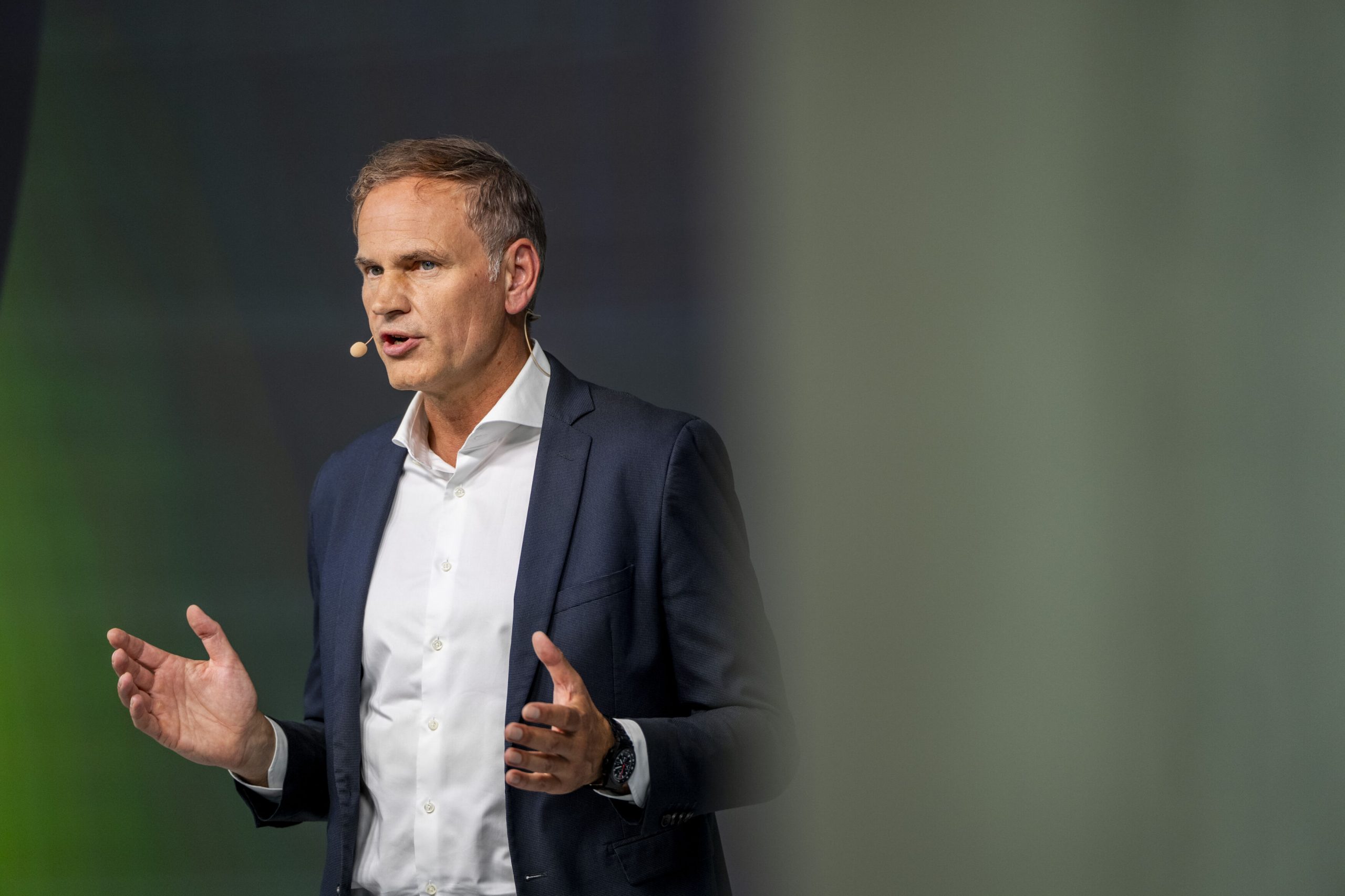 Photo: VW
I know I’ve been talking about Volkswagen all week, but just in case there are some new folks, allow me the briefest of histories. Volkswagen and Porsche were once two different, albeit interrelated companies. In the early 2000s, Porsche attempted to takeover Volkswagen, but botched the job and ended up being absorbed into Volkswagen instead. The newly-combined company excelled at platform-sharing and enjoyed big profits in both the United States and China, leading them to a bout of hubris that gave us both the Phaeton and Veyron, but started the company down the wrong path. The larger company also bought a lot of smaller companies, including Lamborghini and Ducati.
Then Dieselgate happened, and the company responded by going hardcore into software and electric vehicles. Arguably, it failed almost entirely as a software company and the EV rollout wasn’t particularly smooth. As Chinese automakers have risen, Volkswagen has fallen in kind, and now it find itself in a position where it sells fewer cars and makes lower profits than rival Toyota, yet employs nearly 250,000 more people.
Something had to give, and CEO Oliver Blume has been working on a plan for the last year or so. Details have been dripping out all summer, but the big points seem to be cutting as many jobs as it can, dropping brands, and simplifying its lineups. The plan, as reported, also included closing factories.
The problem Blume has is that, for various historical reasons, his board is a mix of the old Ps (Pötsch, Porsche, Piëch), the government of Lower Saxony, and representatives of the workers. Getting everyone to agree has been tough, and one board member reportedly referred to Blume’s plans for higher margins as something in “Cloud cuckoo land.” It’s been hinted that Blume and chair Hans Dieter Pötsch could move to skip the board altogether and go for the nuclear option: hold a general shareholder vote if he didn’t get his way. This would have meant that, in theory, Blume could ignore the competing interests on the board (specifically, the workers and the state) and push forward a plan that likely included breaking off parts of the business and closing plants without any kind of veto. No one knows what would happen if it was attempted, but assume large strikes and massive political upheaval. As recently as yesterday that seemed like a not entirely remote possibility.
Last night, though, everything changed. From Manger Magazin:
Blume and Pötsch had persisted, and in the end, they were also supported by Minister-President Olaf Lies (59; SPD), who at times acted as a mediator, representing the major shareholder, Lower Saxony. And so, on Thursday, following the meeting of the Supervisory Board’s Presidium, the entire board convened – and, according to reports, unanimously passed the resolution.
According to the proposed resolution, Blume pushed through his plan with some concessions. For the individual brand groups, this means clear targets: Of the approximately 47,000 jobs to be cut – including around 5,000 management positions – the Core brand group, led by VW Passenger Cars, is to take over roughly 22,000. Core also includes VW Commercial Vehicles, Škoda, and the Spanish subsidiary Seat/Cupra.
With previously announced job cuts, this should result in approximately 100,000 total cuts over the next five years or so. Ducati is also up for sale. Both are wins for Blume and Pötsch. Where they compromised is on the closing of four plants, leaving open the possibility that either VW puts a product there or finds someone else to take them over. Blume had also tried to separate out the company’s parts business, but the unions seemed to think this would reduce their sway, and this was avoided.
Markets reacted positively, as did market watchers as Bloomberg reports:
“This is a brave plan and a realistic decision for all concerned,” analysts at Citigroup wrote in a note, calling the agreement “existential” for the carmaker.
It “should further allow VW to continue to move capital to its highest-return brands and models, without the need to maintain excess capacity utilization,” they added.
Much of the hard work is still to be done, but Blume has at least bought himself more time.
Škoda Probably Isn’t Coming To America, But Let A Boy Dream
 Photo: VW
Škoda has been one of the bright spots for Volkswagen over the last few years, with growing sales in most of its markets. I’ve long said that the hill I’ll die on is that Škoda would perform better in the United States than Volkswagen. I mentioned this on Threads and got this amusing response from Škoda’s official account:
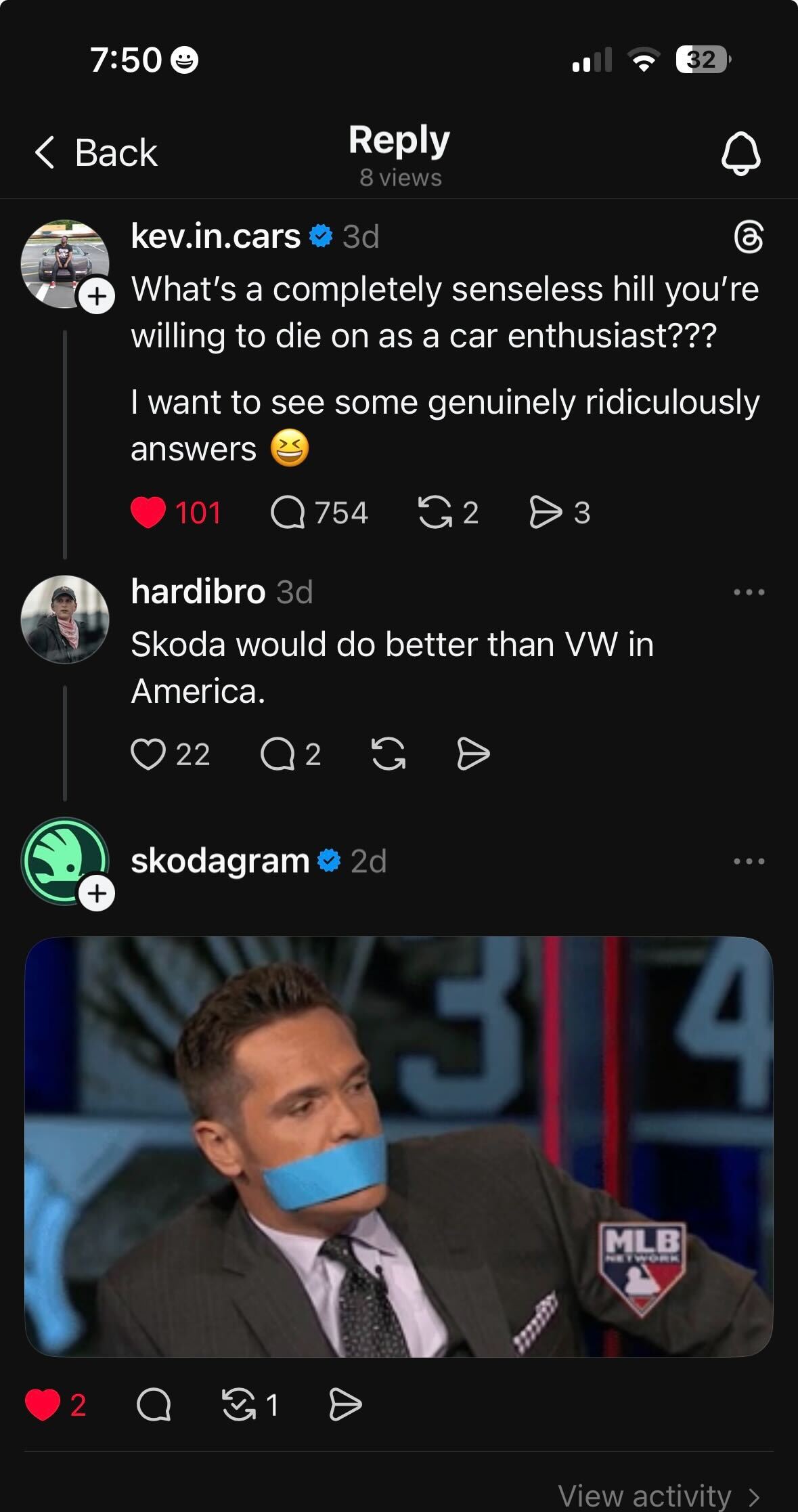
So you’re saying there’s a chance?
NHTSA Keeps Delaying New Safety Rules
 Photo: IIHS
There was a time when a spirit of bipartisanship was supposed to lead to the government and, specifically, the National Highway Traffic Safety Administration, to do a better job of making sure automakers advanced vehicle safety.
This hasn’t happened, and Automotive News reports that the program has been consistently delayed:
The National Highway Traffic Safety Administration has settled into a pattern of delaying new crash tests, rules and other safety requirements, according to an Automotive News review, leaving the industry and consumers without clear guidance at a time of unprecedented technological change and innovation.
Last month, NHTSA proposed delays for at least 18 tests for vehicle safety features that feed into the New Car Assessment Program, a ratings system for consumers. For some upgrades, it has now published four successive delayed timelines.
Critics say NHTSA’s failure to keep up with the auto industry is stifling innovation as advanced driver-assistance features, automated driving and alternative powertrains become more popular. They also say the agency’s sluggishness is contributing to preventable deaths on the nation’s roadways, even as 2025’s traffic fatality rate makes up the second-lowest in recorded history.
NHTSA’s own report on why it’s late has also been delayed… It’s almost like cutting employees from major government agencies doesn’t somehow magically result in them operating better.
California Gets To Keep Its Waivers Safe From Congress, For Now
 Source: CARB
What the Trump administration does with regards to fuel economy is serious, but it’s also all in the shadow of whatever ends up happening with the waivers granted by the EPA to California at the end of the Biden administration, as I wrote earlier this week.
One of the ways the current EPA has tried to diminish the California Air Resource Board’s ability to set its own emissions standards is by saying that changes should have been sent to the Senate under the Congressional Review Act, meaning that Republicans would only need 50 votes (not 60) to overturn the waivers.
A judge disagreed, and it’s not likely Congress will get a chance to overturn it before they go on break.
U.S. District Judge Beryl Howell said in a preliminary injunction ruling that the EPA had urged the court to “engage in Orwellian doublethink” in seeking approval and arguing the agency is ignoring serious inconsistencies.
“The EPA cannot say one thing to Congress while ignoring any consequence from reclassifying these waivers as rules,” Howell said. “Such gamesmanship may seem like a clever policy move, but undermines honest compliance with the law.”
It’ll be a while for this is all resolved, but it’s a win for California.
What I’m Listening To While Writing TMD
I have yet to attempt it, but it’ll take AC/DC at their word when they say “It’s A Long Way To The Top” if you want to rock and/or roll.
The Big Question
Are you doing one last summer road trip or are you done? If you already did it, what was it?
Top photo: Universal/Volkswagen