
Sep 07, 2026 06:00:00
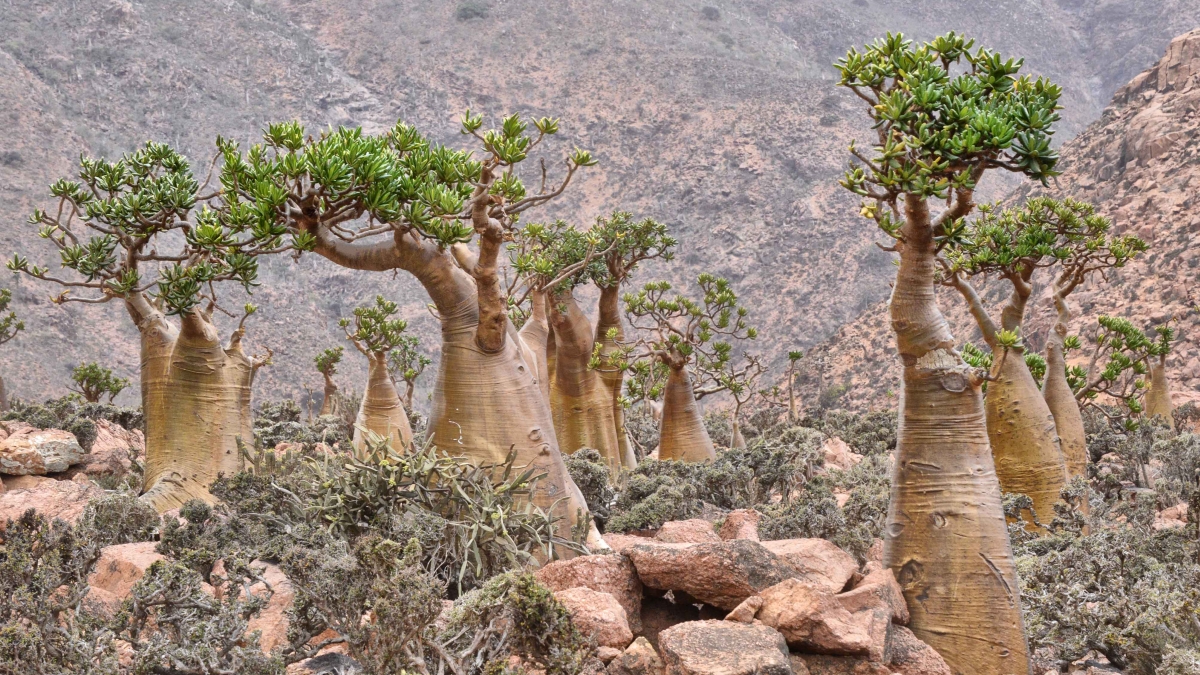
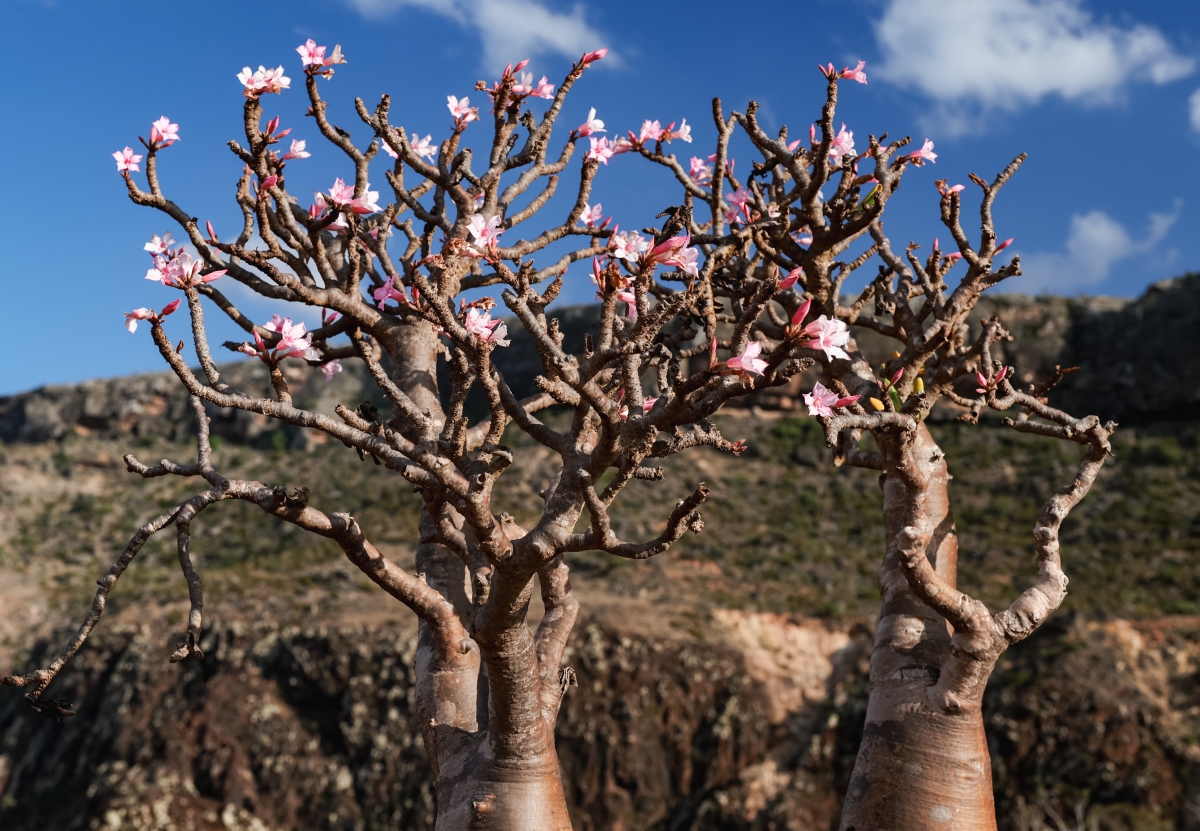
On the Yemeni island of Socotra in the Indian Ocean, there is a plant with a trunk that resembles a giant bottle placed on the ground, and which blooms with vibrant pink flowers in dry, rocky areas. ScienceAlert, a science media outlet, has provided an explanation of this plant, known as the ‘bottle tree.’
Meet The ‘Bottle Tree’ Whose Sap Is Both Poison And Medicine : ScienceAlert
https://www.sciencealert.com/this-tree-has-sap-so-toxic-it-causes-blurred-vision-and-can-kill-you 
Adenium obesum – Wikipedia
https://en.wikipedia.org/wiki/Adenium_obesum
ScienceAlert explains that the ‘bottle tree’ is a type of Adenium obesum, a succulent plant belonging to the Apocynaceae family, that grows on Socotra Island. Adenium obesum itself is distributed in arid regions from the Sahel region on the southern edge of the Sahara Desert to eastern and southern Africa and the Arabian Peninsula, and is also known as the ‘desert rose.’
The type that grows on Socotra Island is not found growing naturally in other regions. The base of the trunk can reach a maximum diameter of about 2.4 meters, and it survives in environments with little rain by storing water in its greatly swollen trunk and roots, and it blooms with pink and white flowers from early March to late April.
Adenium obesum produces a milky white sap when damaged, which contains
cardiac glycosides that affect the contraction of the heart muscle and heart rate. These cardiac glycosides strengthen the heart’s contractions while simultaneously slowing the heart rate, and are therefore used to treat heart failure and some arrhythmias.
However, this does not mean that the sap of Adenium obesum can be used as a safe medicine. The difference between the amount of cardiac glycoside needed for treatment and the amount that causes side effects is small, and if too much is ingested, it can cause vomiting, blurred vision, dangerous arrhythmias, and even be life-threatening.
Furthermore, the sap of Adenium obesum is dangerous not only to humans but also to animals. A case report published in March 2026 described a blue-and-yellow macaw that showed severe symptoms of poisoning immediately after eating the flowers of an Adenium obesum being grown indoors, and required 12 days of treatment.
People also use the toxicity of Adenium obesum for hunting; the Hadza people, hunter-gatherers in northern Tanzania, have coated their arrows with Adenium obesum poison to hunt buffalo, zebras, giraffes, and birds. The seeds and roots are said to be particularly toxic, and in other regions, they are used as a poison to catch fish and kill pests and vermin.
On the other hand, a 2024 review paper on ethnobotany concluded that Adenium obesum has been used as a traditional medicine for skin abnormalities, wounds, earaches, tooth decay, lice, and infections.
Furthermore, past studies have isolated and identified 53 compounds from Adenium obesum, some of which have been reported to have antibacterial, antiviral, antioxidant, and anticancer properties. However, some of these compounds are toxic, and it remains unclear which of the traditional treatments are actually effective.
Adenium obesum has played cultural roles beyond its medicinal and poisonous uses, such as the belief that its sap wards off the evil eye and protects people from evil spirits and malevolent beings, its stems, leaves, and flowers being used as offerings in Buddhist rituals, and in some parts of Indonesia for grave visits and mourning the dead. Furthermore, its swollen roots can be trained to entwine with rocks to create bonsai, and the pigments of its flowers are used in eco-prints on fabric.
ScienceAlert concludes that Adenium obesum is a multifaceted plant that is a ‘living water reservoir’ that produces beautiful flowers, but is also used in traditional medicine and rituals, and can be a life-threatening poison under certain circumstances.