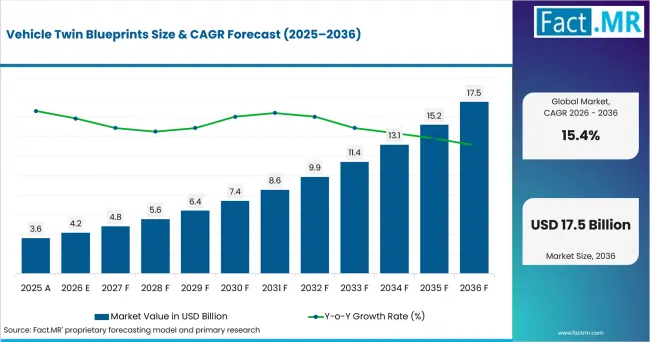
The market covers commercial software licenses, subscriptions and engineering environments that provide reusable vehicle-level digital twin blueprints for automotive system architecture, virtual validation, manufacturing launch and in-service engineering. Revenue is counted where a product provides a configurable twin framework or system model that can be applied across vehicle programs, variants or lifecycle stages.
What is included in the scope?
Included offerings cover full-vehicle architecture twins, E/E and software twins, powertrain or energy twins, manufacturing twins, and service or fleet twins.
The scope includes concept and architecture use, virtual validation, manufacturing launch, in-service optimization and after-sales diagnostics across the stated vehicle categories and data-basis models.
What is excluded from the scope?
Excluded are stand-alone CAD or CAE tools that do not provide a reusable vehicle-twin workflow, generic PLM systems without vehicle-twin functionality, physical test equipment sold separately, raw sensor hardware, and telemetry platforms that collect vehicle data without maintaining a corresponding vehicle model.
Adjacent autonomous-driving simulation is included only where it is part of the vehicle twin blueprint offering.
How Was the Analysis Built?
Primary research is structured around automotive OEM systems engineers, E/E and software architects, validation leaders, CAE and simulation teams, Tier-1 engineering suppliers, test organizations and digital twin software providers. Interviews focus on how system models are purchased, reused, correlated and governed across vehicle programs.
Desk research uses vehicle regulation, national mobility strategies, public research laboratories, technical standards and first-party provider material to assess adoption conditions, engineering workflows and current provider status.
Market sizing considers provider revenue exposure, engineering software spend, vehicle-program volume, blueprint deployment breadth, license or subscription structure, model reuse across variants and the share of development work moving into virtual validation. Country analysis considers automotive engineering activity, SDV policy, simulation infrastructure and public R&D programs.
Validation checks focus on current provider ownership, product releases, regulatory requirements, vehicle-development workflows and changes in the balance between simulation and physical testing. Forecast assumptions are updated as vehicle architectures, software release practices and digital engineering adoption change.