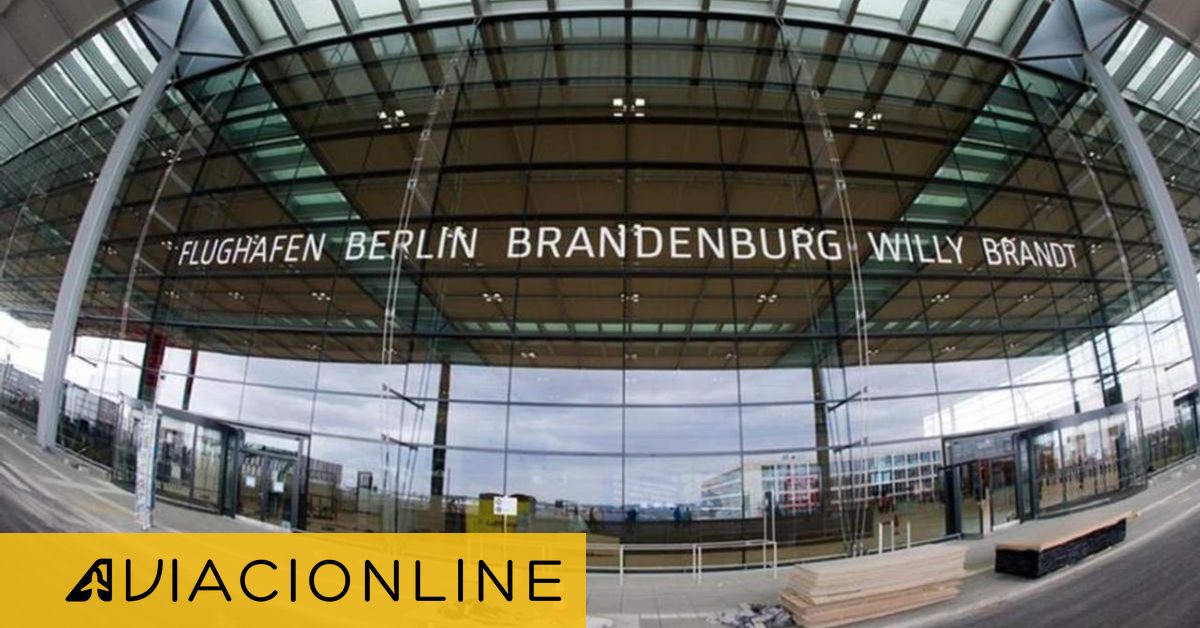
After decades of lobbying and amid the state visit of the president of the United Arab Emirates, Germany granted additional traffic rights that will allow Emirates to operate daily flights between Dubai and Berlin Brandenburg Airport (BER).
The agreement was announced on September 10 during the Berlin visit of Sheikh Mohamed bin Zayed Al Nahyan, who met with Chancellor Friedrich Merz and Berlin’s mayor, Kai Wegner. The decision is part of a new air transport understanding between the two countries.
Emirates currently operates to Frankfurt, Munich, Düsseldorf and Hamburg. Berlin becomes the fifth authorized point of entry, although the additional flights are limited to a maximum of seven weekly frequencies (in other words, a daily service), and the airline will not be able to exercise fifth-freedom rights from BER: it may only fly between Germany and the United Arab Emirates, without continuing to third countries.
“After years of negotiations, we have finally reached a forward-looking result. By granting a UAE airline a fifth point of entry in Germany, in addition to the previous four, we tie Germany even more closely to the UAE,” said Federal Transport Minister Steffen Bilger. “The airline’s additional flights are limited to a maximum of seven per week. At the same time, we rule out the airline operating flights between the fifth point of entry and third states. This strengthens Germany as an aviation hub”.
Wegner welcomed the announcement: “With daily Emirates long-haul flights from Berlin to Dubai, two growing economic regions move even closer together. This makes the capital’s airport better connected internationally”.
A long-running dispute
The four-destination limit on UAE airlines in Germany stems from a 1994 bilateral agreement. Emirates has spent years pushing to add Berlin and Stuttgart, arguing that the German capital is underserved in long-haul connections and that a daily Boeing 777-300ER service would generate employment, tourism and integration with its Dubai hub.
Lufthansa and the states of Hesse and Bavaria opposed the move persistently. The German group argues that much of Emirates’ traffic from Germany connects at Dubai to destinations in Asia, Africa and Oceania, draining passengers from its Frankfurt and Munich hubs. Internally, the company was frustrated at having failed to prevent the expansion of rights.
Emirates asks for slots to fly to Berlin-Brandenburg and challenges Lufthansa
BER already has services to Dubai: Condor will begin on October 25 and Eurowings (a Lufthansa subsidiary) on November 1. Emirates’ arrival adds a network carrier with greater capacity and connectivity beyond the emirate city itself.
The aviation package was announced alongside a United Arab Emirates investment commitment of €40 billion in Germany, focused on digital infrastructure, data centers, energy and artificial intelligence, in addition to dozens of business memorandums of understanding.
The exact launch date has not yet been confirmed. In previous months, Emirates had reserved slots at BER and was weighing a start in December 2026 with Boeing 777s, although aircraft delivery delays had altered those plans. With the rights now granted, the airline can move forward with scheduling.
For the Berlin airport, opened years behind schedule and with a limited intercontinental offering, the route represents a symbolic and commercial boost. It remains to be seen how the operation materializes and whether, over time, the debate over Stuttgart or additional frequencies reopens.