Patriots and Tories
Support for independence from England was nowhere near homogenous. Along coastal South Carolina, there were strong allegiances to England in some communities. While Hilton Head leaned to the Patriot’s cause, a veritable island in a sea of Tory sympathies, including nearby Daufuskie Island, which was fiercely loyal to the Crown.
“The Patriots on Hilton Head harassed the Tories on Daufuskie Island, which they nicknamed ‘Little Bermuda’ because of the staunch loyalism,” wrote authors Lawrence S. Rowland, Alexander Moor and George C. Rogers Jr. in “The History of Beaufort County, South Carolina, Volume 1, 1514-1861.” Bermuda was colonized by Britain in 1609, and settlers from that Caribbean outpost led the expedition that landed in Charles Town in 1670.
In the late 1770s, both British and Continental forces moved out of the Beaufort District, the authors wrote. With no military to enforce the restoration of the government, there were numerous acts of “plunder, murder and revenge” between Patriot and Tory factions. A string of atrocities were committed by forces from each neighboring island against the other in a tit-for-tat exchange that left many dead in its wake.
“There were more military clashes that occurred with the larger armies in the north. But down here, it was a civil war, community against community, family against family,” Thomas said.

Golf fans worldwide know the RBC Heritage’s famous 18th hole (above) along Calibogue Sound, thanks in part to international TV coverage and the landmark lighthouse behind the green. The long-running PGA Tour stop is considered South Carolina’s biggest annual sporting event.
File/Provided
A proper home
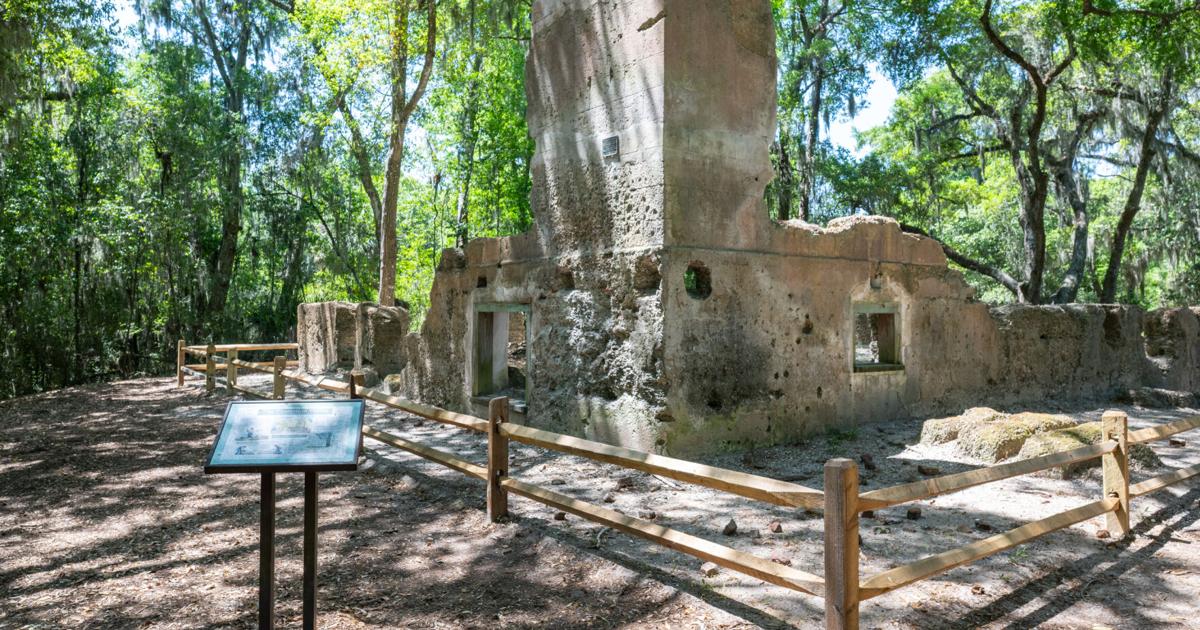
With the end of the war, Stoney turned over most of the responsibility for operating his plantations to his sons as he retired to the life of a gentleman farmer. Near the end of the 18th century, he built “a proper home” for his wife on Braddock’s Point plantation. For Stoney, that meant a 1,900-square-foot tabby and timber home believed to have been the only tabby home on the island.
Primarily growing sea island cotton, Stoney’s plantation required an unknown number of enslaved people, laboring in anonymity, though the fingerprint of their work was everywhere.