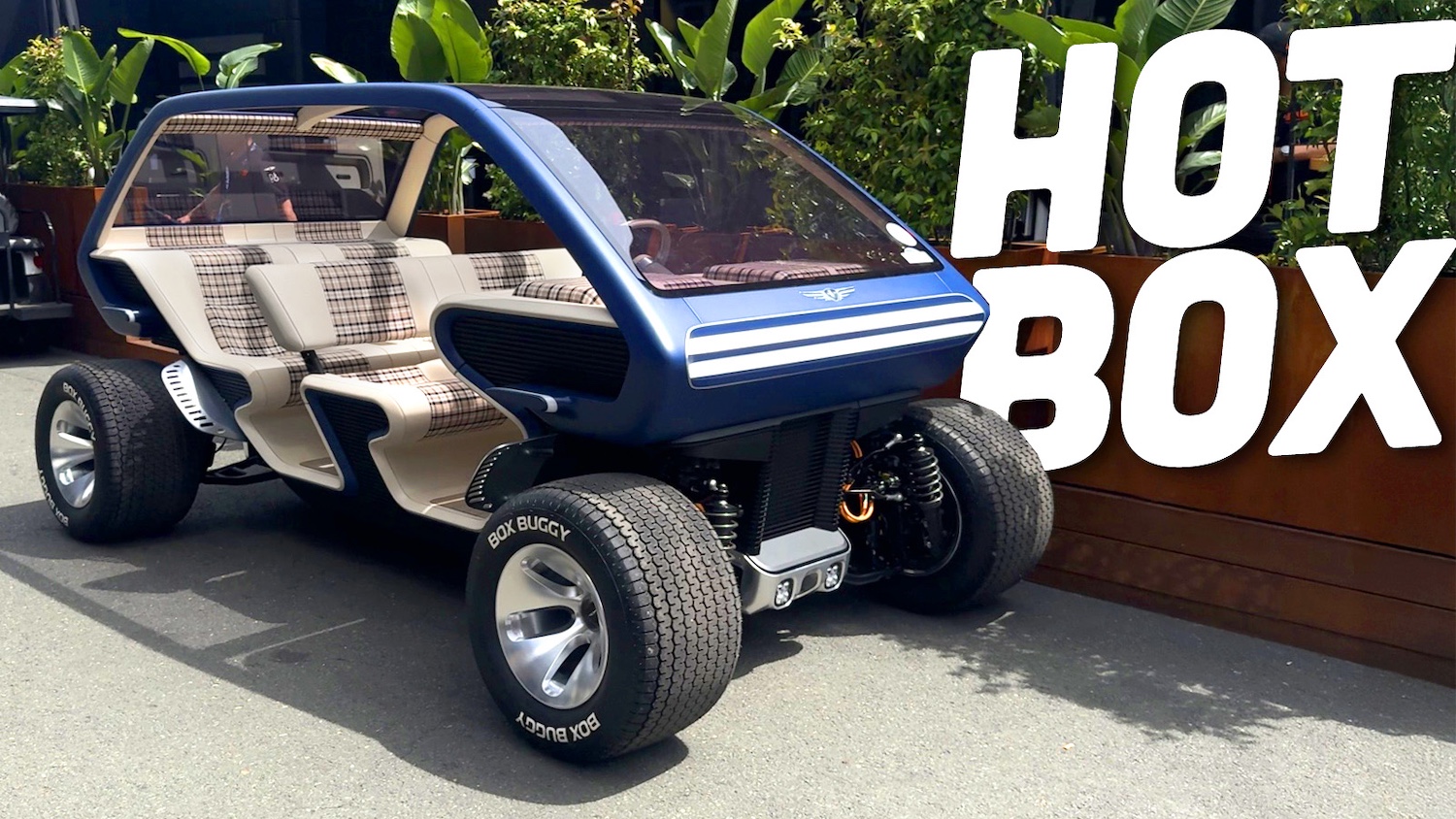
Every year, cars descend upon a small town in the French countryside for the 24 Hours of Le Mans. This year, there were 62 vehicles in the race, countless cars and race cars on display, and parking lots full of everything from Porsche 911s to Renault Clios. But the car I saw everyone freaking out about wasn’t really a car at all. It was Genesis’ fancy, futuristic concept cart called the “Box Buggy.”
Genesis took me to France this year for the company’s Le Mans debut in the race’s top Hypercar class, but I had no idea the Box Buggy would be there. I had no idea it even existed. We just rolled up to the track and saw it, alongside Genesis’ Hypercars and two new concept cars: a race car called the GT3, and a road car called the Magma GT.



The Box Buggy is also a concept, and Genesis’ Chief Creative Officer, former Lamborghini designer Luc Donckerwolke, referred to the it as a toy that his team brought to life. There aren’t many details about the Box Buggy yet, and the only reference to it on Genesis’ U.S. media site is four photos. No press release, no specs, no further details. But in my sleep-deprived haze during Le Mans, I remember seeing a video of the buggy using its four-wheel-steer system to rotate in place. My internal monologue went something like: “Woah. Cool. I need some sleep.”
While a lot of concept cars either get parked on a stage or rolled around a specified closed course, either because they have limited function or are motor-less rollers, the Box Buggy was out and about all weekend at Le Mans. Genesis parked the buggy in the paddock and used it to transport people around the track, and every time I saw it, there was a crowd of passerby taking photos and videos.

A buggy might seem like a silly thing to chase at a venue full of supercars, race cars, and cheap hatchbacks that aren’t available in America. But the compelling thing about the Box Buggy was that it took a familiar concept (a golf cart, basically, just without a dedicated spot for your clubs) and made it something entirely new. Gone are the plasticky body panels, all-weather seats and floors, and simple canopy over the seats that are typical spec for an afternoon on the links, replaced with the kind of styling and materials (and a proper roof) you’d expect from a fancy sports-car restomod.
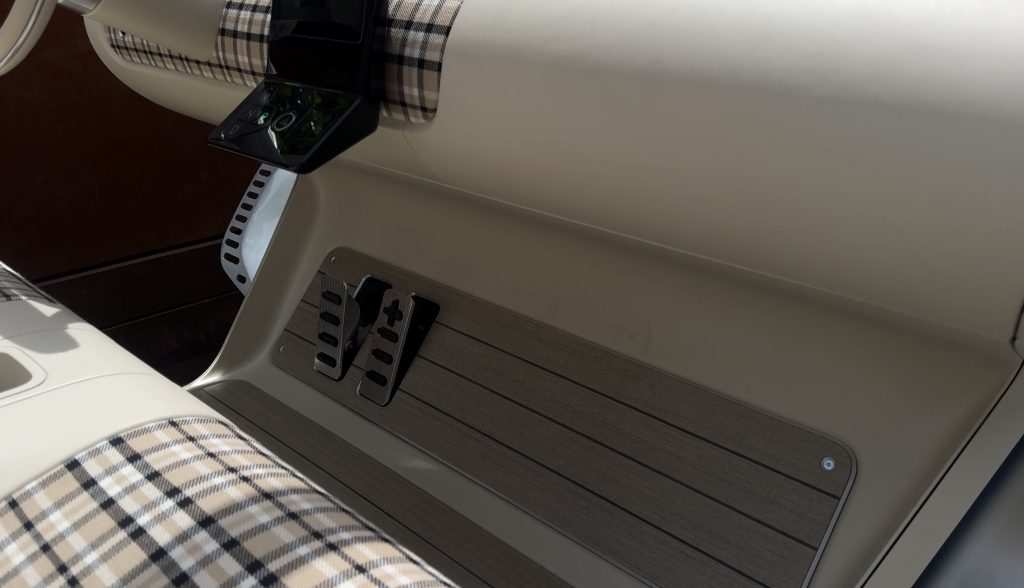
The outside of the Box Buggy was minimal yet futuristic, with light bars and Genesis branding running down the nose and tail, and the inside was covered in tan plaid upholstery. It had the kind of plush steering wheel we’ve all come to expect in Genesis’ actual luxury cars, and the floorboards were a light-grain tan wood. (Whether this was real wood or not, I couldn’t tell. I wanted to touch it but decided to behave myself.) There was a giant center screen, and the roof was entirely windows.
When I realized how popular the Box Buggy was, I tried to pinpoint the reason. I knew why I liked it: I enjoy weird things. But what about everyone else? Why did crowds love this thing so much?
I think it comes down to two things. First, the Box Buggy reimagines something that’s become stale. It’s human nature to be intrigued by new things, and the Box Buggy replaces typical golf-cart styling — which has become boring by virtue of golf carts looking so similar to one another — with something new. Second, the Box Buggy is a concept car you can see in action.

I recently wrote about how, for years, especially in the 2010s and early 2020s, writing about promotional cars and concepts as an American automotive journalist was a drag. They felt like vaporware, because they were so far from what automakers were actually producing for the road. For me, it came to a head with a promo video for Nikola’s hydrogen-powered semi truck, which deceptively showed the semi rolling down a hill instead of operating under its own power.
For too long, concept cars felt more like lies than promises for the future. They sat on stages, unmoving and unlikely to ever come to fruition. But modern concepts from Genesis and its parent company, Hyundai Motor Group, finally feel like promises again. That’s underscored by the fact that vehicles like the Box Buggy are out running around, getting real reactions from real people.

I don’t know if the Box Buggy will ever be more than just a hype-generating toy for Genesis. But I do know that everyone I saw, including myself, loved watching it run around Le Mans. It stole the show because it was new and interesting, and if public reaction holds any weight in turning a fun concept into a real vehicle, then maybe the world is in for a new era of fancy, futuristic golf carts like this one.
[Ed note: I would be remiss if I didn’t mention the Box Buggy is reminding me of the Roamer, the modified Brubaker Box that starred alongside the Ark II in the 1970s live-action kids show of the same name. – Pete]
Top graphic image: Alanis King