The rise and fall of LIV Golf has been something to behold. The league, which is backed by the Public Investment Fund of Saudi Arabia, offered massive paydays to many of the golfers on the PGA Tour.
Many guys stayed the course, remaining with the PGA Tour even in the face of turning down tens or hundreds of millions of dollars. But dozens of big names, including Jon Rahm, Dustin Johnson, Bryson DeChambeau, and Brooks Koepka, all defected to LIV Golf.
The appeal wasn’t difficult to understand. LIV offered enormous guaranteed contracts, more casual settings, and shorter events that didn’t have a cut—meaning everyone got paid, even the last-place finisher.
Yet in April, the Saudi PIF, which has backed LIV Golf since its founding in 2022, announced it would stop funding the league after the 2026 season. To date, PIF has invested about $6 billion in LIV Golf.
After spending $6 billion to upend professional golf, LIV suddenly had to figure out how to survive without the seemingly bottomless pool of Saudi money that made the entire experiment possible.

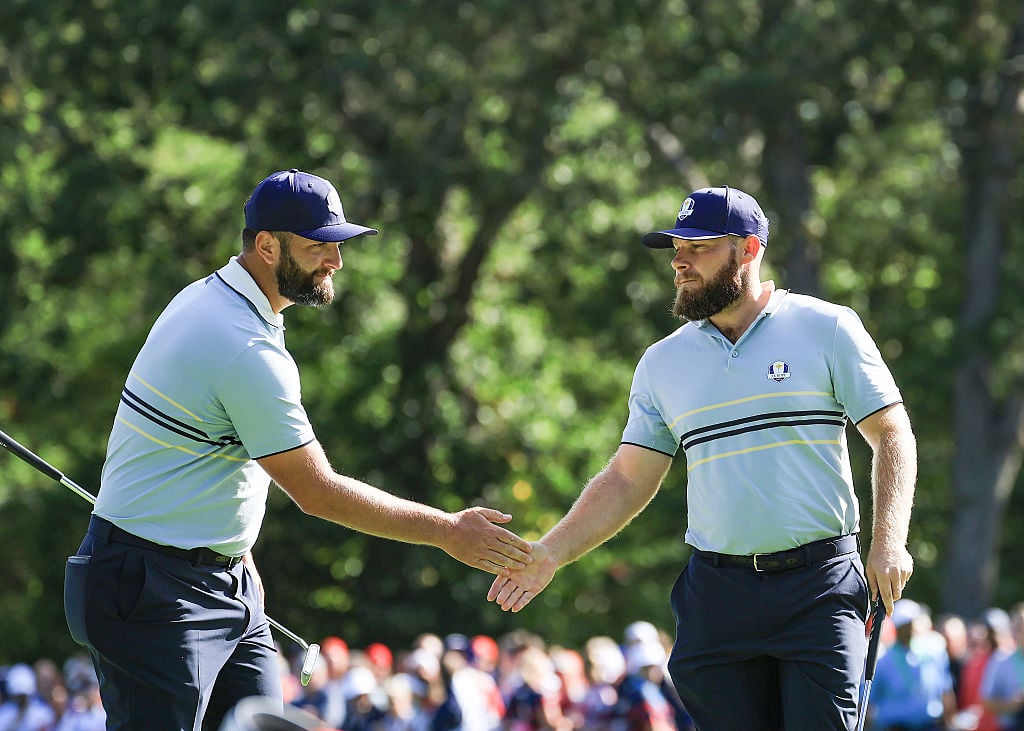
Jon Rahm and Tyrrell Hatton are looking to recover some of their LIV Golf salary. (David Cannon/Getty Images)
During a conference earlier this month, LIV Golf CEO Scott O’Neil announced that the league had found a new lead investor to help finance what he has called LIV Golf 2.0. LIV had been seeking roughly $250 million to $350 million in outside investment, though O’Neil did not reveal the identity of the new investor or how much money it had actually committed.
He also said players will be able to hold equity in the LIV Golf 2.0 league and capitalize on name, image, and likeness deals. Finally, O’Neil said the 2027 season will cut the schedule down to 10 events, with five in the U.S. and five in other parts of the world.
But the unanswered questions surrounding LIV’s financing could leave some of the league’s top players in an uncomfortable position.
One report suggests the league still owes more than $250 million to its players. Rahm may have the most money at stake. His contract was heavily backloaded, and he is reportedly still owed as much as $150 million in future payments.
That’s a remarkable situation when you consider that Rahm’s move to LIV was celebrated as one of the biggest guaranteed paydays in sports history. A contract worth hundreds of millions of dollars is only as valuable as the organization’s ability to make the payments.
DeChambeau, who has been attending meetings with potential investors, led a recent players’ meeting discussing the future of LIV Golf. With nothing about the league’s long-term financing truly set in stone, players are understandably considering all of their options.
Rahm seems to be the biggest name on the hook if LIV Golf winds up going under, but he’d be far from the only one. DeChambeau, Tyrrell Hatton, and Joaquin Niemann also reportedly still have money due to them, and there are likely other players waiting on future contractual payments.
Maybe LIV Golf 2.0 works. Maybe the new investment arrives, the player-equity model succeeds, and everyone ultimately receives every dollar they were promised.
But LIV’s current predicament is still pretty extraordinary. The league spent roughly $6 billion disrupting professional golf, transforming player salaries and convincing some of the sport’s biggest stars to walk away from the PGA Tour.
Now, as PIF funding barrels toward an ending on August 30, LIV faces a much simpler financial question:
Will it have enough money to finish paying the golfers who helped build it?