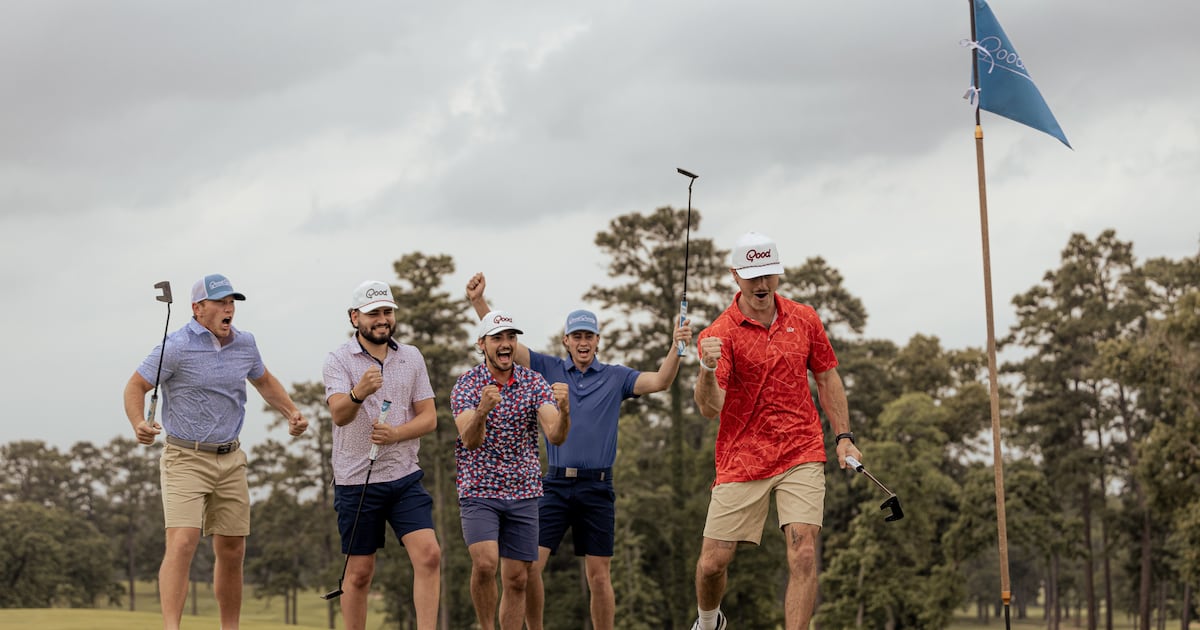
Matt Kendrick has built Good Good Golf into one of the most recognizable brands in the sport over the past five years. But that’s not where he ultimately wants the influencer golf company to be.
The Good Good Golf co-founder has lofty goals.
“We want to be the biggest golf company in the world,” Kendrick said recently. “We are building the next-generation golf company.”
In 2020, 20-year-old YouTuber Garrett Clark, who had his own golf trick shot YouTube channel called GM Golf, officially started Good Good with Kendrick and a handful of other amateurs who specialized in trick shots. As interest in golf grew in the years after the COVID-19 pandemic, both on and off the course, so did interest in Good Good. The channel launched with trick shot videos, as well as matches among its members, and crossed 1 million subscribers just a couple of years later.
As of July, Good Good has seven official YouTube channels and nearly 820 million views. Its main channel has 2.1 million subscribers alone.
Kendrick, 40, said content creation remains the foundation of Good Good, but its goal is to continue expanding beyond that. One of those areas is through Versant and Golf Channel.
Good Good has had a handful of live competitions on Golf Channel, and it is the presenting sponsor of Golf Channel’s “Big Break,” which returns to the airwaves at 9 p.m. ET on Aug. 25 after an 11-year hiatus. The show will run through November and have contestants play for a spot in the Good Good Championship in Austin, marking Good Good’s first title sponsorship of a PGA Tour event.
“From the beginning, we both saw value in each of our audiences individually,” said Glenn Grimshaw, Golf Channel’s vice president of franchise development. “From our perspective, this was a new, up-and-coming young audience in the YouTube space that was full of fun golf content without opinions. That’s what attracted us to their brand. And then once you get to know them, they’re good people. We’ve been able to try things together without having any egos on either side.”
While content and influencer creation remain Good Good’s core, it hopes the expansion to linear TV and a more traditional golf audience will widen its reach.
“It gives us an opportunity to put our brand in a more traditional golf space,” Kendrick said. “That’s something that’s important to us because we know not everyone watches YouTube golf. And so how do you continue to grow the brand in the golf space? And that’s putting it where other people watch golf as well.”
More than entertainment
Good Good Golf has three pillars to its business: Content, product and live events/experiences.
On the product side, Good Good continues to grow with a clientele that skews heavily in the 18-45 age range. It has hats and other apparel in Target stores. It’s worked with Callaway Golf to have its logo on shoes, balls and gloves. In July, it struck a licensing agreement with Dude Perfect. And later this year, Good Good and Callaway will roll out drivers and putters, according to Kendrick.
“We look for ways to diversify everything that we do in the golf space, but I also believe that you’re starting to see that Good Good … everything that we’ve built here is also a platform for other opportunities,” Kendrick said.
WME’s Davis Holman, who works with Good Good on its commercial deals, said the company has 11 commercial partners, co-branding with seven of them, and is working with potential partners in livestreaming and collectibles. In addition to Dude Perfect, Good Good has worked with esports organization OpTic Gaming on product development.
“[They’re] partners that touch golf, but I wouldn’t say all are golf endemic,” Holman said. “Callaway is a great partner and we hope to be doing that for a long time, but it’s not all going to be golf brands.”
Added Kendrick: “Anything that we do, [we’ll do] anything that doesn’t restrict us from continuing to build our own golf products. We’re very protective of that because that’s what we’re trying to establish ourselves as.”
Title-sponsoring the November tournament is one of Good Good’s largest endeavors. The company is also the host organization of the event, which HNS Sports is operating. With all the other expansions, why did Good Good decide to title-sponsor a tournament?
Good Good has been a net positive for golf. They’ve connected a younger audience to the game in a way the rest of the industry hasn’t always been able to.
— Terry Clark, PGA of America CEO
“It’s important to us to be looked at as somebody that’s investing in the game of golf from a competitive side,” Kendrick said. “And there’s no doubt the PGA Tour has the best players in the world playing on that tour, and we want to be associated with it. And we also want to be able to put on an event for those players that feels different and gives an experience, helps introduce them to anything that we’re doing.”
“For us to be aligned with a professional organization like the PGA Tour, and us having a whole week to ourselves in a professional environment, is extremely valuable to the brand building of what we’re doing. And it sends a message to the world that, ‘Hey, we’re a serious organization. We’re not a flash in the pan. We’re not just golf entertainment.’”
Good Good also has chipped in on the non-revenue side. It’s worked closely with the PGA of America and the North Texas PGA on their junior programs. And it has collaborated with Augusta National Golf Club around its annual Drive, Chip & Putt competition for junior players.
 Co-founder Matt Kendrick said Good Good Golf’s title-sponsoring of a PGA Tour event signals that it is “a serious organization.” Good Good Golf
“Good Good has been a net positive for golf,” PGA of America CEO Terry Clark said. “They’ve connected a younger audience to the game in a way the rest of the industry hasn’t always been able to. If I genuinely believe in growing the game — and I do — then I think they’re part of the story. … They’ve figured out how to make golf feel fun, social and approachable.”
“Everything that we do is looking at how do we affect the game as a whole,” Kendrick said.
‘New wave’ of golf
Good Good Golf has a full-time staff of around 50 employees, who are based mostly in the Dallas-Fort Worth area. Last year, Good Good secured a $45 million investment from a group that includes Creator Sports Capital, Manhattan West, Sunflower Bank and Peyton Manning’s Omaha Productions. It has sponsored PGA Tour players, including Joel Dahmen and Beau Hossler.
“The company cash flows really well, and so us supporting our capital needs internally has never really been an issue,” Kendrick said. “We would look at things from a strategic standpoint more than anything, and that’s how we looked at the raise that we did in March of last year when we closed it. To get to some of the big ideas that we have down the road, we’re going to need more cash to do those types of things.”
Good Good recently hired Alex Criscuolo as its director of product and innovation. He joined Good Good after a stint as a senior product designer at Tiger Woods’ Sun Day Red brand. Before that, he was a designer at TaylorMade Golf.
“People have watched and consumed golf in one way for so long that it’s kind of hard to train people or educate people on — you can watch golf in a different way,” Criscuolo said. “[At] Good Good, they understand this new wave, this new generation of young golfers. And since COVID, everyone from different walks of life have entered the game and started playing.”
Criscuolo’s charge is to build on Good Good’s following but also expand in other demographics.
“The idea is to get a young consumer involved in Good Good and have them grow with the brand,” he said. “So we want them to continue to wear Good Good and support the brand, whether they’re 12 years old or 40 years old. I think we want to have product that any age can really wear. And you don’t want a consumer to outgrow your brand. You want them to continue to evolve with us.”