The golf world is still getting its arms around the PGA Tour’s major changes coming in 2028, considered by many to be the most seismic in the tour’s history.
With a Championship and Challenger Series, new and old markets, a calendar shift for some of those markets and sponsorships for $30 million and more, it’s all still resonating throughout golf.
In recent weeks, Sports Business Journal polled the industry to get a sense of how it was responding to the new model. SBJ posed the question: Buy, sell or hold the PGA Tour’s changes? A total of 43 industry stakeholders gave direct responses, while a handful of others provided anonymous commentary.
Of the 43 who responded, more than half (26) said they would buy the tour’s changes. Fourteen said they would hold on the plan, needing more information, while three respondents said they would sell completely.
Of those who responded, 12 were player agents/managers, nine were tournament directors or operators, eight came from media, eight were other agency reps and six were varied industry stakeholders.
Championship or bust?
There are now two PGA Tours: the Championship and Challenger series. The Championship Series will consist of 15 events (not including postseason, majors, Players Championship or the Ryder/Presidents cups) and the top 120 players on tour. Championship events are expected to have most, if not all, of that top 120 and be contested across the tour’s best golf courses and markets.
Despite the lofty cost to sponsor a Championship tournament, the PGA Tour has not had an issue selling the events at $30 million per year. To date, seven of 15 have been confirmed, including new markets. Importantly, the tour has brought in new title sponsors to go with existing ones. Japan-based insurer Sompo is sponsoring a new event in 2027 that will become Championship-level in 2028. Raymond James also is set to sponsor Greensboro’s annual tour stop.
Why the high demand for such a costly endeavor?
“It gives sponsors a meaningful championship to support, and the product is more consistent and predictable,” one Championship tournament director said. “Players know exactly what they have to do. Fans understand it.”
The cost of deals is increasing. Whereas some of the Signature event tournaments were going for $25 million per year, Championship events are going for as much as $30 million, and are said to have yearly escalators.
“Sponsors are the winners because they know what the product is,” one agency source said. “But sponsors are also the losers because they are absorbing every bit of the cost increases. Thirty million dollars to sponsor a tour event is diabolical.”
One of the main positives of the Championship Series is that the PGA Tour’s top players will be playing in the same place during events. That has been the case with the current Signature event model, but those tournaments have had only 72 players and have not had a halfway cut, which is considered a stain on the model by many industry executives. In a move that’s been widely applauded, Championship Series tournaments will have cuts.
“[There will be] more top players playing head-to-head more often,” one executive said. “Over time, it will be easier for fans to know when they can see the heavyweights. And it gives players scheduled weeks off.”
A potential drawback around the Championship Series is that top players, at least currently, won’t be required to compete in those tournaments. To draw a parallel, Rory McIlroy skipped three of eight Signature series events this season on tour. Scottie Scheffler, the world’s No. 1 player, typically has not played the Truist Championship in Charlotte. In fact, many top players have skipped at least one Signature event per year.
 For now, top players like Scottie Scheffler won’t be required to compete in Championship Series events. Getty Images
“Golf is not F1 — in F1, all teams and drivers show up for each and every race,” one longtime media executive said. “It is unthinkable to have a race without Ferrari or Red Bull. In golf, players play a schedule that suits them. Tiger [Woods] rarely played a week before a major, while Rory seems to enjoy doing that. Why should they have to conform to a single schedule when it may not be best for the individual?”
Marty Gorsich, the tournament director of The Sentry (a Championship Series event) and member of the PGA Tour’s Tournament Advisory Committee, pushed back on that notion, pointing to other sports where top players may not play in every single game. He said knowing most of those top players will compete should help drive interest around the tournament.
“You may get a chance to see the Yankees come here to San Diego to play the Padres,” Gorsich said. “It doesn’t mean that Aaron Judge is going to be playing all the time, but you get to see the Yankees. There’s going to be a few guys, whether they’re injured, whether they have some other opportunity or obligation, whether their best friend is getting married — but they’re not choosing between 43 events anymore.”
“To be able to tell the public we’re going to have 90-plus percent of the top players, that’s a lot more formidable than before, where I was waiting until a couple days before the tournament to know who I was going to end up with,” he added.
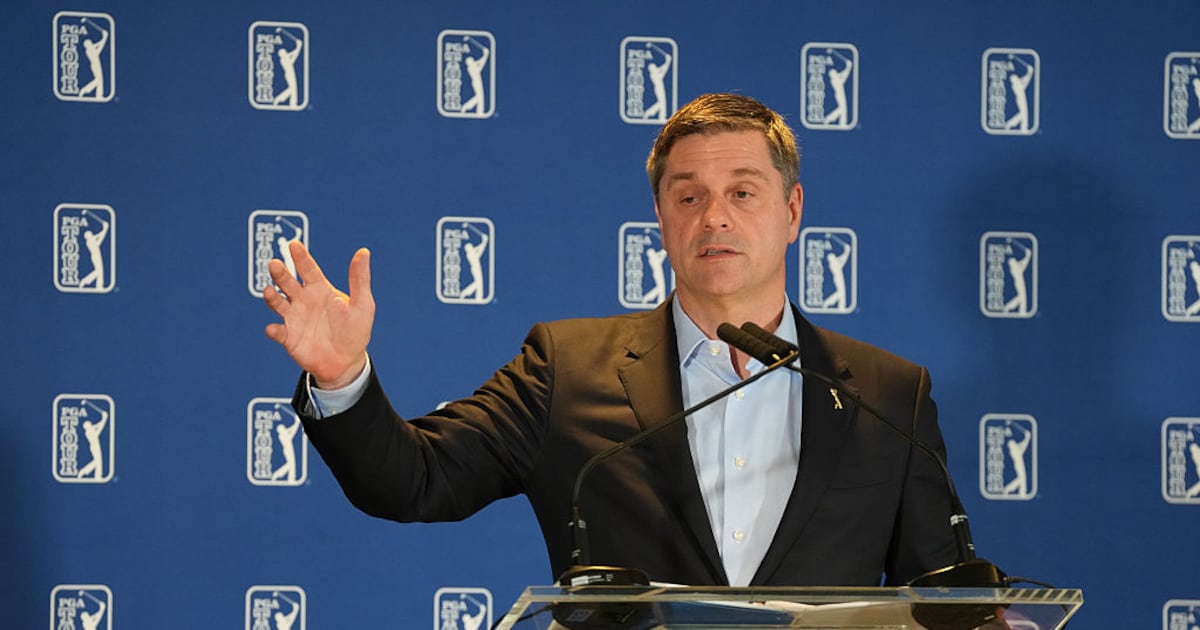
One of PGA Tour CEO Brian Rolapp’s selling points is that the new model will be easier to understand for both casual and die-hard fans. Despite being in its 20th year, the FedEx Cup remains a bear to figure out, even for the most tenured in the golf industry.
“I’ve been in golf 15 years and I cannot explain to you right now how the FedEx Cup points work,” Gorsich said. “I can’t explain to you even the playoffs, the way it’s set up. But especially week to week, who wins means something, but making a top 10 or a cut and the implications to you, it’s not intuitive.
“You’re going to at least have some storytelling and something to follow about individuals, and more than just who wins and loses,” he added. “You’re going to hear about the young college guys, or the young guy from Europe coming up. Or you’re going to watch a Rickie Fowler get relegated and root for him to make his way back.”
Up to the Challenge?
Among respondents, the most questions revolve around the Challenger Series. It will comprise 20 events with 144-man fields, and it’s expected that Championship players will rarely, if ever, compete at the Challenger level. That means big names, like Scheffler or McIlroy, won’t be able to drive interest and revenue around a field that might lack other star attractions.
Will viewers tune in to a product in which the top players aren’t competing? And by association, will sponsors be willing to sign on for those same events?
“I don’t know if I believe sponsors for events on the second track see enough value to keep investing,” one sponsorship executive said. “I see John Deere staying in because it’s such a community play. But others? Not so sure. The value will be massively reduced with no opportunity for stars to play, and without stars, the ratings plummet.”
The Challenger tournaments will have levels. Seven of the 20 events will have their own week and be aired on network TV on Saturday and Sunday. The remaining 13 will be played opposite Championship events and broadcast only on cable.
The two tiers of Challenger events also means two tiers of sponsorships. Sources said the seven network TV tournaments are going for around $10 million a year, while the cable/opposite events are in the $5 million range. There’s also a possibility for multiple sponsors to come in together on a Challenger Series event, the sources said, similar to the Players Championship and its three “Proud Partners.”
The promotion of Challenger Series players to the Championship level has been a major selling point by the PGA Tour. Theoretically, a player will have an opportunity to qualify his way onto the Championship Series every week. But where does that leave Challenger tournaments, which lose potentially marketable players to the higher level?
“You have to be able to build a marketing plan in a community to be able to sell your event,” one tournament director said. “Let’s just say, hypothetically, Max Homa is a Challenger Series player and he wins twice and gets a promotion. Well, he may be on a billboard in our community because that’s a guy that we could market, but now all of a sudden he’s gone.”
One thought circulating in the industry in recent months — and even dating back years with the Signature series — is that some of the top-tier events could rotate to different markets. For example, the Cognizant Classic in the Palm Beaches would be a Challenger event for three years, but would then be a Championship tournament in the fourth year. Industry executives said that idea has been shot down multiple times over the past few years, both for the Signature events as well as the new Championship/Challenger model.
“Every single week on the Challenger series, someone is playing for the ability to move up,” PGA Tour Chief Commercial Officer Dhruv Prasad said last month. “We’re going to be able to deliver stories of victory, stories of competitive consequence that will elevate. There’s this fallacy that on the PGA Tour, there are 10 guys that matter, and it’s just not true. This is a sport that has more competitive parity than maybe any other sport in the world.”
To draw a parallel with the Korn Ferry Tour, four players won twice in 2025, five won multiple times in 2024 and five won at least two times in 2023.
An eventual evolution
There undoubtedly will be winners and losers in the new model, but one through line and underlying message is that change had to be made.
“The PGA Tour has always evolved,” one longtime executive said. “These proposed changes are another step in that evolution. They won’t satisfy everyone, but standing still isn’t an option.”
“The good news is that these changes are happening at a time when golf has never been stronger,” the person added. “Participation is at record levels. The fan base is younger and more diverse. Golf has become culturally relevant again, driven by its unique blend of competition, lifestyle, travel, business and health and wellness.”
Beyond industry stakeholders, one other important faction has been largely in support of the new model: the players. They will be competing for more prize money than ever, on both the Championship and Challenger levels, and will have by and large a set schedule, a rarity in pro golf.
“The players are the most important asset,” one person said. “Keeping them happy is the only way to go — which it sounds like this is as close as they can get to something that walks the line of the all-stars and the mules.”