
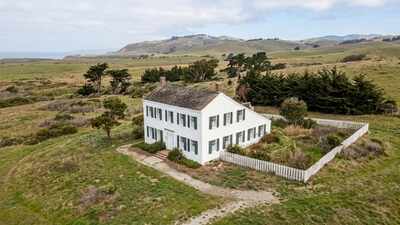
 AI-generated representative image showing the historic House surrounded by the rolling grasslands. Credits – Gemini South of Half Moon Bay, California, Johnston Ranch covers 868 acres of coastal grasslands, agricultural fields and natural habitat. In the early 1990s, developers proposed turning the property into a golf course and luxury homes. San Mateo County voters rejected the proposal, opening the way for conservation groups to protect the land. In 2024, the Midpeninsula Regional Open Space District, known as Midpen, completed the purchase of 644 acres of the ranch’s uplands. The land became part of the adjacent Miramontes Ridge Open Space Preserve, while farmland remained under separate ownership. The official account of Johnston Ranch’s preservation and transfer documents the property’s history and current ownership.Midpen’s board approved the $4.8 million purchase in November 2021, and the district began managing the uplands in December that year. However, the formal transfer of ownership from the Peninsula Open Space Trust, or POST, to Midpen was completed in June 2024. The distinction matters because management began more than two years before the ownership transfer was finalized.The vote that matteredThe property has a long history. It lies within the ancestral territory of the Ohlone peoples, including the Quiroste, who cultivated food and regularly burned grasslands before European settlement displaced them. In 1853, Scottish immigrant James Johnston purchased 1,162 acres of the Miramontes Rancho de San Benito along the southern part of Half Moon Bay. Johnston had arrived in California during the Gold Rush and later became a successful San Francisco businessman.In the early 1990s, the golf course and housing proposal faced strong local opposition. San Mateo County voters rejected it by 84%, creating an opportunity for POST, a private nonprofit land trust, to acquire and protect Johnston Ranch. POST purchased the property in two transactions, one in 1999 and another in 2001, for a combined $5.65 million. The two purchase dates and the total amount are confirmed in Midpen’s historical account of the property. POST’s longer-term plan was to find suitable stewards for the different parts of the property. That meant protecting the uplands as public open space while keeping the productive farmland available for continued agricultural use.Two owners, one ranchThe later ownership arrangement divided the ranch according to its conservation and agricultural uses. Midpen acquired the 644 acres of uplands for $4.8 million, using funds from Measure AA, which local voters approved in 2014. Grants totalling $700,000 from the Coastal Conservancy and the California State Parks Habitat Conservation Fund helped offset the acquisition cost. The district manages the uplands as part of its open space preserve system.POST retained the remaining 224 acres of prime agricultural land, where Giusti Farms has farmed for generations. POST holds an agricultural conservation easement over this farmland to prevent future development and ensure that it remains in production. The organisation has also expressed an intention to transfer ownership to the Giusti family in the future.

AI-generated representative image showing cattle grazing across the rolling grasslands. Credits – Gemini
What lives on the hillsMidpen characterises the uplands as rolling grassy slopes, coastal scrub and the Arroyo Leon Creek corridor. The rangelands that provide habitat for grasshopper and savanna sparrows, western meadowlarks, burrowing owls and American badgers are home to natural grasses such as California oatgrass, purple needlegrass and California meadow barley, as well as western rush. Cattle still graze the farm, but as a conservation strategy. Managed grazing can be beneficial to native grasslands that evolved with occasional disturbance, like those under a rangeland management plan Midpen wrote for a local rancher.People are part of the plan as well. When the transfer was announced, Midpen said it would conduct a public process on a possible loop trail near the Johnston House and connections to the adjacent Burleigh Murray Ranch State Park, while Half Moon Bay was preparing to plan a walking and cycling trail along Higgins Canyon Road to connect the house with downtown. And the house itself is owned by the city. The Johnston House Foundation says it is in the same place where it was erected in 1853, and it has arranged free, costumed docent visits on the third Saturday of each month from January through September in 2026.Johnston Ranch now has separate roles in conservation and agriculture. Midpen manages 644 acres of uplands as protected open space, while POST retains 224 acres of farmland under an agricultural conservation easement. The original $5.65 million was POST’s combined purchase price for the larger property in 1999 and 2001. Midpen’s later $4.8 million payment covered only the 644-acre upland section, not the entire ranch again and not an additional premium on the original purchase price. Grants helped offset that later acquisition, while Giusti Farms continued working the remaining agricultural land.