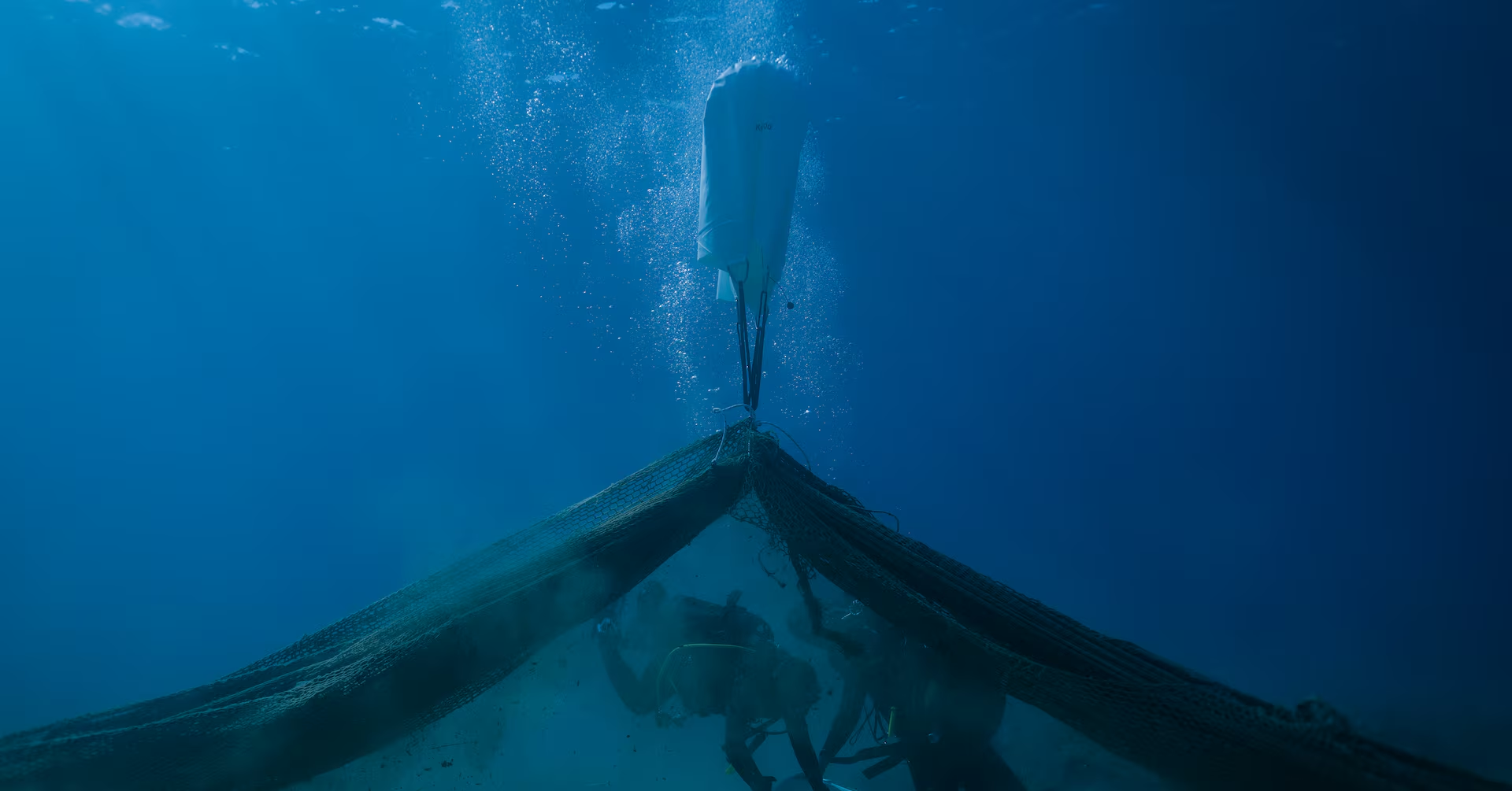
Volunteer divers of the environmental group Aegean Rebreath use lift bags to raise a fish-farming net from the seabed during an underwater cleanup off the islet Sapientza, in southern Greece, October 11, 2025. REUTERS/Stelios Misinas
Divers off the coast of Sapientza Island in southern Greece have launched a determined effort to remove “ghost nets” — abandoned fishing gear that silently strangles marine ecosystems.
Draped like curtains over the seabed, these nets trap unsuspecting sea creatures and slowly disintegrate into microplastics, poisoning the waters and suffocating life.
Attaching inflatable lift bags to the heavy, tangled nets, the divers worked with precision and urgency.
“The ghost net basically creates a dead zone — a dead zone in which nothing lives,” said volunteer Alexander Stavrakoulis, scanning the horizon. “Life is becoming obsolete. This is why it is so important for these ghost nets to be removed as soon as possible.”
Sapientza, known for its pristine waters and rich marine biodiversity, is now one of many sites threatened by the legacy of farm fishing.
Environmental group Aegean Rebreath launched the cleanup to remove ghost nets from known hotspots before they cause irreversible damage.
Invisible to the casual swimmer, the nets drift with currents, entangling everything in their path.
As they degrade, they become microscopic threats, plastics too small to see but toxic enough to enter the food chain.
“We cannot just stand there and watch sea life go extinct,” said Stavrakoulis. “We have a responsibility to act. This is a way to give something back to nature.”
Aegean Rebreath founder George Sarellakos, 46, said decades-old gaps in Greece’s legislation had allowed abandoned fish farms and discarded gear to devastate marine habitats unchecked.
“Years pass but there isn’t any targeted policy for this phenomenon,” he said. “What we need is a concrete legal framework that stops this from happening again.”
A drone view shows volunteer divers of the environmental group Aegean Rebreath unloading fish-farming nets and waste gathered from the seabed of the islet Sapientza, at the port of Methoni, in southern Greece, October 12, 2025. REUTERS/Stelios Misinas
Volunteer divers of the environmental group Aegean Rebreath use lift bags to raise a fish-farming net from the seabed during an underwater cleanup off the islet Sapientza, in southern Greece, October 11, 2025. REUTERS/Stelios Misinas
A diver swims in front of fish-farming nets being lifted from the seabed during an underwater cleanup by volunteer divers of the environmental group Aegean Rebreath, off the islet Sapientza, in southern Greece, October 12, 2025. REUTERS/Stelios Misinas
A drone view shows lift bags raising fish-farming nets from the seabed during an underwater cleanup by volunteer divers of the environmental group Aegean Rebreath, off the islet Sapientza, in southern Greece, October 11, 2025. REUTERS/Stelios Misinas
A volunteer diver of the environmental group Aegean Rebreath holds a discarded shoe found on the seabed during an underwater cleanup off the islet Sapientza, in southern Greece, October 12, 2025. REUTERS/Stelios Misinas
A volunteer diver of the environmental group Aegean Rebreath gathers a tire from the seabed during an underwater cleanup off the islet Sapientza, in southern Greece, October 12, 2025. REUTERS/Stelios Misinas
Volunteer divers of the environmental group Aegean Rebreath carry a fish-farming net during an underwater cleanup off the islet Sapientza, in southern Greece, October 12, 2025. REUTERS/Stelios Misinas
A discarded plastic container lies on the seabed during an underwater cleanup by volunteer divers of the environmental group Aegean Rebreath, off the islet Sapientza, in southern Greece, October 12, 2025. REUTERS/Stelios Misinas
The ghost net basically creates a dead zone — a dead zone in which nothing lives.
Alexander Stavrakoulis
A diver swims next to a fish-farming net during an underwater cleanup by volunteer divers of the environmental group Aegean Rebreath, off the islet Sapientza, in southern Greece, October 11, 2025. REUTERS/Stelios Misinas
A diver swims next to a fish-farming net during an underwater cleanup by volunteer divers of the environmental group Aegean Rebreath, off the islet Sapientza, in southern Greece, October 11, 2025. REUTERS/Stelios Misinas
Part of a fish-farming net is seen underwater during a cleanup operation by volunteer divers of the environmental group Aegean Rebreath, off the islet Sapientza, in southern Greece, October 11, 2025. REUTERS/Stelios Misinas
A diver swims next to a fish-farming net during an underwater cleanup by volunteer divers of the environmental group Aegean Rebreath, off the islet Sapientza, in southern Greece, October 11, 2025. REUTERS/Stelios Misinas
A volunteer fisherman helps unload fish-farming nets and waste gathered by volunteer divers of the environmental group Aegean Rebreath from the seabed of the islet Sapientza and brought to the port of Methoni, in southern Greece, October 12, 2025. REUTERS/Stelios Misinas
Photography by Stelios Misinas; photo editing by David Lucas; writing by Ivana Sekularac; text editing by Patricia Reaney
Our Standards: The Thomson Reuters Trust Principles., opens new tab