The protagonist of “Train Dreams,” Robert Grainier (Joel Edgerton), is a quiet man, but arguably one of the most important supporting characters in the latest movie by director Clint Bentley doesn’t have a single line of dialogue. Visions of the Western United States —its woods and landscapes— both entice and haunt Grainier throughout his life, evoking unanswerable beauty and heartbreak that circle around and around the logger and railroad worker, nonlinearly over the course of the film. (Listen to an exclusive track from the score below.)
Creating an emotional throughline for a film that embraces the lyrical, dreamlike quality of its title gave composer Bryce Dessner enough of a challenge to disrupt how composers usually create a movie score.


“A lot of times [composing] is kind of wedging into a corner of ‘you’ve got 40 seconds to say something’ or whatever. But I felt like the music in this needed more development. It needed to simmer in its own juices a bit more and be more like a composition. So half of the score I did where I had some images — I had still photography from the set and a couple of sequences I was watching — but I was pretty much writing and then recording off picture,” Dessner told IndieWire.
Dessner also deliberately went off-piste when choosing how to record the “Train Dreams” score to evoke the slower, older sense of connection to the world that the film explores. “[As part of] trying to access this older way of working, I was working in recording studios that were not set up for film. It was pretty funny. Getting a monitor into the live room was kind of a challenge, where normally that’s the first thing there,” Dessner said. “These older studios have this gear from the ‘30s and ‘40s, and the old analog boards and microphones, so you can kind of hear it on the score, a little bit of a crackle in the sound.”
Much like the film’s protagonist, there is not a lot that would be outwardly pushy or loudly experimental about Dessner’s music on “Train Dreams.” A lot of it is simple, disciplined, ruminating in a way that won’t surprise anyone aware of his work with The National. But having the freedom to let the music breathe and develop allows the score to feel emotionally expressive, and never didactic.
“A lot of times, composers and editors end up being problem solvers to put out a fire or bridge something; the first act’s good, but there’s a tricky section in the middle, things like that. That’s not really the case with Clint and Greg. They’re really fine filmmakers. They’re really bold filmmakers. Their scripts are kind of airtight,” Dessner said. “Music can do the thing that words struggle to do, and the film itself is also really emotional, but it’s not hitting it over the head with it, you know?”
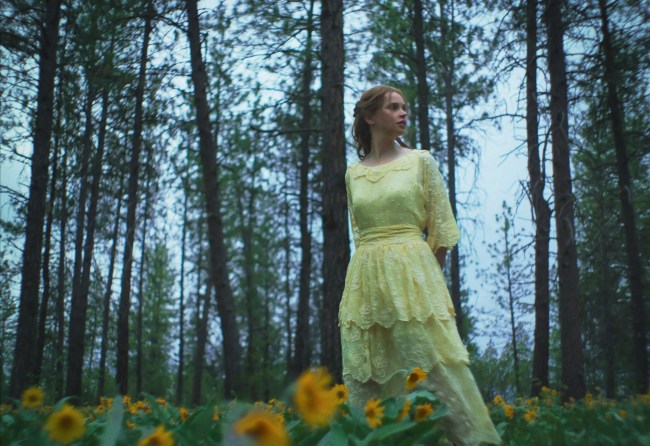
 ‘Train Dreams’©Netflix/Courtesy Everett Collection
Which is not to say that Dessner didn’t get to play around and push the music of “Train Dreams” any. “I did try some things I haven’t done in film scores before — some of the more outlying, stranger harmonic ideas are pushing it, I would say, pretty far. Then, in a similar way, there’s really simple music in there. Really kind of like folk songs,” Dessner said.
Honing in on American folk music of the early 20th Century wasn’t just logical given the period in which “Train Dreams” is set. The score’s spirit — the African American musical tradition coming out of slavery and the Civil War, merging with other immigrant cultures of Ireland, Scotland, and other places — aligns with the spirit of the film, too, so much wrapped up in how Grainier affects and is affected by the changing American landscape.
“You know, people say America is a melting pot, and if you talk about the music, it’s really true,” Dessner said. “It’s almost impossible to distinguish where all of this comes from when it gets all mixed up. And in terms of American identity, it’s fundamental. The way that the music and the landscape of America — you know, if I had to say the two unique things about the American experience, it would be those two things,” Dessner said.
Listen to an exclusive track from the score below.
“Train Dreams” opens in select theaters on November 7 before streaming on Netflix November 21.