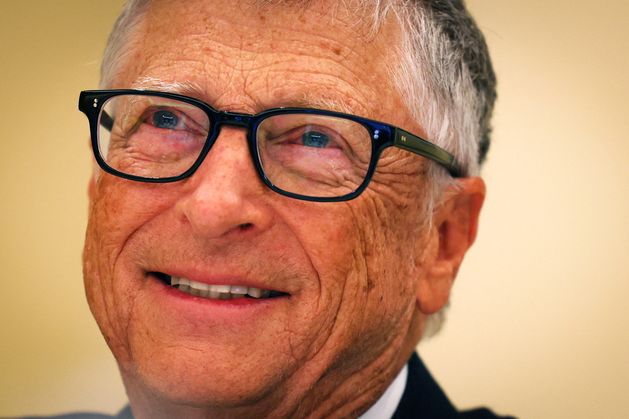
Speaking ahead of next week’s COP30 climate summit in Brazil, Mark Suzman, head of the Gates Foundation, said the funding would go toward innovations like mapping soil health and biofertilisers that use microorganisms rather than chemicals to promote plant growth. Gates called last week for a pivot in climate strategy away from focusing on emissions targets and toward helping the poor, who are increasingly bearing the brunt of erratic weather and other climate extremes.
“These are the people who have contributed such a minimal fraction to the greenhouse gas emission that is causing climate change, but they are the most affected because those climate impacts actually hit them in terms of their ability to feed themselves and their families,” Suzman told Reuters in an interview before the funding was announced. Noting that climate-fuelled weather extremes are posing an increasing threat to crop yields and food security, the United Nations has urged more protection for agriculture as global warming intensifies. A report by more than 20 organisations including consultants Systemiq found that crop resilience was one of the most impactful areas of investment. The report, released on Tuesday, said there was a widespread need for climate-resilient crop varieties, improved weather forecasts and innovations such as AI-enabled mapping and guidance.
The International Potato Center, one of the organisations to previously benefit from Gates Foundation funding, unveiled on Thursday a newly cultivated variety of potato that is resistant to blight, a disease that is spreading to higher altitudes as global temperatures rise.
“This new potato was developed in Peru by identifying wild potatoes with resistance to the disease and incorporating this resistance into cultivated varieties,” said one of the company’s researchers, Thiago Mendes. Another recipient, TomorrowNow, sends weather updates by text message to farmers in African countries including Kenya and Rwanda, helping to prevent them wasting seeds and supplies by planting or harvesting at the best times, CEO Wanjeri Mbugua told Reuters.
Suzman said there was robust research and development for agricultural solutions, but that the goal for the world should be to deliver those solutions to the world’s poorest.
“The jury is still out on if we’re going to see that,” he said.
Business class tax
Spain’s prime minister Pedro Sanchez on Friday outlined plans to tax commercial flights and private jets, an initiative meant to combat planet-warming pollution from aviation that could hike the cost of business travel.
“We are working together with other countries to tax premium-class flights and private jets,” Sanchez told delegates at a summit in Belem, Brazil, that serves as a prelude to the United Nations COP30 climate conference beginning on Monday. “It is only fair that those who have more – and pollute more – pay their fair share.”
Sanchez’s comments foreshadow an expected declaration at COP30 by a number of countries, building on an initiative with France and Kenya, to increase levies on the most expensive forms of air travel, with a portion of the proceeds going to help the most climate-vulnerable nations.
Some of the world’s top emitters of greenhouse gases – as well as island countries bearing the brunt of the climate change they’re fueling – are set to address the second day of the summit.
That includes German Chancellor Friedrich Merz, who marked his first appearance at the international climate summit since his May election. Germany is the EU’s top greenhouse gas emitter, but on Friday Merz cast the country’s industrial might as an asset.
“For Germany, the decision at this crossroads is clear: We are focusing on innovation and technological openness to halt climate change,” Merz said. “Our economy is not the problem, but rather the key to better protecting our climate.”
“We rely on innovation and technological openness when it comes to combining competitiveness with climate protection and social balance,” Merz said.
Tropical forests fund
Brazil’s President Luiz Inácio Lula da Silva on Thursday sought to mobilise funding to halt the ongoing destruction of tropical rainforests and advance the many unmet promises made at previous summits.
He’s proposing a fund called the Tropical Forests Forever Facility that would pay 74 developing countries to keep their trees standing, using loans from wealthier nations and commercial investors. Financed by interest-bearing debt instead of donations, it aims to make it more lucrative for governments to keep their trees rather than cut them down.
The location where the proposal was announced and the talks are being held, Belem, is significant because the city is part of the Amazon rainforest, which is crucial in helping to regulate the climate.
Destroying rainforests makes money for cattle ranchers, miners and illegal loggers, but Brazil hopes to convince countries that preserving forests promises richer rewards for the entire world by absorbing huge amounts of carbon dioxide, a greenhouse gas that heats the planet when it’s released into the atmosphere.
As senior Brazilian officials walked reporters through the fund’s inner workings, Norway pledged $3 billion — the biggest commitment of the day — raising hopes for Lula’s ambitions to become a reality. Germany expected to follow on Friday when Lula meets Chancellor Friedrich Merz. Brazilian officials announced a total of $5.5 billion in pledges.
The fund’s rules call for 20pc of the money to go to Indigenous peoples, who for millennia have managed and preserved lands. This year’s climate talks are expected to have a large presence of tribes, particularly from Brazil and surrounding countries.
But reduced participation in the summit revealed divisions among countries and focus on the many other things happening around the world. The leaders of the planet’s three biggest polluters, China, the United States and India, were absent from the preliminary gathering of world leaders ahead of the full climate talks, which begin next week.
U.N. Secretary-General António Guterres opened a gathering with harsh words for world powers who he said “remain captive to the fossil fuel interests, rather than protecting the public interest.”
Allowing global warming to exceed the key benchmark of 1.5 degrees Celsius, laid out in the 2015 Paris Agreement, would represent a “moral failure and deadly negligence,” Guterres said. He warned that “even a temporary overshoot will have dramatic consequences … every fraction of a degree higher means more hunger, displacement and loss.”