At a glance
Publicly launched: 2021
Headquarters: Romainville, France
Focus: Sustainable method of dyeing clothing
Technology: Biobased pigments combined with a positively charged polymer binder
Founders: Amira Erokh and Ilan Palacci
Funding or notable partners: About $38 million from funders including Crédit Mutuel Innovation and Daphni
Textile dyeing is one of the most polluting steps in the fashion supply chain. Most dyes are derived from fossil fuels and optimized for performance and cost. Globally, dyehouses use trillions of liters of water annually and account for 20% of all industrial water pollution. On a commercial scale, dyeing relies on hot water baths with chemical fixatives, a process that requires a lot of energy and water. Alternatives exist but can be hard to implement: natural dyes are less toxic but can wash out quickly, and newer, waterless methods require specialized equipment. The industry needs a method that is both sustainable and scalable, says Philippe Berlan, CEO of the sustainable pigment start-up Ever Dye.
“We will always have the need to produce garments, so at least we need to find a solution to produce them in a clean way,” Berlan says.
That gap is what Ever Dye, founded in 2021, aims to fill. The idea began in Amira Erokh’s PhD lab at the University of Sfax, where she developed a pigment-based technology for coloring fabrics and eliminating the need for dyes. Through an entrepreneurship program, Erokh partnered with engineer Ilan Palacci to turn the idea into a business. The pair engineered a new class of biobased pigments that cling to fibers without heat. Palacci left in 2024, and Berlan came on board as CEO to guide the French company toward commercialization.
Pigments are uncommon in the textile industry because, unlike dyes, they are insoluble in water and need a binder to stick to fabrics. The acrylic and polyurethane binders typically used can make clothing stiff and contribute to microplastic pollution.
Outdoor headshots of Philippe Berlan and Amira Erokh.

Ever Dye CEO Philippe Berlan (left) and chief technology officer and cofounder Amira Erokh (right)
Credit:
Ever Dye
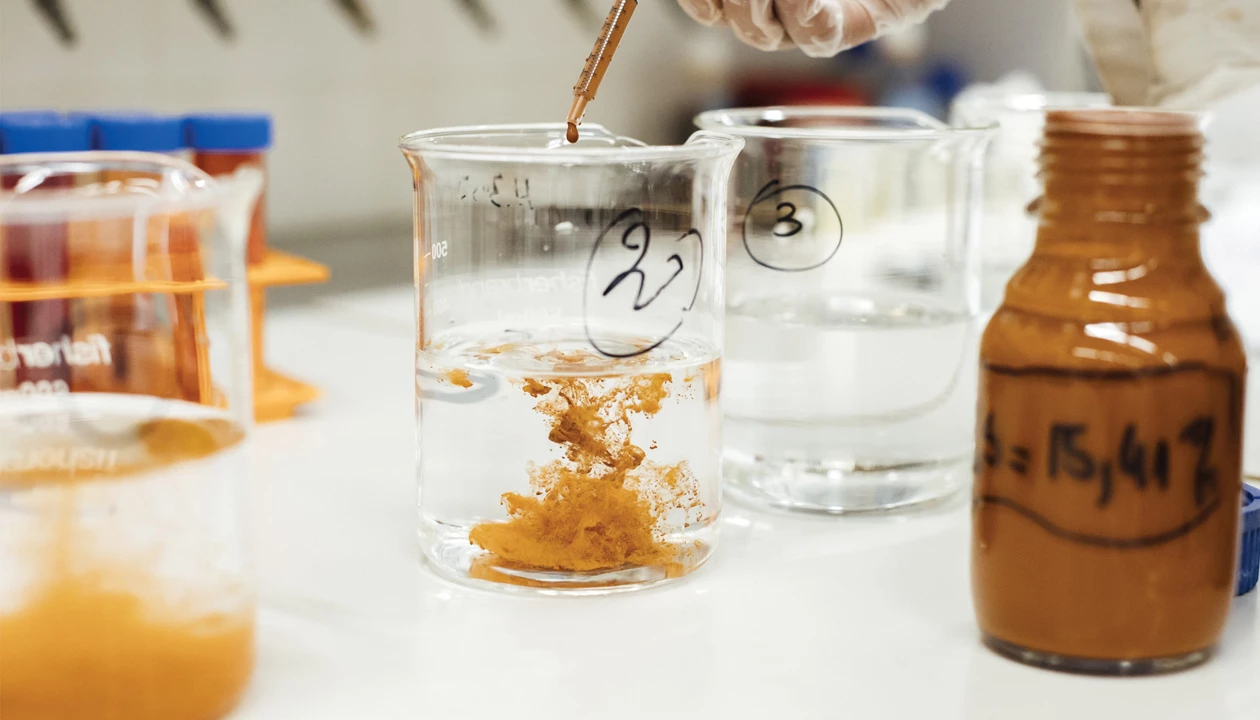
Extracted from organic and inorganic natural materials, Ever Dye’s pigments are attached to a bioderived polymer that gives them a positive charge. After fabrics undergo a pretreatment that adds a negative surface charge, the pigment binds to the textile electrostatically, acting like a magnet and locking onto fibers. Most fabrics are naturally negatively charged, so the process just strengthens the attraction, says Ever Dye research scientist Christelle Chauffeton.
The team designed the method to minimize pollution, as well as to avoid toxic chemicals and high energy costs in the dyeing process and in pigment formulation. “We follow as much as possible the rules of green chemistry,” Chauffeton says.
“We will always have the need to produce garments, so at least we need to find a solution to produce them in a clean way.”
Philippe Berlan, CEO, Ever Dye
The dyeing is done at room temperature—no heat bath required—which eliminates the largest source of energy consumption in dyehouses. Because the pigment binds so effectively, fabrics need fewer rinses to remove excess color, which reduces water consumption. The whole process takes only about 2 h—compared with the 10–12 h typical for dyeing—and can cut energy consumption by up to 90%, Berlan says.
Independent labs are evaluating how long the color sticks, and early reports indicate that the pigments stand up to washing as well as conventional products do, Chauffeton says.
Because the process is designed to work with existing dyeing machines, mills can swap dyes for pigments without investing in new equipment or altering their workflows, Berlan says. Still, getting companies to switch will take time, he adds. “It’s a quite conventional market; they are stuck in their certainties.”
Ever Dye has begun testing on a larger scale. In 2024, it partnered with the lingerie brand Adore Me on a limited edition collection of pajamas colored with its pigments that sold out quickly, Berlan says. Trials with the kids’ clothing company Petit Bateau and other major retailers are underway.
Currently, Ever Dye’s pigment palette is limited to brown, orange, and black. The team is working to develop the three primary colors, which would allow the firm to cover the full spectrum, Chauffeton says. Some colors are easier than others—blue, in particular, is difficult to make without toxic heavy metals, she adds.
“If you want to be pollution zero, you would need to wear beige,” Chauffeton says. But, she adds, by delivering both color and sustainability, Ever Dye can help turn the textile industry toward a cleaner future.
Chemical & Engineering News
ISSN 0009-2347
Copyright ©
2025 American Chemical Society