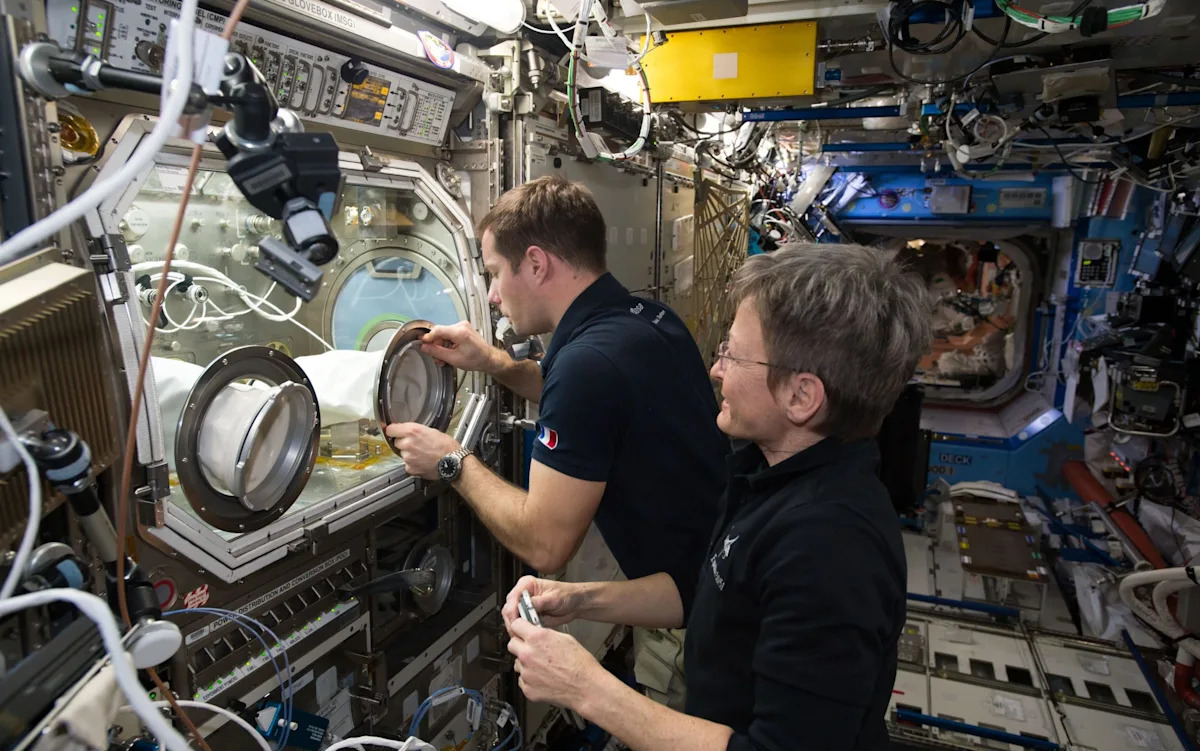
Laboratories in space could be the key to finding a cure for motor neurone disease, experts believe.
Space is the next frontier for the research and development of new drugs and vaccines because the unique conditions allow for novel experiments and potential breakthroughs.
Pharmaceutical companies are already investing in projects to build orbiting laboratories and scientists have already performed experiments on the International Space Station (ISS).
Prof Alysson Muotri, from the University of California, San Diego, is to deliver the Stephen Hawking Memorial Lecture at the Motor Neurone Disease Association (MNDA) annual symposium in San Diego in December on the impact of the space environment on human brain cells.
He told The Telegraph he thinks it is “very likely” that a cure for the disease could be found by conducting research in space.
“Space can accelerate the senescence of human brain cells, compressing the research time into practical terms,” he said.
“Right now, we do not have an age-relevant human model for MND and this strategy can likely help.”
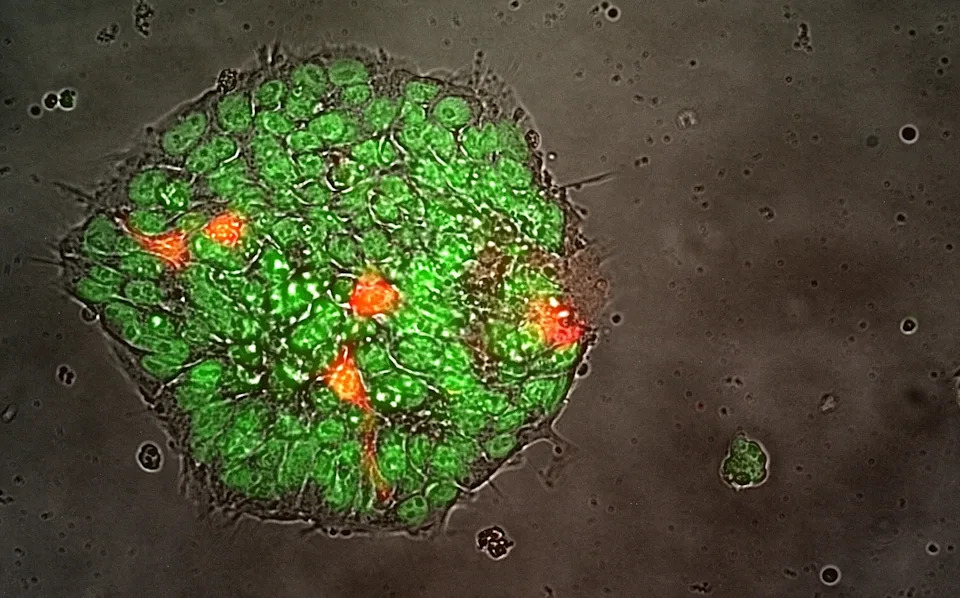
The scientists grow mini brains in space to see how they are affected
Prof Clive Svendsen, Executive Director of the Regenerative Medicine Institute at Cedars-Sinai Hospital in the US, has led research efforts to grow mini brains in space to see how they are affected.
Prof Svendsen, a Briton who attended Cambridge before moving to the US 35 years ago, is a world leader in ALS (Amyotrophic Lateral Sclerosis) research, which is the most common type of MND.
He told The Telegraph: “In the last four or five years I have got involved with SpaceX and some companies that are sending cells to the ISS.
“The reason we got interested in it is because one of the focuses of my lab is IPS technology – induced pluripotent stem cells.”
These stem cells can be turned into other types of cells in a lab and his work has focused on making them into brain cells and growing them so he can use them to study ALS disease.
“The idea was that if we grew them in with microgravity they would automatically form better cultures,” he added.
“And we made them in space with the astronauts and they made a beautiful suspension. We have a paper coming out soon showing that you can manufacture IPS cells in space and they go into suspension in a much different way and grow very efficiently.
“We’re now testing those on Earth. We brought them back to see if there’s any long-term effects of manufacturing in space.”
‘Imitate the sick cells’
But doing this work in space has the additional benefit of allowing brains to become aged from the brutal radiation and lack of gravity to imitate the sick cells found in ALS patients.
“There’s a yin and yang in space,” Prof Svendsen explained.
“The yin is that maybe we can manufacture cells better and the mission we have now – we have cells on the space station right now and are waiting for astronauts to go up – is what happens when you try and make brain tissue when you are not constrained by gravity.
“A lot of people are doing that and the idea is 3D printing like in Westworld. It’s remarkable; biology changes completely when you don’t have gravity.
“But the yang is that astronauts have all sorts of weird side effects from microgravity which is basically premature aging, like their bones becoming more brittle.
“The reason we are interested in ALS is we’re using space to age the cells. We take the organoids up from ALS patients and we’re hoping to see more ALS phenotypes – motor neurons dying and cells dying.
“The accelerated aging and possibly improved organoid growth is a two-for-one.
“We hope to have a satellite out there doing these experiments soon supported by Cedars-Sinai and some of the commercial space companies doing these experiments that you cannot do with gravity.”
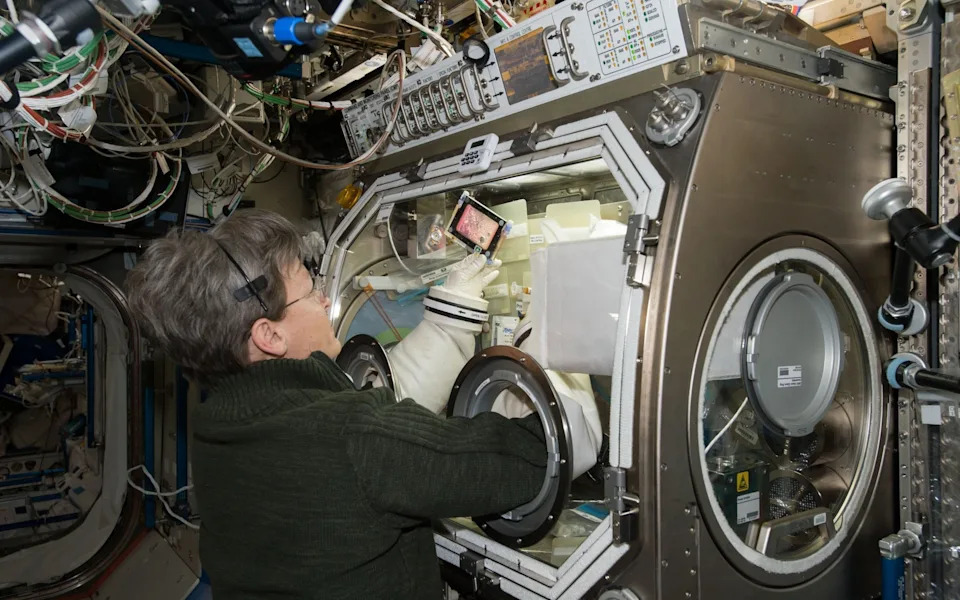
Space could recreate the wear and tear of decades of life in a matter of days – Shane Kimbrough
Brian Dickie, chief scientist at MNDA, told The Telegraph: “If you fire something up into space you expose these cells to cosmic radiation which accelerates the ageing process by causing damage to DNA strands etc.
“So there’s an opportunity here to accelerate neurodegeneration because the studies on stem cells make nerve cells out of skin cells but we are then trying to mimic decades of life in maybe 30 days in a cell in a dish.”
Space could recreate the wear and tear of decades of life in a matter of days and make the cells behave like they are of a person in their 40s or 50s.
Nerve cells never regenerate in life, so once they are damaged they cannot be replaced and scientists need these older, diseased mini brains to be able to really see what is happening in the brain of a person with motor neurone disease and then find a way to treat it.
b’
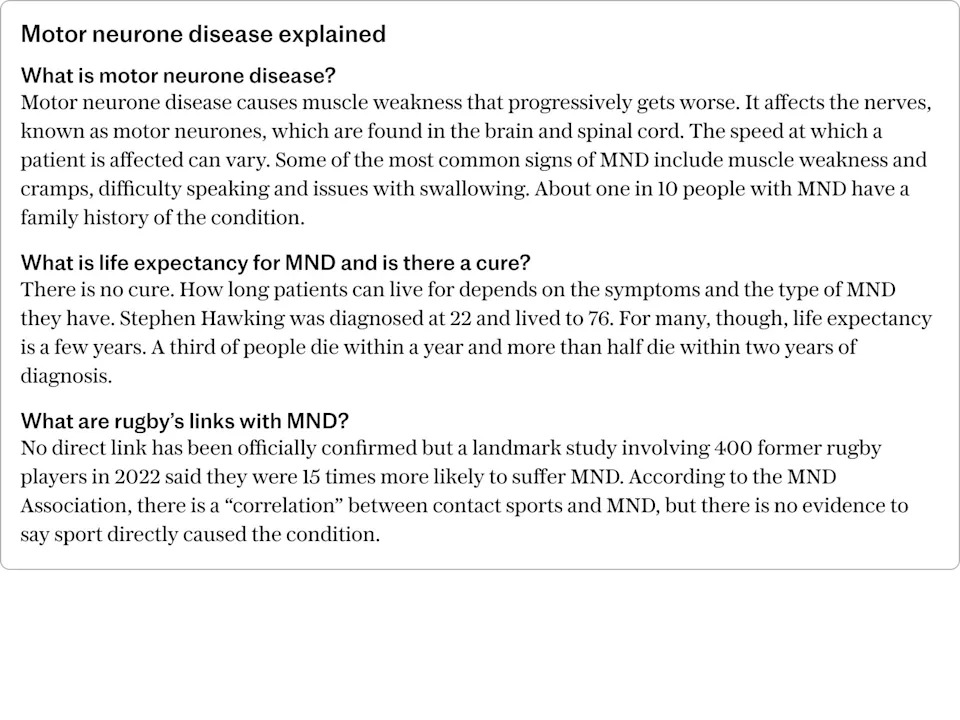
Motor neurone disease explained
‘
Prof Svendsen hopes that the yin and yang approach leads to treatment breakthroughs for MND and thinks it could be the first condition to be tackled primarily in orbit.
It could also precipitate the biggest shift in research in a century with scientists moving to orbiting labs and hotels to do their work.
“The ISS is coming down in three to four years and we are going to switch to a new era of commercial space stations,” he said.
“Nasa will rent out space and the British space agencies will rent space on these commercial satellites that are basically big hotels.
“Some of these big hotels will be fully kitted out with molecular sequencing, with tissue culture hoods and all the things we have been developing on Earth.
“I predict that in the future there will be things that we’ll be able to do with either stem cell 3D printing organs or stem cell technology that we can’t do on Earth and that will be the focus of work up there.
“In 100 years there will be Ubers going up and down. You’ll be able to go to space without any problem whatsoever. The technology is all coming.”