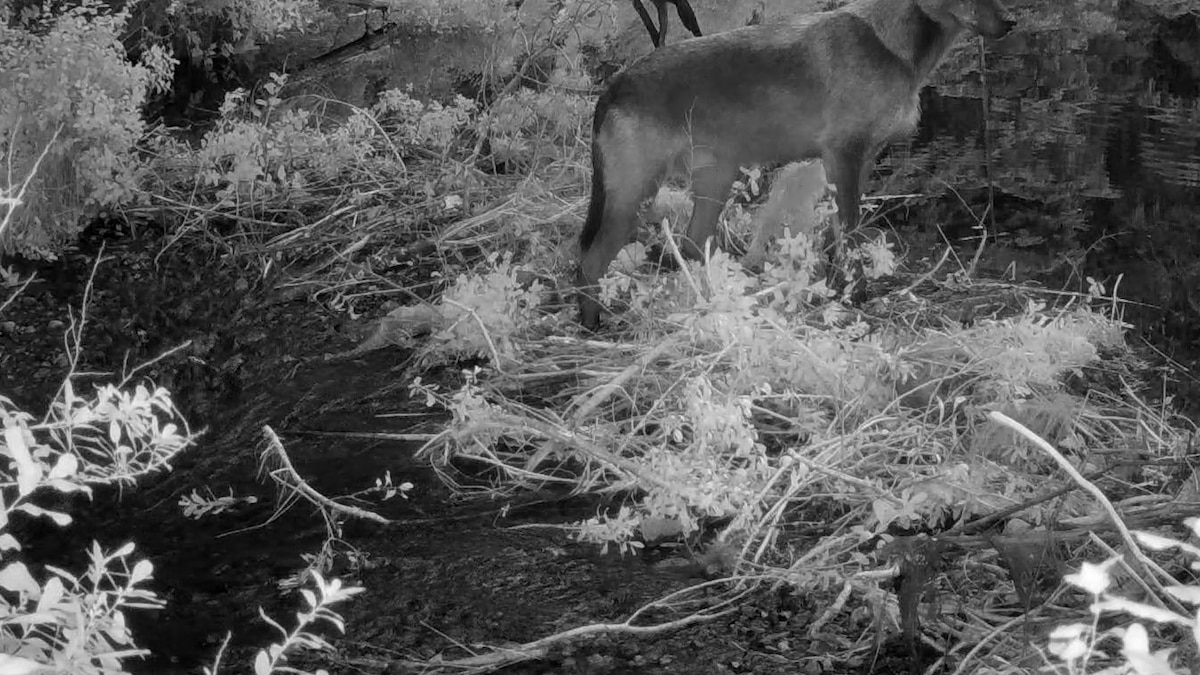
From “the very first watch of the video, it was like—from my interpretation—this is tool use,” says Kyle Artelle, a study co-author and an ecologist at SUNY College of Environmental Science and Forestry in Syracuse, New York who was part of the team that set the traps. “Every motion is perfectly efficient,” and the animal seemed to know the connection between the trap’s parts. In another camera trap video, a different wolf is seen tugging a line attached to a buoy, and dozens if not hundreds of crab traps have been similarly damaged in the area.
People have seen canids, the group that includes dogs and their kin, using tools in captivity. In 2012, ethologist Bradley Smith of Central Queensland University in Adelaide, Australia, and his colleagues shared observations of a captive dingo dragging a table some 6 feet and then climbing onto it and grabbing an object that had been out of reach. The same dingo also moved a dog crate and stood on it, allowing him to see out of his enclosure.
“I couldn’t believe it,” says Smith, who wasn’t involved with the new work, referring to those early dingo observations. At the time, the list of animals known to be capable of higher-order tasks—going beyond using their instincts and simple reactions— was short, including primates, dolphins, elephants and crows. The dingo findings opened up new knowledge on canid capabilities.

Limited-Edition Classic Collection
Inspired by Earth’s highest peak and deepest point, get limited-edition holiday gifts and a National Geographic subscription.
(5 clever animals that treat and prevent their own illnesses)
This new study shows how adaptable and clever wild wolves are, he says. While the dingoes lived in a sanctuary, the wolf behavior was spotted in the wild, “so that makes the wolf discovery more special and valuable,” he says.