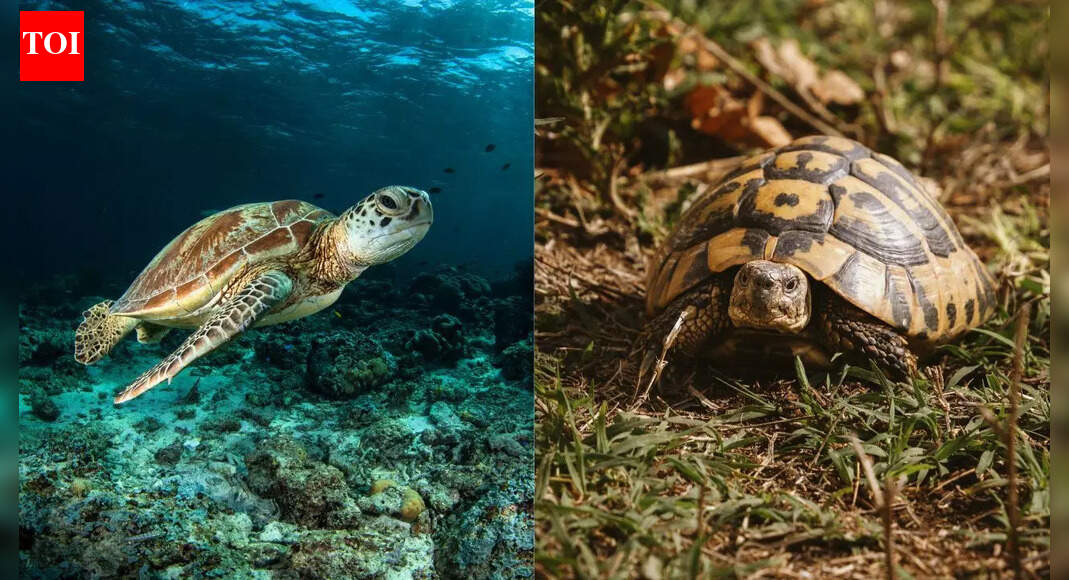
 Many people use the words turtle and tortoise interchangeably, often assuming they represent the same kind of animal with minor variations in size or behaviour. This confusion continues even as interest in wildlife identification grows through digital media and conservation programmes that rely on public engagement. The similarities in their protective shells and slow, deliberate movements make the two appear closely related, which they are, yet their evolutionary paths, environmental roles and physical traits differ far more than most casual observers realise. Understanding how they diverge and why those distinctions matter in ecology and conservation helps clarify long-standing misconceptions that shape public perception of these ancient reptiles.
Similarities in turtles and tortoises: What they have in common across species
Turtles and tortoises share a deep evolutionary history within the order Testudines, meaning they possess several foundational traits that link them across habitats and continents. Both exhibit a bony shell that forms part of the skeleton rather than acting as an external layer. This structure is composed of a fused ribcage and spine, which provides significant mechanical protection and influences the shape of their bodies from the moment they hatch. The presence of scutes, patterns of keratin covering the shell, reflects growth, environmental shifts and age, creating an identifiable record that specialists can interpret.Their slow metabolic rate supports longevity, allowing some species to live for many decades or more if their environments remain stable. Although their habitats differ, both rely on temperature-dependent regulation of bodily processes, which shapes daily routines such as basking, foraging and shelter seeking. Reproduction also reflects shared ancestry, since all species lay eggs and follow behavioural patterns centred on nest placement, incubation temperature and seasonal timing. These similarities often contribute to the widespread assumption that a turtle can be treated as a tortoise or the reverse, when in reality the contrasts between them are considerably sharper and carry ecological significance.
Differences between turtles and tortoises
Scientific work analysing species data has helped clarify how turtles and tortoises diverge across morphology, diet, habitat use and behaviour. One such dataset, presented in Nature Scientific Data, compiles information from hundreds of species and offers a precise overview of these differences. Its findings support widely accepted distinctions while also revealing variation between populations influenced by geography and environmental pressures. The contrasts below reflect these documented patterns and highlight how the two groups perform different ecological functions despite their shared lineage.
Why these distinctions matter for conservation and public understanding
The differences between turtles and tortoises shape how conservation groups monitor populations, create habitat protection plans and evaluate species vulnerabilities. Their contrasting environments expose them to distinct pressures, which means strategies that support one group rarely work for the other. Aquatic species rely on water quality, shoreline stability and the reduction of plastic and fishing-related threats. Land-based tortoises depend heavily on protected grasslands, the regulation of collection for trade and the maintenance of safe migration corridors across human-altered landscapes. Public confusion between the two can influence how communities respond to conservation campaigns, which is why clear communication around their differences remains essential.Also Read | What is the hardest wood on Earth