Topline
A recent Goldman Sachs analysis shows that more workers are embracing gig work to supplement their income than before, as a result of a cooldown in the labor market—underlying a broad slowdown.
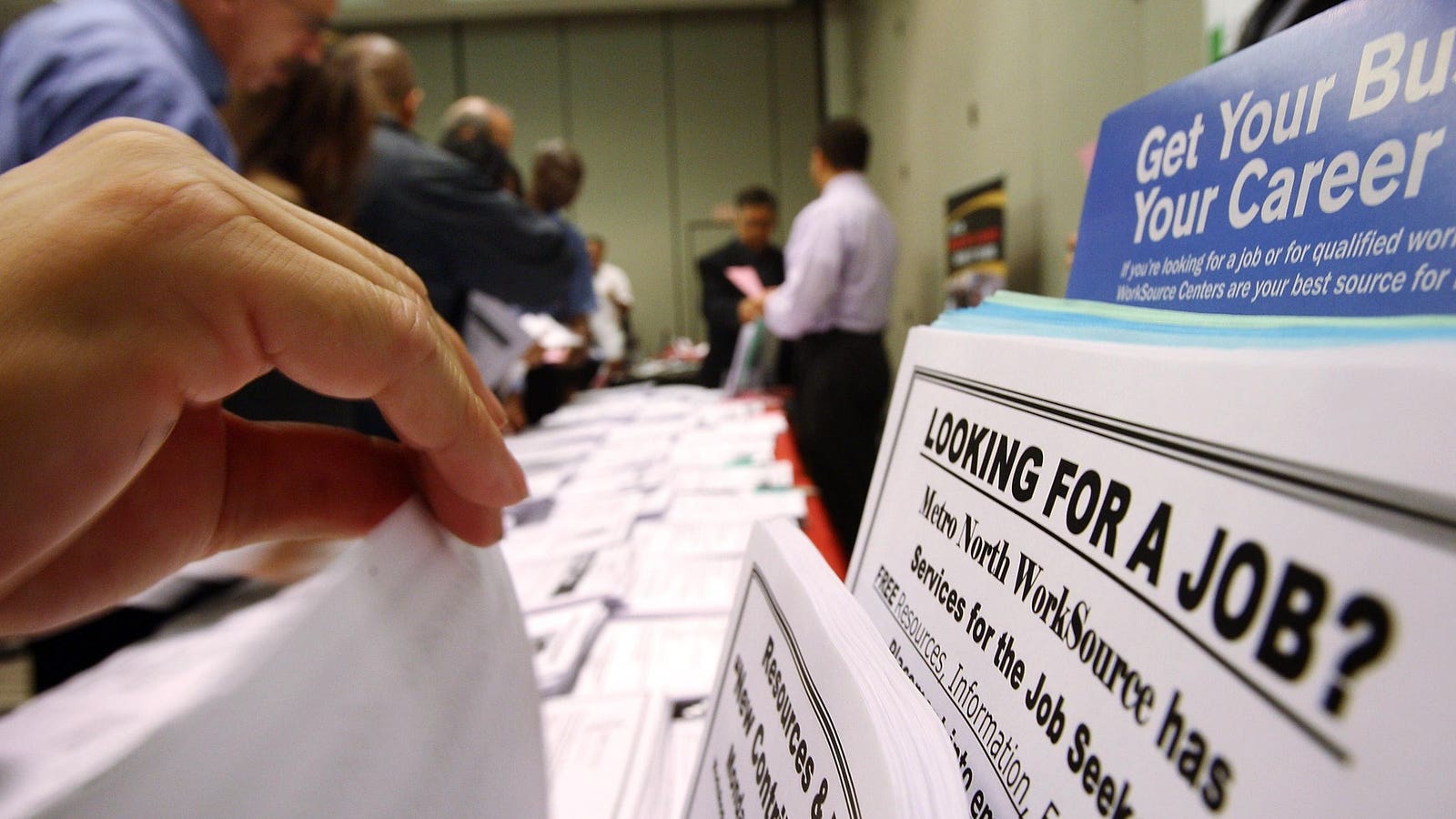
PASADENA, CA – MAY 14: Job seekers look over job opening fliers at the WorkSource exhibit, a collaborative effort by governmental agencies to offer jobs and job training resources at the Greater Los Angeles Career Expo at the Pasadena Convention Center on May 14, 2009 in Pasadena, California. Nineteen exhibitors offer job and educational opportunities as well as advice from the Board of Equalization at the event that is open to the general public. (Photo by David McNew/Getty Images)
Getty ImagesKey Facts
Hours worked on gig platforms in 2025 have increased, even as payroll growth has slowed, suggesting more workers have taken up gig work during a cooling labor market, according to a report released by Goldman Sachs.
Goldman Sachs classified gig workers as employment that includes subsets of workers such as independent contractors, temp agency or on-call workers, or freelancers.
The analysis showed that workers who choose to participate in the gig economy would only be able to earn 50%-65% per hour of work as they did in traditional jobs.
Data from the Federal Reserve’s Survey of Informal Work shows that 20% of all people who reported that they took a pay cut, lost their job or had their hours reduced within the prior two years took up gig work as a result.
The Goldman Sachs report also claimed that as workers increasingly turn to gigs, the gig economy would not be able to support all who lose their jobs during a downturn because the demand for gig workers would fall as the economy weakens.
The unemployment rate was 4.3% as of August 2025, according to the Bureau of Labor Statistics, and the Labor Department is set to release September’s jobs report Thursday.
Is There Going To Be A Recession?
Treasury Secretary Scott Bessent said earlier this month that he believes some “sectors” of the economy are in a recession or at risk of one and blamed the Federal Reserve for not cutting interest rates quickly enough. It is difficult for economists to ascertain the state of the economy, since data from the Bureau of Labor Statistics stopped being collected due to the government shutdown. Real estate agents told the New York Times in July that the housing market was in a recession, citing a slow sales environment. The Federal Reserve cut interest rates by a quarter of a percentage point in October, the second time in two months. President Donald Trump has called for more aggressive rate cuts since he took office in January, and criticized Fed Chair Jerome Powell for keeping interest rates stable earlier in the year.
Read More