
Nikon has filed a fascinating patent that points toward the next stage in camera-sensor technology. The document describes a multi-layer stacked image sensor built to improve two of the most critical imaging parameters: dynamic range and readout speed. In simple terms, this design could help Nikon cameras deliver cleaner shadows, smoother highlights, and faster frame capture, all without making the chip larger.
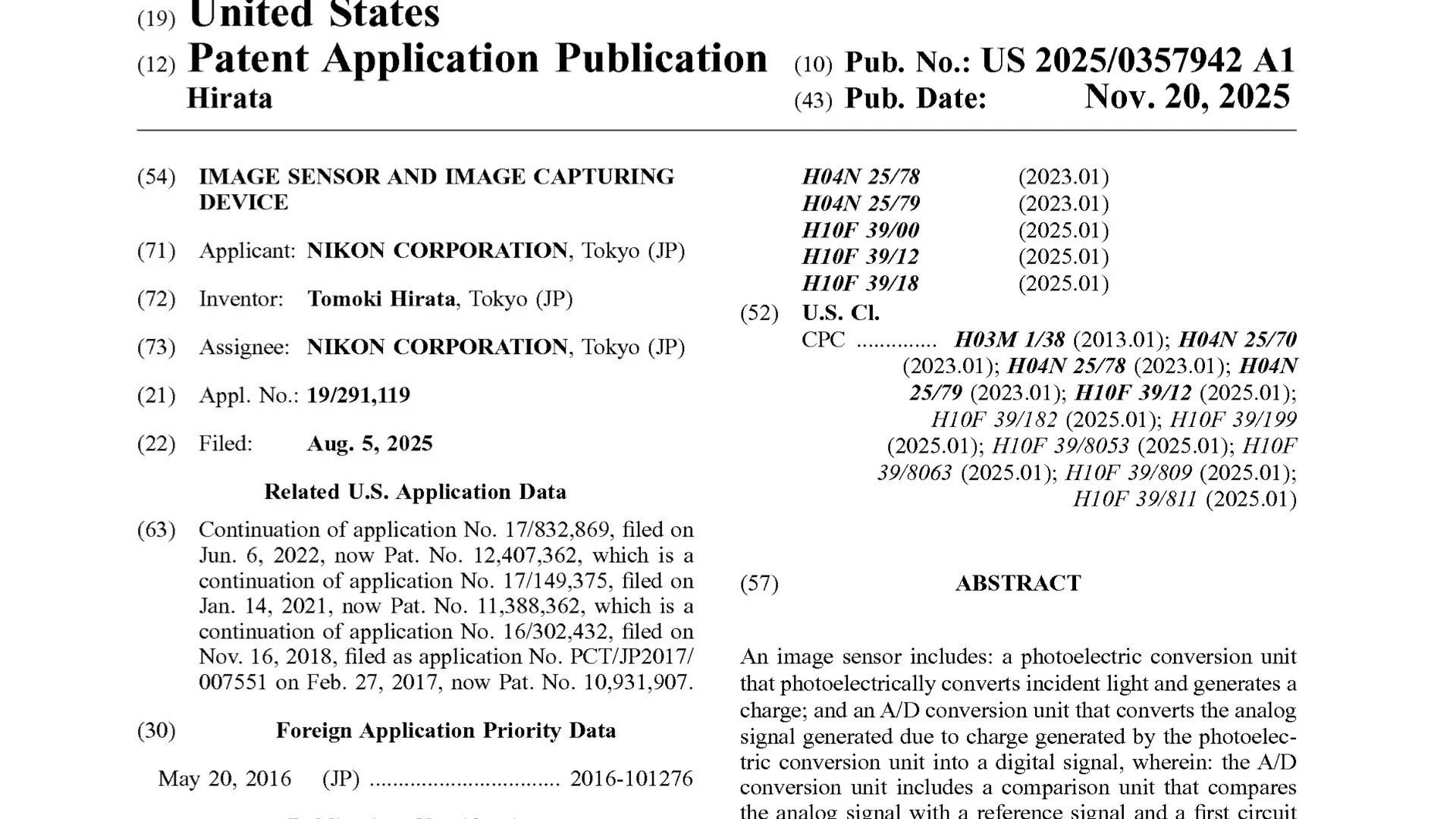 Nikon patent IMAGE SENSOR AND IMAGE CAPTURING DEVICE
The patent titled IMAGE SENSOR AND IMAGE CAPTURING DEVICE explains a four-layer semiconductor stack. The top layer receives light through microlenses and color filters, while the lower layers handle signal conversion and processing. What makes this setup different is how Nikon spreads its analog-to-digital conversion (ADC) components across multiple layers. Instead of placing all capacitors on one plane, the smallest and most sensitive ones sit closest to the comparator, the part that decides each pixel’s brightness value. This physical arrangement minimizes electronic noise and boosts accuracy. The concept follows the same stacked-architecture logic discussed in Nikon Hybrid Image Sensor Global vs Rolling, where Nikon explored sensor stacking to reduce rolling-shutter distortion.
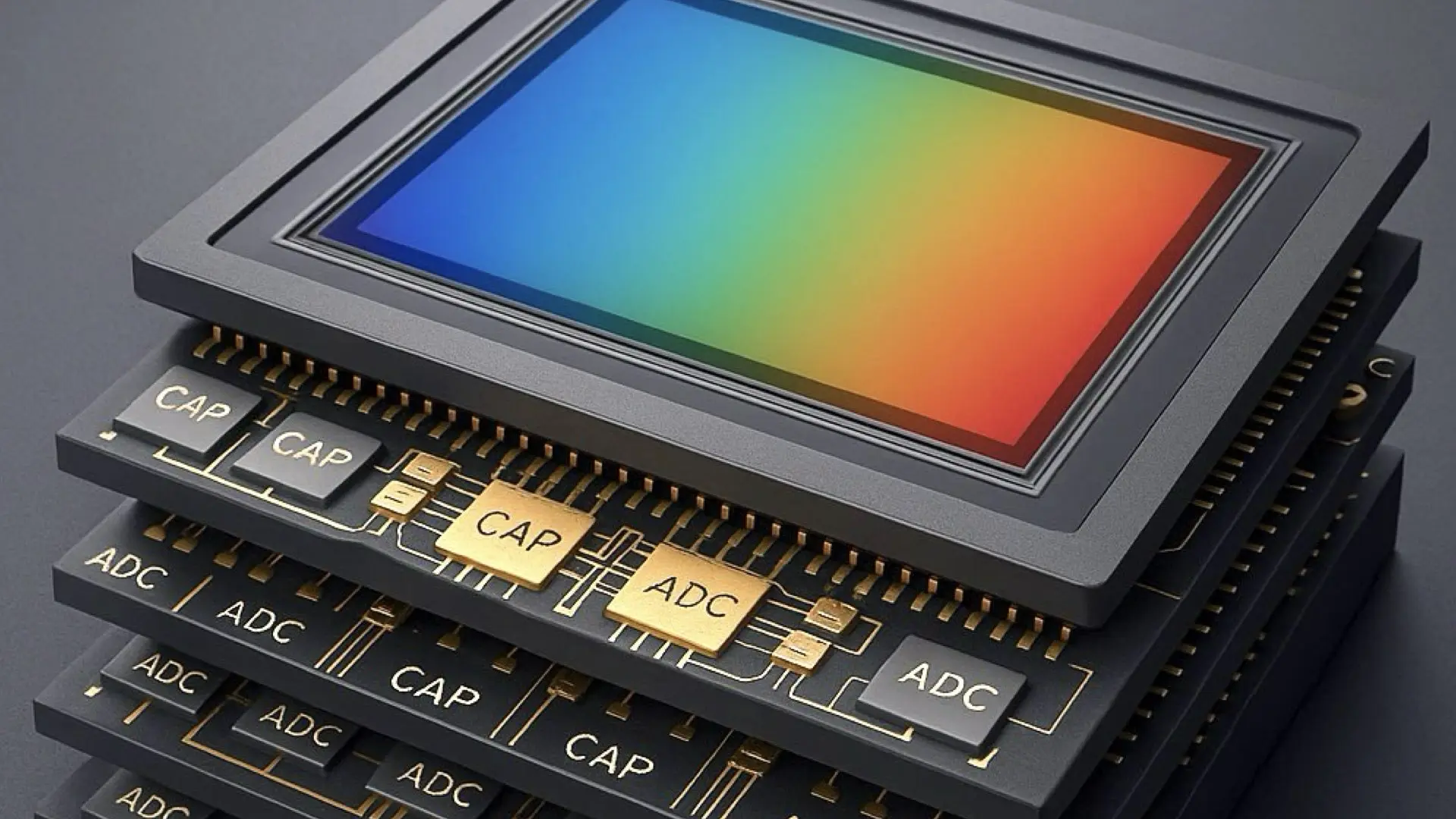 3D rendered mockup derived from the Nikon patent IMAGE SENSOR AND IMAGE CAPTURING DEVICE
Dynamic range depends heavily on how precisely the sensor converts light into data. Any small deviation in analog conversion can add noise, especially in dark areas. Nikon’s new layout reduces that error, allowing more accurate tone reproduction from shadows to highlights. That means cinematographers could get smoother gradations, more natural contrast, and better color depth, qualities that fit Nikon’s continued push into professional imaging. Similar goals appeared in Nikon Large Sensor Cinema Camera Technology, where Nikon emphasized maximizing tonal latitude for high-end productions.
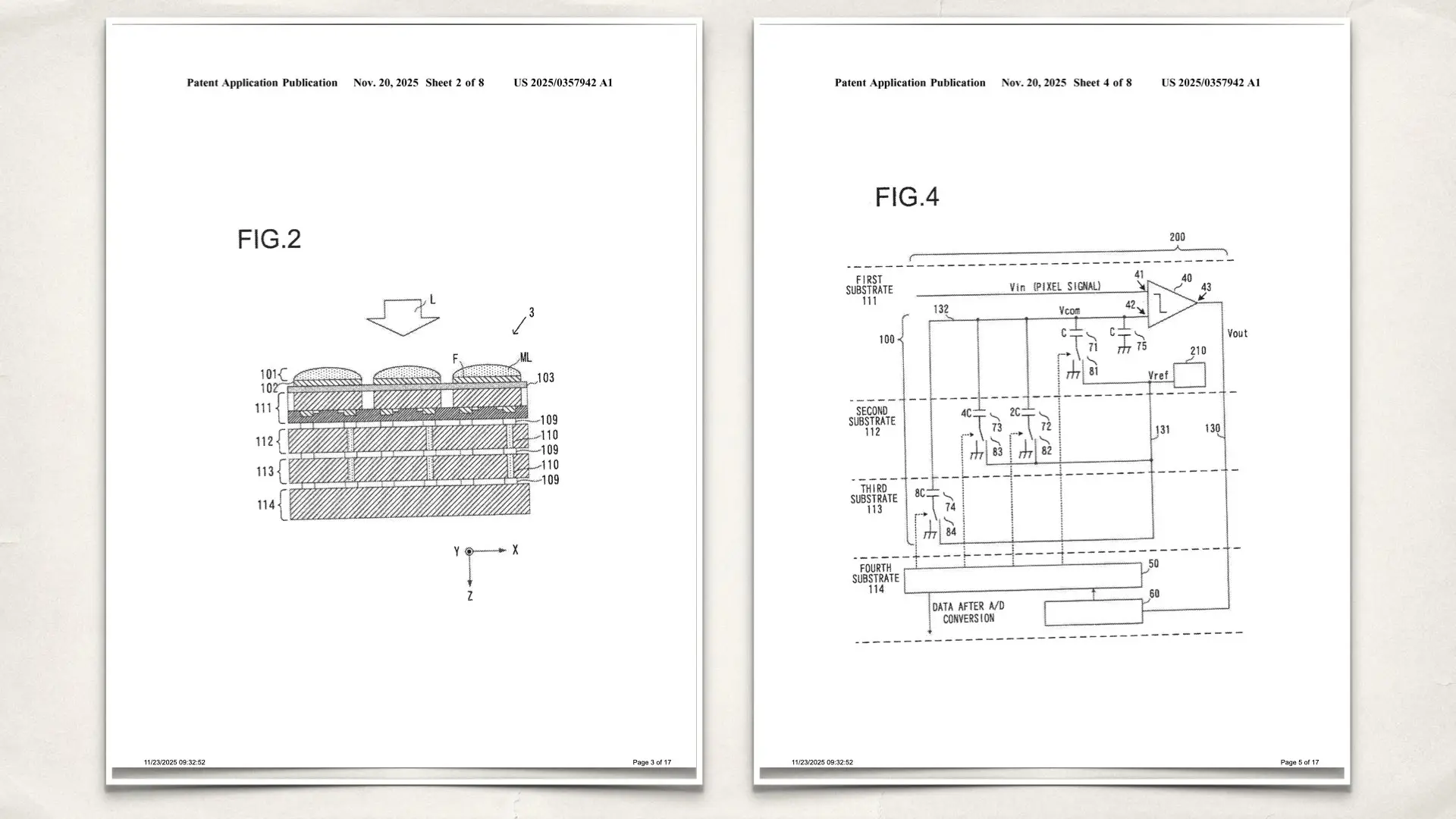 Nikon patent IMAGE SENSOR AND IMAGE CAPTURING DEVICE
Speed comes from efficiency. By distributing capacitors over several layers, Nikon can fit more ADC units in parallel without expanding chip area. Each column or pixel group can convert signals at once, resulting in quicker frame delivery and reduced rolling-shutter artifacts. That means smoother motion capture and higher-frame-rate 4K, 6K, or even 8K recording. These same priorities appeared in Nikon New Sensor Faster Readout High Resolution, which previewed Nikon’s effort to pair high resolution with fast readout pipelines.
If Nikon turns this patent into a real product, the benefits will directly impact video and cinema work:
-
Cleaner shadows and improved highlight retention.
-
Shorter readout times for reduced skew and wobble.
-
Better HDR and low-light performance.
-
Potential for sustained high-frame-rate shooting.
In other words, Nikon is laying the groundwork for sensors that balance cinematic image quality with speed, a combination that could reshape its future Z-mount and cinema-oriented cameras.
While still a patent, this document shows Nikon refining its stacked ADC architecture to achieve both higher dynamic range and faster readout speeds: two characteristics that define the best modern cinema sensors. If realized, this technology could make Nikon’s next-generation cameras more competitive in the professional filmmaking space, delivering the kind of tone depth and responsiveness that cinematographers demand.