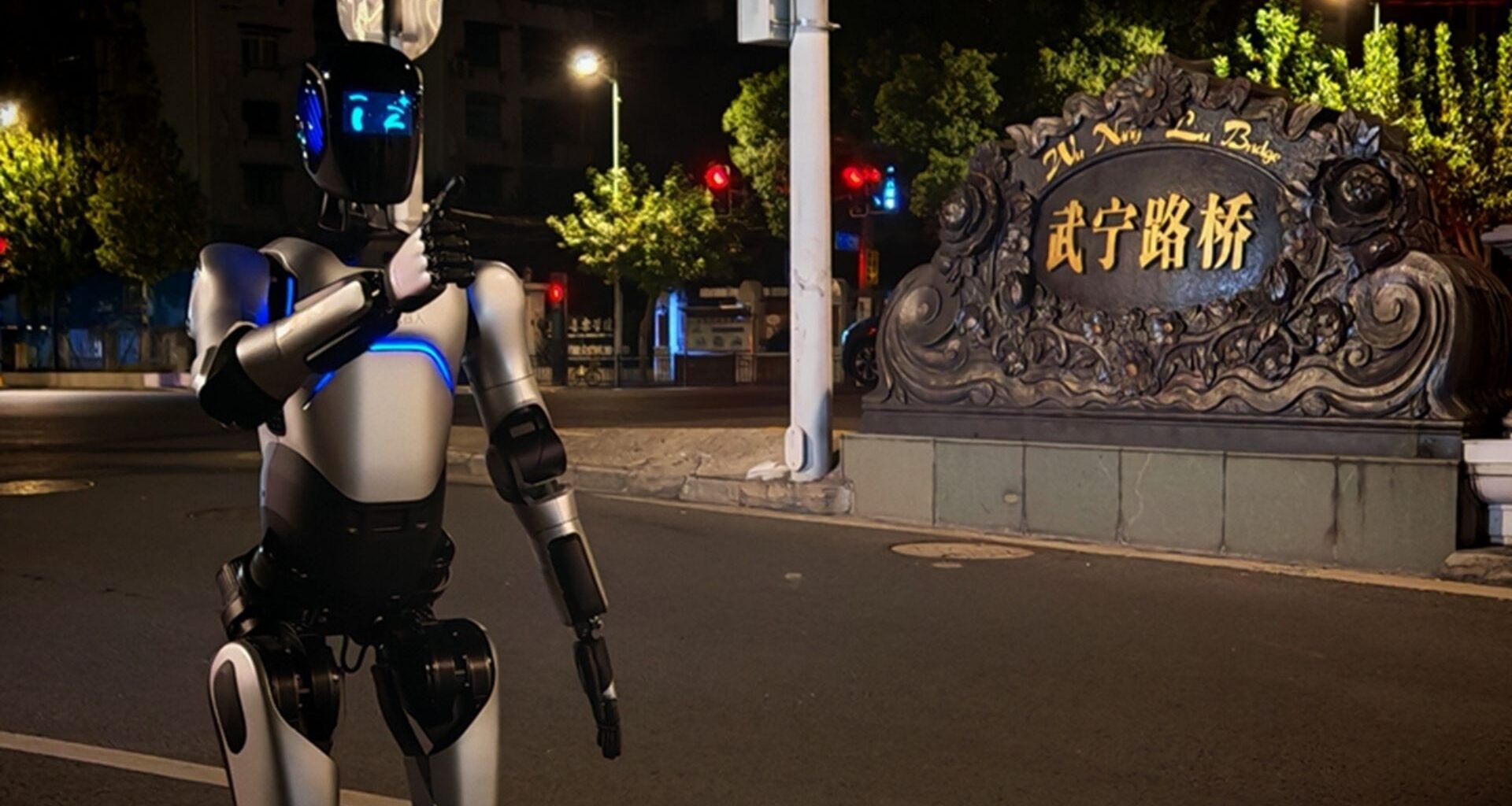
Chinese robotics company AgiBot’s A2 humanoid completed a 65 mile (106 km) cross-province trek, setting a Guinness World Record as revealed on Thursday.
The walk started on November 10 from Suzhou’s Jinji Lake in East China’s Jiangsu Province and ended at Shanghai’s Bund on November 13.
According to AgiBot, the A2 robot covered 106.286 kilometers during this challenge. It was named as the record holder for the “Longest journey walked by a humanoid robot”, according to a statement sent to Global Times by the company.
Becoming the first humanoid to clinch this title, the A2 achieved this feat without powering off, courtesy of its hot-swappable battery system that kept it functioning continuously.
Wang Chuang, partner and senior vice president of AgiBot, said that the cross-province walk was meant to illustrate the reliability and stability of humanoid robot technology. “Walking from Suzhou to Shanghai is difficult for many people to do in one go, yet the robot completed it,” he revealed.
According to Chuang, the challenge showed the A2 humanoid’s overall endurance, hardware durability, and balanced control, showcasing that it was truly ready for commercial deployment.
About AgiBot A2 humanoid robot
The AgiBot A2 is a 5.74 feet (175 cm) tall humanoid robot that weighs 55 kg (121 lbs), equipped with AI-powered sensing capabilities that allow it to process text, audio, and visual information.
It can also perform fine-motor tasks, such as threading a needle. Beyond the A2, AgiBot’s portfolio includes the A2 Max and service robots such as the A2-W, X1, and X1-W.
Experience of the challenge
The robot traversed urban roads, scenic corridors, and multiple national and provincial highways, encountering diverse surfaces including asphalt, tiled pavements, bridges, tactile paving, slopes, and areas with minimal night illumination.
It complied with traffic regulations throughout the journey and ultimately arrived at Shanghai’s Bund, the company said. The A2 returned in good condition despite walking over 100 kilometers. Wear and tear was observed, albeit only on the rubber layer of its foot soles.
According to Wang, the A2 robot used in the challenge was a regular, mass-produced commercial unit with no custom tweaks, the same as those delivered to clients.
For the walk, it used dual GPS modules alongside onboard LIDAR and infrared depth cameras, enabling accurate navigation needed for changing light conditions and urban environments.
Star of the show
The Chinese humanoid briefly interacted with the reporters upon completing the trek, calling the journey a “memorable experience”. While speaking with Xinhua News Agency reporter Sun Qing, the robot joked that it needed “a new pair of shoes” after completing the walk.
Vice President Wang shed light on the other notable capabilities of the A2, stating it supports multilingual interaction, facial recognition and memory, autonomous guidance, and report tasks.
AgiBot has produced and shipped over 1,000 commercial units of the humanoid in 2025.
“The leap from last year’s robot marathon to this week’s 100-kilometer robot walk shows how rapidly China’s robotics sector is advancing,” Liu Dingding, a veteran industrial expert, told the Global Times on Thursday.
Liu further marked this achievement as a milestone in improving robot reliability, endurance, motion control, and environmental adaptability. He also predicted that robots could match or even surpass humans in certain physical tasks in the near future.