Scientists have found a way to convert high-energy radiation waste from particle accelerators into a critically scarce medical isotope used in cancer therapy.
The intense beams of particles inside accelerators, typically focused on unlocking the deepest secrets of the universe, eventually collide with a component called a “beam dump.” This is where the leftover energy — massive amounts of radiation — is absorbed and usually dissipated as waste heat.
The photons in a particle accelerator’s beam dump are intense, high-energy radiation byproducts of the main physics experiment.
A team of researchers at the University of York states that this powerful radiation, specifically the photons, can be captured and repurposed. It can be utilized to create materials necessary for cancer treatment.
The target isotope, copper-67, is a highly valuable asset in oncology. The method shows potential for generating this rare isotope, which is used for both diagnosing and treating cancer.
“We have shown the potential to generate copper-67, a rare isotope used in both diagnosing and treating cancers, by demonstrating that what we might view as waste from a particle accelerator experiment can be turned into something that can save lives,” said Dr. Mamad Eslami, a nuclear physicist from the University of York’s School of Physics, Engineering and Technology.
Copper-67 demand
In nuclear medicine, medical isotopes are the key tools—they emit radiation used to both diagnose and treat diseases. Because they aren’t abundant in nature, these isotopes have to be produced synthetically.
Copper-67 is a highly valuable medical isotope because it functions as a theranostic agent, meaning it can both treat and track disease simultaneously.
Specifically, it emits radiation that is effective at destroying cancer cells, while also releasing radiation that allows doctors to monitor the treatment’s progress and assess its location using diagnostic imaging. This dual capability makes it exceptionally useful in personalized cancer care.
Clinical trials are currently investigating its use against aggressive diseases like neuroblastoma and prostate cancer.
However, the global supplies of Copper-67 are severely restricted because current production methods rely on expensive, dedicated accelerator time and often use aging infrastructure.
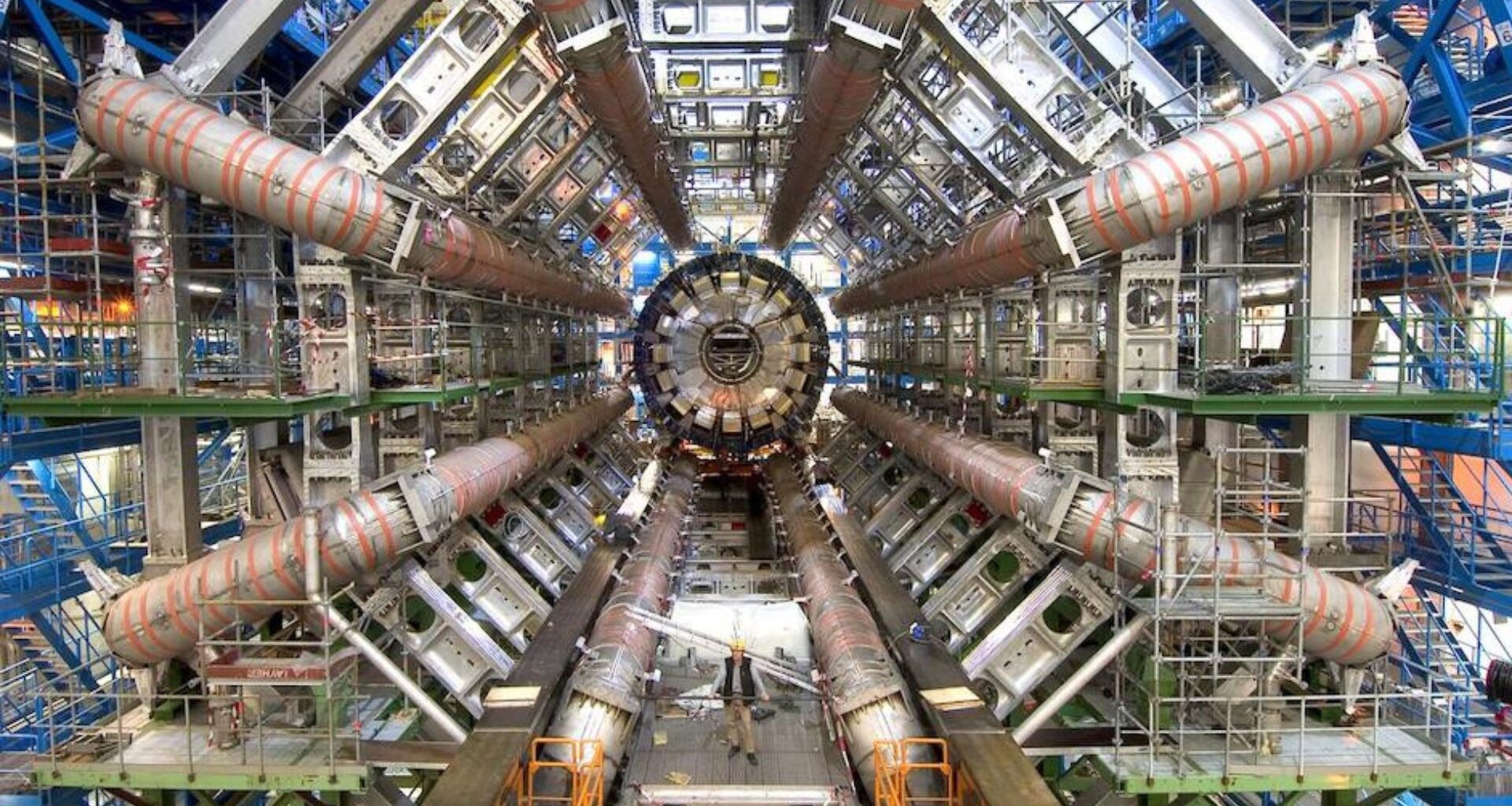
That’s why the team looked into particle accelerators, such as the one at CERN.
The key to the York team’s innovation lies in its simplicity and efficiency. It requires no downtime for the physics experiments.
“Our method lets high-energy accelerators support cancer medicine while continuing their core scientific work,” Eslami added.
Cost-effective, parallel approach
The continuous operation of large research particle accelerators is key to the feasibility of this new method.
Since these machines often run for extended periods, the proposed process can gradually accumulate useful quantities of medical isotopes in parallel with the primary physics experiments.
This efficient approach allows existing physics facilities to double as reliable sources of medical materials, maximizing the use of accelerator energy and directly supporting the creation of life-saving treatments.
The research team’s immediate future efforts will focus on collaboration with both accelerator laboratories and medical partners.
The goal is two-fold: first, to successfully apply the waste-repurposing method at other particle accelerator facilities; and second, to explore methods for scaling up production.
This scaling phase aims to ensure the reliable and cost-effective delivery of clinically useful quantities of Copper-67 and other valuable medical isotopes to meet the demands of cancer diagnosis and treatment.
The study was published in the journal Physical Review C.